
Business
Canadian Taxpayers Federation Proposes Key Changes for Manitoba’s Budget

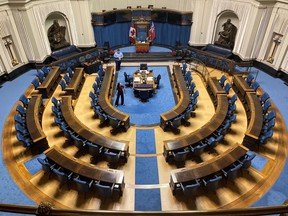
The Canadian Taxpayers Federation (CTF) has presented a series of significant proposals aimed at influencing Manitoba’s upcoming budget. As various regions across Canada face challenges stemming from tariffs and restrictive policies that impede private-sector investment, the CTF emphasizes the need for strategies that enhance economic competitiveness and foster per capita GDP growth.
CTF’s Key Recommendations for Budget 2026
In their pre-budget submission, the CTF has highlighted several key recommendations for the Manitoba government. Central to their proposal is an end to tax bracket creep and a reduction of one percentage point in the provincial sales tax. The CTF argues that eliminating bracket creep, which results from the government’s failure to index income tax brackets to inflation since Budget 2025, would save taxpayers approximately $82 million this year. This change would prevent inflation from automatically pushing taxpayers into higher tax brackets, thereby increasing their tax liabilities.
Additionally, the CTF estimates that a reduction in the retail sales tax would save the average Manitoban family around $315 annually. Such measures, they contend, are essential to making life more affordable for residents of Manitoba.
Addressing Public Sector Compensation and Spending
The CTF advocates for a comprehensive spending review and an end to what they describe as corporate welfare. They assert that aligning government compensation with private sector wages is a prudent step towards improving economic efficiency. While many public sector roles are vital, the federation warns that higher public sector salaries can distort the labor market, drawing workers away from private employers and ultimately reducing productivity and competitiveness.
At a time when economic competition is intensifying, the CTF emphasizes that Manitoba must focus on real productivity growth. They argue that even without actively paying down debt, the financial burden can lessen if the economy grows at a rate that outpaces debt accumulation. However, achieving this requires policies that incentivize private sector expansion rather than a government-centric economic model that exacerbates inflationary pressures.
The CTF’s proposals come at a critical juncture for Manitoba. The province faces substantial challenges, including persistent poverty and rising crime rates, but it also boasts significant strengths. The population is characterized by a strong work ethic, creativity, and a community spirit. Furthermore, Manitoba is rich in natural resources, including rare earth minerals that are increasingly important in the global economy.
By reducing the tax burden and unlocking the potential of its citizens, the CTF believes Manitoba can set itself on a path to success. The federation argues that true leadership will require making difficult choices now to ensure future prosperity, rather than clinging to the status quo in hopes that conditions will improve.
As Budget 2026 approaches, the CTF’s recommendations highlight the importance of incentivizing growth, easing the tax burden, and exercising prudent spending restraint. If the Manitoba government adopts these strategies, it could pave the way for a more prosperous future for its residents.

Meta Plans Major Layoffs as AI Costs Surge

Alberta’s Referendum Could Pave Way for U.S. Statehood

Minooka District 201 Plans Enhanced Bilingual Support for Students

Canmore Approves Multiple Development Permits for New Projects

Remembering Bradly Castillo Shearsmith: A Life of Friendship and Joy

BIS Urges Watchdogs to Integrate Synthetic Risk Transfers in Stress Tests

Teva Transforms: Shifting Focus from Generics to Branded Success

Apple Launches AirPods Max 2 with Enhanced Audio Features

Ontario Ends Funding for Seven Supervised Injection Sites

Toyoake City Proposes Daily Two-Hour Smartphone Use Limit

Pedestrian Fatally Injured in Esquimalt Collision on August 14

B.C. Review Reveals Urgent Need for Rare-Disease Drug Reforms

Dark Adventure Game “Bye Sweet Carole” Set for October Release

Konami Revives Iconic Metal Gear Solid Delta Ahead of Release

Victoria’s Pop-Up Shop Shines Light on B.C.’s Wolf Cull

Jimmy Lai’s Defense Challenges Charges Under National Security Law

Snapmaker U1 Color 3D Printer Redefines Speed and Sustainability

Apple Expands Self-Service Repair Program to Canada
-
 Science12 months ago
Toyoake City Proposes Daily Two-Hour Smartphone Use Limit
-
 Top Stories12 months ago
Pedestrian Fatally Injured in Esquimalt Collision on August 14
-
 Health12 months ago
B.C. Review Reveals Urgent Need for Rare-Disease Drug Reforms
-
 Technology12 months ago
Dark Adventure Game “Bye Sweet Carole” Set for October Release
-
 Technology12 months ago
Konami Revives Iconic Metal Gear Solid Delta Ahead of Release
-
 Lifestyle12 months ago
Victoria’s Pop-Up Shop Shines Light on B.C.’s Wolf Cull
-
 World12 months ago
Jimmy Lai’s Defense Challenges Charges Under National Security Law
-
 Technology12 months ago
Snapmaker U1 Color 3D Printer Redefines Speed and Sustainability
-
 Technology12 months ago
Apple Expands Self-Service Repair Program to Canada
-

 Technology12 months ago
AION Folding Knife: Redefining EDC Design with Premium Materials
-

 Technology12 months ago
Solve Today’s Wordle Challenge: Hints and Answer for August 19
-

 Business12 months ago
Gordon Murray Automotive Unveils S1 LM and Le Mans GTR at Monterey