
Business
Dollar Faces Sharpest Annual Decline Since 2017 Amid Fed Uncertainty

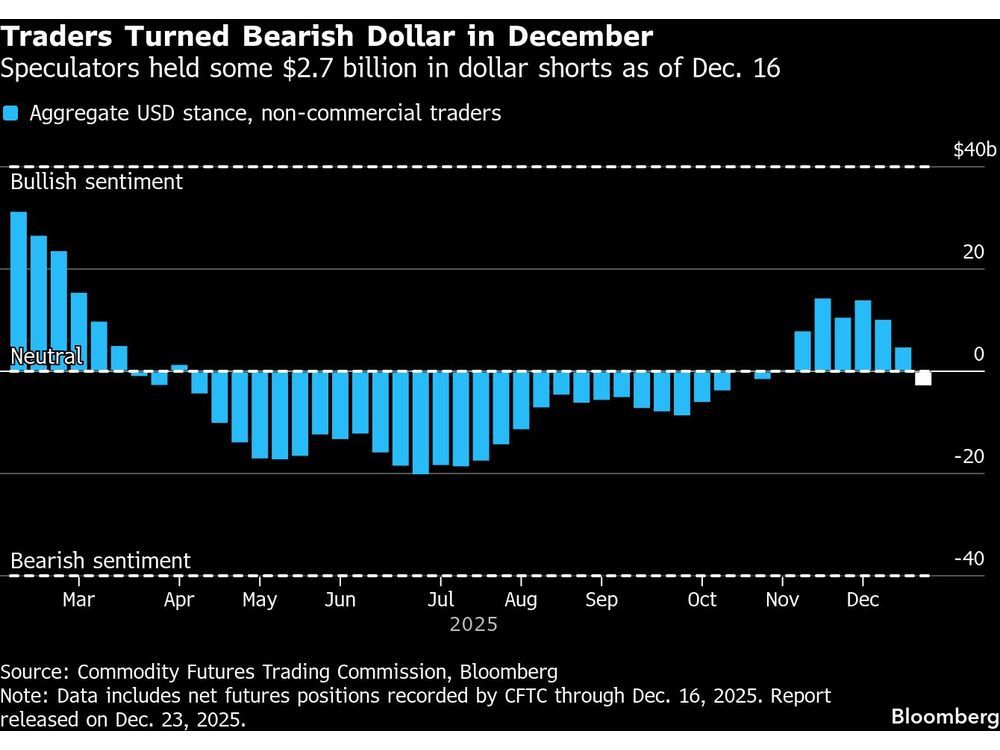
The value of the dollar is set to experience its most significant annual decline since 2017, with a drop of 8.1% recorded in the Bloomberg Dollar Spot Index this year. This downturn coincides with expectations that the incoming chair of the Federal Reserve will implement deeper interest rate cuts. The dollar’s fall has been exacerbated by political maneuvers surrounding the Fed’s leadership, particularly as President Donald Trump seeks to install a more dovish candidate for the role.
Pressure on the dollar intensified following the introduction of tariffs in April, which Trump labeled as “Liberation Day.” This event triggered a wave of investor concerns regarding the U.S. economy, shifting market sentiment towards a more pessimistic outlook. Yusuke Miyairi, a foreign-exchange strategist at Nomura, emphasized the crucial role of the Federal Reserve in the dollar’s trajectory, stating, “The biggest factor for the dollar in the first quarter will be the Fed.”
The upcoming leadership change at the Federal Reserve is particularly important as Jerome Powell’s term is set to end in May 2024. Speculation surrounds potential candidates to succeed him, with Kevin Hassett, the Director of the National Economic Council, frequently cited as a frontrunner. Trump has hinted at having a preferred candidate but has not announced a decision, leading to uncertainty in financial markets.
As discussions about the Federal Reserve’s direction continue, expectations for at least two interest rate cuts next year have further diminished the dollar’s appeal. In contrast, the euro has strengthened against the dollar, buoyed by favorable economic conditions in Europe, including minimal inflation and anticipated increases in defense spending. Meanwhile, markets in Canada, Sweden, and Australia are projecting interest rate hikes, diverging sharply from the U.S. outlook.
Recent data from the Commodity Futures Trading Commission indicated a shift back to pessimism regarding the dollar after a brief period of bullish sentiment. This change reflects the broader concerns over economic stability in the wake of the tariff announcements, which have significantly influenced market dynamics.
The potential Fed chair candidates, including Kevin Warsh, Christopher Waller, and Michelle Bowman, present various implications for the dollar’s future. Andrew Hazlett, a foreign-exchange trader at Monex Inc., noted that while Hassett’s appointment is largely anticipated, alternatives such as Warsh or Waller could lead to a more cautious approach to rate cuts, which would be advantageous for the dollar.
As the financial world watches closely, the outcome of these developments will play a pivotal role in determining the dollar’s trajectory in 2024.

Meta Plans Major Layoffs as AI Costs Surge

Alberta’s Referendum Could Pave Way for U.S. Statehood

Minooka District 201 Plans Enhanced Bilingual Support for Students

Canmore Approves Multiple Development Permits for New Projects

Remembering Bradly Castillo Shearsmith: A Life of Friendship and Joy

BIS Urges Watchdogs to Integrate Synthetic Risk Transfers in Stress Tests

Teva Transforms: Shifting Focus from Generics to Branded Success

Apple Launches AirPods Max 2 with Enhanced Audio Features

Ontario Ends Funding for Seven Supervised Injection Sites

Toyoake City Proposes Daily Two-Hour Smartphone Use Limit

Pedestrian Fatally Injured in Esquimalt Collision on August 14

B.C. Review Reveals Urgent Need for Rare-Disease Drug Reforms

Dark Adventure Game “Bye Sweet Carole” Set for October Release

Konami Revives Iconic Metal Gear Solid Delta Ahead of Release

Victoria’s Pop-Up Shop Shines Light on B.C.’s Wolf Cull

Jimmy Lai’s Defense Challenges Charges Under National Security Law

Snapmaker U1 Color 3D Printer Redefines Speed and Sustainability

Apple Expands Self-Service Repair Program to Canada
-
 Science12 months ago
Toyoake City Proposes Daily Two-Hour Smartphone Use Limit
-
 Top Stories12 months ago
Pedestrian Fatally Injured in Esquimalt Collision on August 14
-
 Health12 months ago
B.C. Review Reveals Urgent Need for Rare-Disease Drug Reforms
-
 Technology12 months ago
Dark Adventure Game “Bye Sweet Carole” Set for October Release
-
 Technology12 months ago
Konami Revives Iconic Metal Gear Solid Delta Ahead of Release
-
 Lifestyle12 months ago
Victoria’s Pop-Up Shop Shines Light on B.C.’s Wolf Cull
-
 World12 months ago
Jimmy Lai’s Defense Challenges Charges Under National Security Law
-
 Technology12 months ago
Snapmaker U1 Color 3D Printer Redefines Speed and Sustainability
-
 Technology12 months ago
Apple Expands Self-Service Repair Program to Canada
-

 Technology12 months ago
AION Folding Knife: Redefining EDC Design with Premium Materials
-

 Technology12 months ago
Solve Today’s Wordle Challenge: Hints and Answer for August 19
-

 Business12 months ago
Gordon Murray Automotive Unveils S1 LM and Le Mans GTR at Monterey