
Business
Europe’s Auto Industry Faces Challenges from Chinese EV Expansion

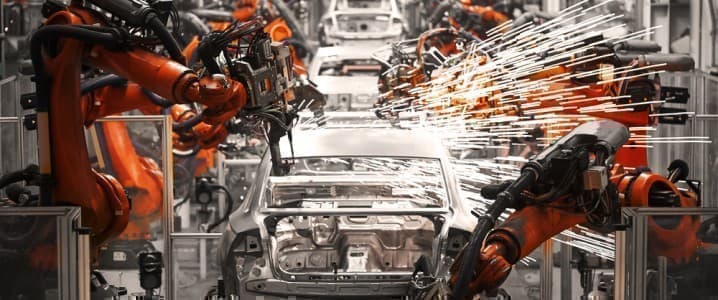
Europe’s automotive sector is confronting significant challenges due to the rapid influx of high-quality electric vehicles (EVs) from China. The industry, which has long been a cornerstone of European manufacturing, is under pressure as Chinese brands flood the market with competitive pricing. This surge has prompted some industry veterans, such as Tomas, a former senior manager with an Italian multinational, to abandon the field. “I think it’s doomed,” he stated in an interview with RFE/RL. “The industry is doomed.”
Chinese EVs Transforming the Market
Chinese vehicles, with prices as low as 10,290 euros ($12,141), have become increasingly popular in Europe, especially post-COVID-19 pandemic. Despite the European Union’s tariffs introduced in 2024, which can reach up to 35 percent on certain Chinese EVs, sales of these vehicles nearly doubled from 2024 to 2025. Over half a million Chinese models were sold in the first nine months of 2025 alone.
BYD, a major Chinese EV manufacturer, reported a staggering year-on-year sales increase of 225 percent in this period, making it the top-selling electric vehicle maker in the EU for several months. Other manufacturers have cleverly circumvented tariffs by exporting combustion engine vehicles and hybrids, which are not subject to the same duties.
The reputation of Chinese auto manufacturers, long marred by perceptions of poor quality and outdated design, has shifted dramatically. Tomas noted that prior to the pandemic, many in the European auto industry dismissed Chinese brands as inferior, predicting they would take decades to catch up. “What happened is basically in five years, they exceeded us,” he explained. “Now their cars are actually amazing.”
Factors Driving Chinese Competitiveness
Several factors have contributed to the competitive pricing of Chinese vehicles. The country’s reliance on inexpensive, predominantly coal-fired energy has historically given it a cost advantage. Additionally, the geopolitical landscape has shifted; following the 2022 Russian invasion of Ukraine, the EU banned steel imports from Russia, while China increased its imports of high-quality metals from that region.
China’s automotive industry has also benefitted from significant economies of scale. By 2023, it had overtaken Japan to become the world’s largest car exporter, producing tens of millions of vehicles annually. Allegations of government subsidies have further complicated the landscape. In 2024, an EU investigation revealed public funding across the entire supply chain for Chinese automakers, although China denies providing such support.
In response to similar concerns, the United States imposed a 100 percent tariff on Chinese electric vehicles in 2024, citing that the US auto industry was being “materially injured” by subsidized Chinese imports.
According to Paul Bennet, managing partner at the UK-based automotive advisory firm Madox Square, the entry of Chinese vehicles into the European market may reflect broader geopolitical strategies. “While the economic benefits are clear, the geopolitical aspects of this strategy shouldn’t be overlooked,” he noted. “It’s likely part of China’s broader efforts to reshape global economic dynamics.”
Future Prospects for Europe’s Auto Industry
The future of Europe’s automotive industry, which employs approximately 13.2 million people and supports millions more in related sectors, is precarious. Bennet warned that the industry now “hangs in the balance.” Under current regulations, vehicles produced in the EU by Chinese manufacturers are exempt from the same tariffs as those imported from outside the bloc, a loophole that Chinese companies are quickly exploiting.
For example, BYD is establishing a $4.6 billion factory in Hungary, while a joint venture between Spain’s Ebro-EV Motors and China’s Chery brand is already producing cars in Barcelona. Further manufacturing sites are being discussed in Italy and Poland, as well as in Serbia, which has become attractive due to its free trade agreements and potential future EU membership.
As European car brands face shrinking demand both at home and in China, industry advocates are calling for urgent action. Bennet has suggested that car manufacturers should push the European Commission to mandate joint ventures with majority European ownership for any Chinese manufacturing operations established within the EU. Others have proposed mutual market access agreements between the EU and the United States to counter Chinese competition.
Negotiations have also resumed between Beijing and Brussels regarding a minimum price floor for Chinese EVs in the European market, aimed at protecting local automakers from being undercut. Tomas emphasizes that if current trends persist, Europe’s industrial base could face dire consequences. He expressed concerns about the potential loss of industrial self-sufficiency and expertise, resulting in significant security risks in the future.
As he reflects on the situation, Tomas admits he struggles to envision a political solution to the challenges facing Europe’s automakers. “I hope I am wrong, I really hope I am wrong,” he said, highlighting the deep uncertainty that looms over the industry.

Meta Plans Major Layoffs as AI Costs Surge

Alberta’s Referendum Could Pave Way for U.S. Statehood

Minooka District 201 Plans Enhanced Bilingual Support for Students

Canmore Approves Multiple Development Permits for New Projects

Remembering Bradly Castillo Shearsmith: A Life of Friendship and Joy

BIS Urges Watchdogs to Integrate Synthetic Risk Transfers in Stress Tests

Teva Transforms: Shifting Focus from Generics to Branded Success

Apple Launches AirPods Max 2 with Enhanced Audio Features

Ontario Ends Funding for Seven Supervised Injection Sites

Toyoake City Proposes Daily Two-Hour Smartphone Use Limit

Pedestrian Fatally Injured in Esquimalt Collision on August 14

B.C. Review Reveals Urgent Need for Rare-Disease Drug Reforms

Dark Adventure Game “Bye Sweet Carole” Set for October Release

Konami Revives Iconic Metal Gear Solid Delta Ahead of Release

Victoria’s Pop-Up Shop Shines Light on B.C.’s Wolf Cull

Jimmy Lai’s Defense Challenges Charges Under National Security Law

Snapmaker U1 Color 3D Printer Redefines Speed and Sustainability

Apple Expands Self-Service Repair Program to Canada
-
 Science12 months ago
Toyoake City Proposes Daily Two-Hour Smartphone Use Limit
-
 Top Stories12 months ago
Pedestrian Fatally Injured in Esquimalt Collision on August 14
-
 Health12 months ago
B.C. Review Reveals Urgent Need for Rare-Disease Drug Reforms
-
 Technology12 months ago
Dark Adventure Game “Bye Sweet Carole” Set for October Release
-
 Technology12 months ago
Konami Revives Iconic Metal Gear Solid Delta Ahead of Release
-
 Lifestyle12 months ago
Victoria’s Pop-Up Shop Shines Light on B.C.’s Wolf Cull
-
 World12 months ago
Jimmy Lai’s Defense Challenges Charges Under National Security Law
-
 Technology12 months ago
Snapmaker U1 Color 3D Printer Redefines Speed and Sustainability
-
 Technology12 months ago
Apple Expands Self-Service Repair Program to Canada
-

 Technology12 months ago
AION Folding Knife: Redefining EDC Design with Premium Materials
-

 Technology12 months ago
Solve Today’s Wordle Challenge: Hints and Answer for August 19
-

 Business12 months ago
Gordon Murray Automotive Unveils S1 LM and Le Mans GTR at Monterey