
Business
Southeast Asia Pushes for Renewables Amid Fossil Fuel Reliance

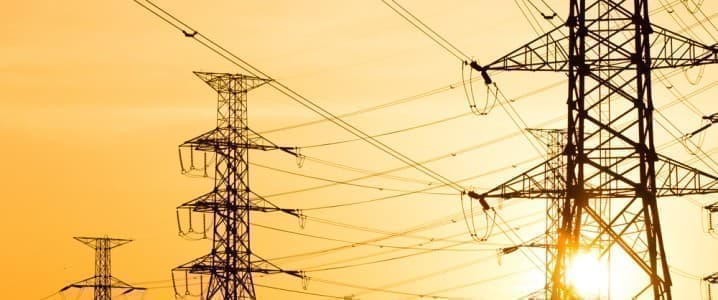
Countries in Southeast Asia are at a critical juncture as they seek to transition from fossil fuels to renewable energy sources. Despite heavy reliance on coal and gas, nations such as Vietnam, the Philippines, and Indonesia are implementing green transition strategies. These initiatives aim to decarbonise their economies and reduce emissions in response to growing global environmental concerns.
With these three nations contributing nearly 60 percent of the Association of Southeast Asian Nations’ (ASEAN) power demand and emissions, their efforts are vital. In 2024 alone, they attracted $4.6 billion in clean energy investment, driven by strong policy frameworks and market reforms designed to promote renewable energy.
Investments Fueling Renewable Energy Growth
Significantly, Brookfield Asset Management, a Canadian multinational, has announced plans to invest in renewable energy projects across all three countries. The firm recently acquired Alba Renewables, which boasts a portfolio of 1.8 GW in wind, solar, and battery storage assets, primarily located in the Philippines and Thailand. Daniel Cheng, head of renewable power and transition for Brookfield Asia-Pacific, underscored the region’s potential, stating, “Southeast Asia is at the forefront of the global energy transition.” He highlighted the pressing need for both capital and experienced operators to scale up renewable energy production.
The Philippines has made notable strides in its energy transition, with 21 percent of its electricity production coming from low-carbon sources in 2024. The country’s largest source of clean electricity is geothermal energy, which contributes 8.3 percent, followed closely by hydropower at 8 percent. Despite a tripling of power sector emissions over the past two decades due to increased reliance on coal, the government aims for a target of 35 percent renewable electricity by 2030.
To bolster this effort, the Philippines is on track to deploy 15 GW of clean energy capacity by 2030, with plans to achieve 50 percent renewable energy generation by 2040. Recent agreements, such as a $15 billion partnership with UAE-based Masdar, will advance solar and wind projects, alongside battery storage initiatives.
Indonesia and Vietnam Set Ambitious Goals
In Indonesia, approximately 20 percent of electricity generation is derived from renewable sources, predominantly hydropower, which accounts for about 8 percent. However, wind and solar energy contribute a mere 0.2 percent. The country’s electricity demand has surged over the last two decades, prompting a shift toward coal and gas to meet this need. In 2023, Indonesia secured $20 billion in funding through the Just Energy Transition Partnership (JETP) to support its renewable energy deployment. The draft plan aims to achieve at least 44 percent renewable power generation by 2030, a significant increase from 12 percent in 2022.
Vietnam has emerged as a leader in renewable energy, producing 44 percent of its electricity from low-carbon sources in 2024, surpassing the global average of 41 percent. Hydropower remains the dominant source, providing 31 percent of its electricity, while solar and wind power contribute 13 percent. The Vietnamese government has set an ambitious target to achieve a renewable energy mix of 47 percent by 2030.
Between 2018 and 2023, Vietnam successfully increased its solar and wind capacity from almost zero to over 21 GW, largely due to government feed-in tariffs that attracted substantial private investment. Notably, 58 percent of this funding came from domestic sources, with 27 percent through domestic-foreign joint ventures, highlighting the potential for rapid growth in the renewable sector.
As Vietnam, the Philippines, and Indonesia work to reduce their reliance on coal, their commitment to fostering strong renewable energy industries signals a pivotal shift towards sustainable energy solutions. The ongoing efforts, particularly in Vietnam, demonstrate the viability of rapid development supported by favorable government policies and investment strategies. The region’s transition is not only crucial for its environmental future but also for its economic resilience in an increasingly energy-conscious global landscape.

Meta Plans Major Layoffs as AI Costs Surge

Alberta’s Referendum Could Pave Way for U.S. Statehood

Minooka District 201 Plans Enhanced Bilingual Support for Students

Canmore Approves Multiple Development Permits for New Projects

Remembering Bradly Castillo Shearsmith: A Life of Friendship and Joy

BIS Urges Watchdogs to Integrate Synthetic Risk Transfers in Stress Tests

Teva Transforms: Shifting Focus from Generics to Branded Success

Apple Launches AirPods Max 2 with Enhanced Audio Features

Ontario Ends Funding for Seven Supervised Injection Sites

Toyoake City Proposes Daily Two-Hour Smartphone Use Limit

Pedestrian Fatally Injured in Esquimalt Collision on August 14

B.C. Review Reveals Urgent Need for Rare-Disease Drug Reforms

Dark Adventure Game “Bye Sweet Carole” Set for October Release

Konami Revives Iconic Metal Gear Solid Delta Ahead of Release

Victoria’s Pop-Up Shop Shines Light on B.C.’s Wolf Cull

Jimmy Lai’s Defense Challenges Charges Under National Security Law

Snapmaker U1 Color 3D Printer Redefines Speed and Sustainability

Apple Expands Self-Service Repair Program to Canada
-
 Science12 months ago
Toyoake City Proposes Daily Two-Hour Smartphone Use Limit
-
 Top Stories12 months ago
Pedestrian Fatally Injured in Esquimalt Collision on August 14
-
 Health12 months ago
B.C. Review Reveals Urgent Need for Rare-Disease Drug Reforms
-
 Technology12 months ago
Dark Adventure Game “Bye Sweet Carole” Set for October Release
-
 Technology12 months ago
Konami Revives Iconic Metal Gear Solid Delta Ahead of Release
-
 Lifestyle12 months ago
Victoria’s Pop-Up Shop Shines Light on B.C.’s Wolf Cull
-
 World12 months ago
Jimmy Lai’s Defense Challenges Charges Under National Security Law
-
 Technology12 months ago
Snapmaker U1 Color 3D Printer Redefines Speed and Sustainability
-
 Technology12 months ago
Apple Expands Self-Service Repair Program to Canada
-

 Technology12 months ago
AION Folding Knife: Redefining EDC Design with Premium Materials
-

 Technology12 months ago
Solve Today’s Wordle Challenge: Hints and Answer for August 19
-

 Business12 months ago
Gordon Murray Automotive Unveils S1 LM and Le Mans GTR at Monterey