
Business
Trump’s Economic Claims Face Growing Doubts Among Voters

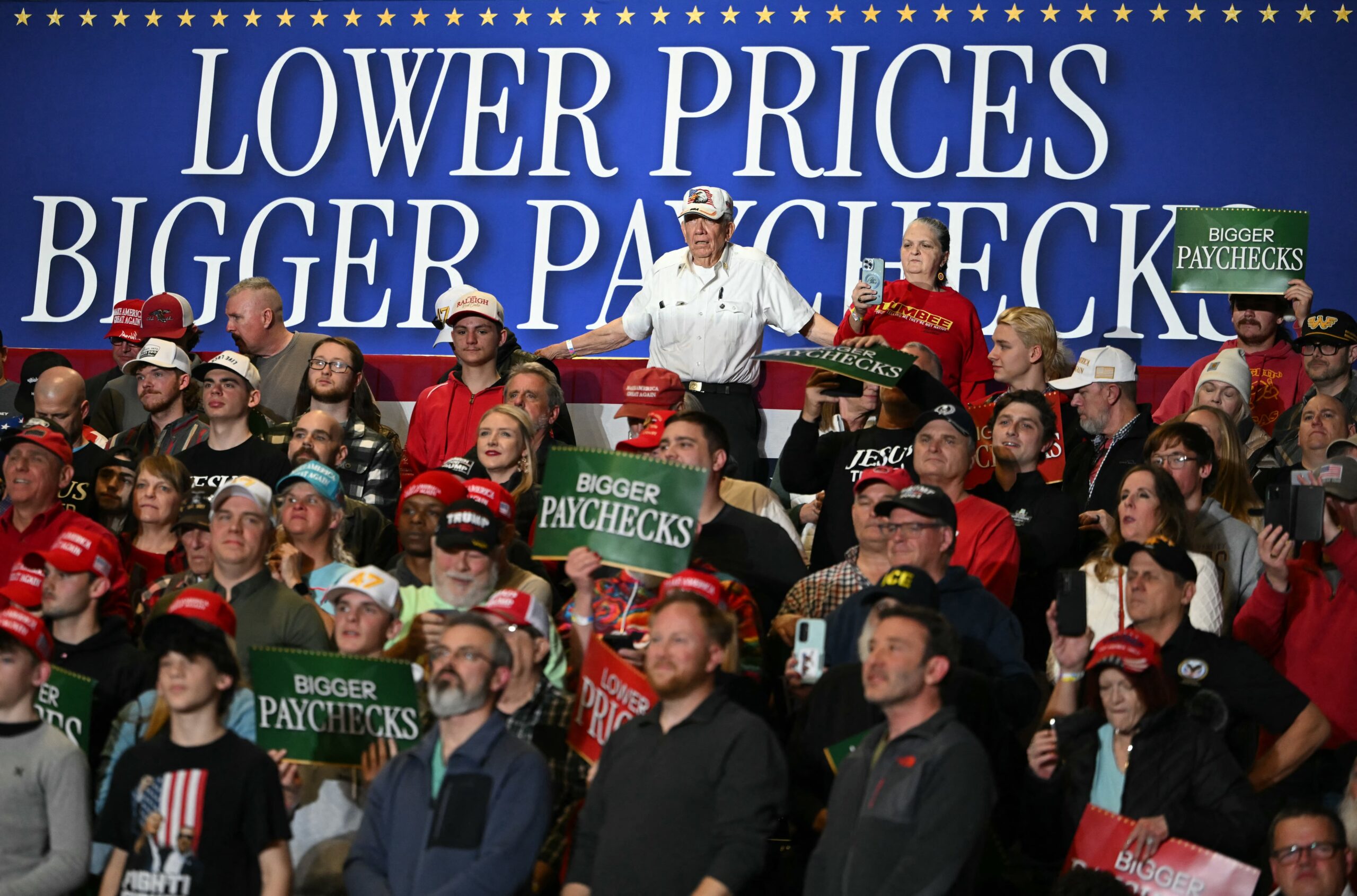
U.S. President Donald Trump addressed supporters at a rally in Rocky Mount, North Carolina, on December 19, where he touted the state of the economy. Despite his optimistic rhetoric that the economy was on the verge of unprecedented growth, evidence suggests that many of his supporters are beginning to question these claims.
Trump’s comments included assertions that prices were dropping and wages were rising, yet recent polling indicates a disconnect between his statements and the realities faced by ordinary Americans. Wage growth has slowed, while inflation continues to impact daily expenses, from groceries to healthcare. Many voters are finding it increasingly difficult to reconcile the president’s claims with their everyday experiences, leading to growing skepticism within his base.
The recent report on third-quarter Gross Domestic Product (GDP) showed positive growth, but it also revealed that consumer spending was supported largely by credit rather than increased income. This trend raises concerns about financial stress among households. According to the Federal Reserve, estimates suggest that the economy is already experiencing a slowdown, coinciding with a weaker job market.
While Trump’s administration is banking on fiscal and monetary stimulus, as well as advancements in artificial intelligence (AI), to drive economic recovery by 2026, many analysts on Wall Street remain doubtful. The anticipated benefits from tax cuts and interest rate reductions may not translate into the economic boost the president expects. The reality is that tax relief tends to favor wealthier households, which could limit its impact on overall consumer spending.
Moreover, rising costs associated with medical insurance, student loans, and reduced assistance programs could offset any positive effects for lower-income individuals who are more likely to spend additional income. The potential for AI to enhance economic growth remains uncertain, with little evidence to date supporting a significant impact on productivity.
Despite the optimistic outlook presented by Trump, his approach mirrors the pitfalls faced by previous administrations when responding to economic challenges with aggregate statistics. The president’s reliance on GDP growth and investment figures fails to resonate with voters who prioritize their immediate financial circumstances.
As economic conditions worsen for lower-income Americans, the political landscape is shifting. Trump’s voter base consists of two primary groups: traditional Republicans and the swing voters who were drawn to his message of addressing their concerns. The latter group appears to be losing faith, which could impact voter turnout in the upcoming mid-term elections.
Recent election results indicate that Democrats have made gains across various regions, suggesting a growing discontent with the current administration. Should the economy not rebound as hoped, Trump’s party could face significant challenges in the upcoming elections.
In summary, while Trump remains confident in his economic narrative, the disconnect between his rhetoric and the lived experiences of voters could have serious ramifications for his administration and the Republican Party in the near future.

Meta Plans Major Layoffs as AI Costs Surge

Alberta’s Referendum Could Pave Way for U.S. Statehood

Minooka District 201 Plans Enhanced Bilingual Support for Students

Canmore Approves Multiple Development Permits for New Projects

Remembering Bradly Castillo Shearsmith: A Life of Friendship and Joy

BIS Urges Watchdogs to Integrate Synthetic Risk Transfers in Stress Tests

Teva Transforms: Shifting Focus from Generics to Branded Success

Apple Launches AirPods Max 2 with Enhanced Audio Features

Ontario Ends Funding for Seven Supervised Injection Sites

Toyoake City Proposes Daily Two-Hour Smartphone Use Limit

Pedestrian Fatally Injured in Esquimalt Collision on August 14

B.C. Review Reveals Urgent Need for Rare-Disease Drug Reforms

Dark Adventure Game “Bye Sweet Carole” Set for October Release

Konami Revives Iconic Metal Gear Solid Delta Ahead of Release

Victoria’s Pop-Up Shop Shines Light on B.C.’s Wolf Cull

Jimmy Lai’s Defense Challenges Charges Under National Security Law

Snapmaker U1 Color 3D Printer Redefines Speed and Sustainability

Apple Expands Self-Service Repair Program to Canada
-
 Science12 months ago
Toyoake City Proposes Daily Two-Hour Smartphone Use Limit
-
 Top Stories12 months ago
Pedestrian Fatally Injured in Esquimalt Collision on August 14
-
 Health12 months ago
B.C. Review Reveals Urgent Need for Rare-Disease Drug Reforms
-
 Technology12 months ago
Dark Adventure Game “Bye Sweet Carole” Set for October Release
-
 Technology12 months ago
Konami Revives Iconic Metal Gear Solid Delta Ahead of Release
-
 Lifestyle12 months ago
Victoria’s Pop-Up Shop Shines Light on B.C.’s Wolf Cull
-
 World12 months ago
Jimmy Lai’s Defense Challenges Charges Under National Security Law
-
 Technology12 months ago
Snapmaker U1 Color 3D Printer Redefines Speed and Sustainability
-
 Technology12 months ago
Apple Expands Self-Service Repair Program to Canada
-

 Technology12 months ago
AION Folding Knife: Redefining EDC Design with Premium Materials
-

 Technology12 months ago
Solve Today’s Wordle Challenge: Hints and Answer for August 19
-

 Business12 months ago
Gordon Murray Automotive Unveils S1 LM and Le Mans GTR at Monterey