
Education
Connecticut Education Department Rejects Homeschool Notification Bill

Connecticut’s Department of Education has announced its inability to comply with a proposed bill requiring notification to the state’s child welfare agency when children are withdrawn from public schools for homeschooling. This decision was made public in written testimony submitted on March 12, 2024, in response to concerns raised after tragic incidents involving children who were reportedly homeschooled.
Senate Bill 6, an omnibus piece of legislation, aims to address safety issues highlighted by the death of Jacqueline “Mimi” Torres-García, an 11-year-old whose body was discovered in a plastic container in New Britain. The bill also responds to the case of a Waterbury man who allegedly faced years of confinement beginning in his childhood, with parents claiming they were homeschooling the children involved.
The proposed legislation mandates that local school districts inform the Connecticut Department of Education when students are withdrawn from public schools. In turn, the education department would notify the Department of Children and Families (DCF), which would check for any open cases involving the family.
Charlene Russell-Tucker, the state’s Education Commissioner, stated that compliance with this bill would violate the federal Family Educational Rights and Privacy Act (FERPA). Russell-Tucker emphasized that the law restricts the disclosure of students’ information without parental permission, except for purposes of evaluation and research, not individual case management. She cautioned that any breach of federal law could jeopardize millions of dollars in federal educational funding.
In an interview, Ceci Maher, the co-chair of the committee handling the bill, disagreed with Russell-Tucker’s interpretation of FERPA. Maher highlighted a provision in the federal law that allows for considerations regarding the welfare of the child, suggesting that Senate Bill 6 could be enforceable under this framework.
Interim DCF Commissioner Susan Hamilton clarified that the requirement for the education department to notify DCF is not a direct proposal from her agency. Hamilton explained that the intention is to simply check for open cases and not to issue reports of alleged abuse.
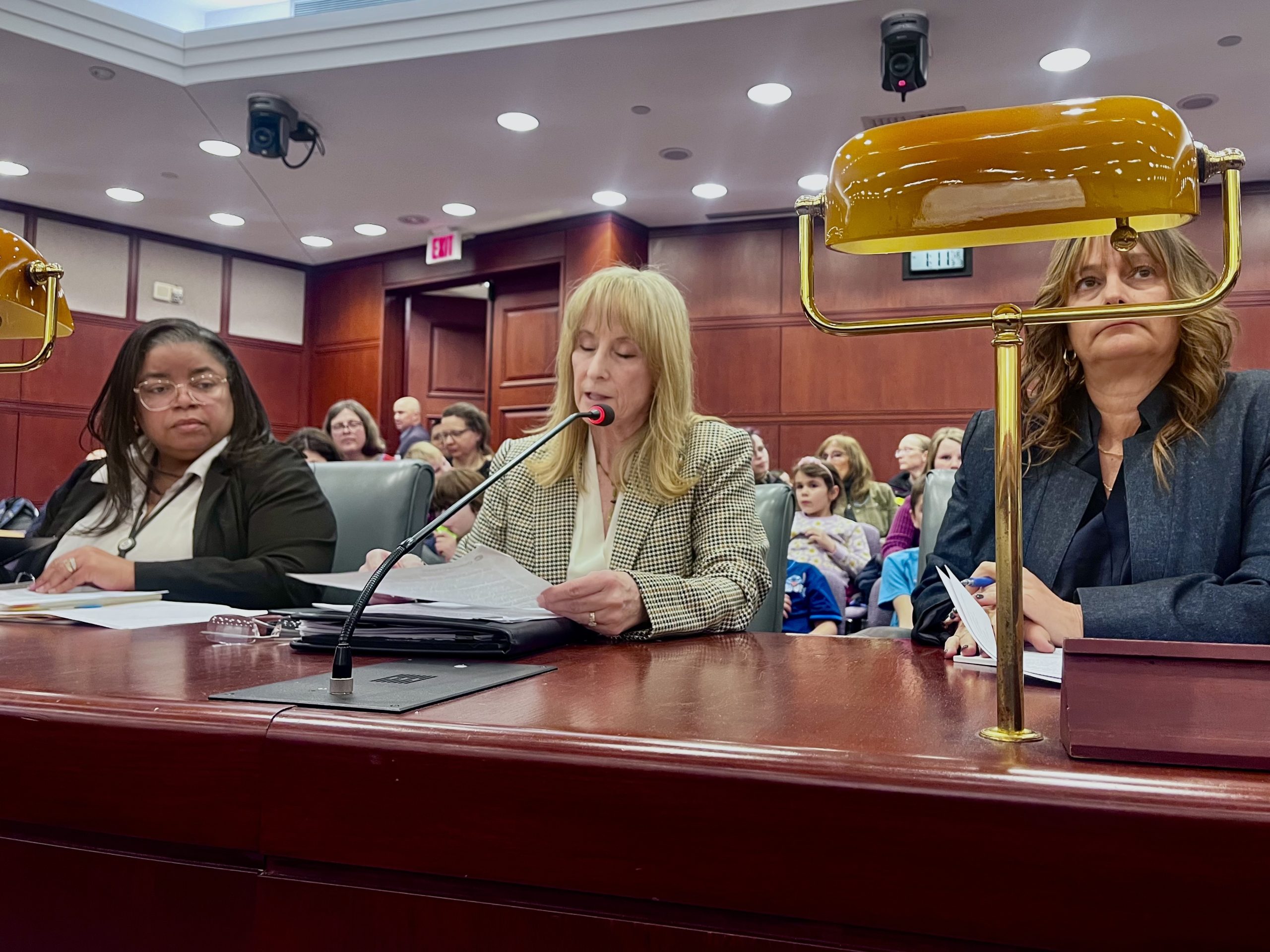
The topic of homeschooling regulations has gained significant attention in recent months, with many advocates voicing concerns over potential infringement of parental rights. On the day of the public hearing, dozens of homeschoolers were present but were sent home due to inclement weather. The committee began its session in person, during which Hamilton provided her testimony, before transitioning to a virtual format.
Opposition to the bill’s notification requirement has been vocal. Gale Mastrofrancesco, a committee member, cautioned that it could lead to a “witch hunt” against homeschooling families. Attorney Deborah Stevenson, representing the National Home Education Legal Defense, argued in her testimony that the notification requirement undermines the presumption of innocence for parents.
On the other hand, the Office of the Child Advocate expressed support for the measure. Child Advocate Christina Ghio noted that a recent report indicated Connecticut has some of the most lenient homeschooling regulations in the United States. Ghio asserted that the bill would provide necessary oversight to ensure that vulnerable children are monitored when they leave the public school system.
Maher reiterated her intent for the bill to be narrowly focused. She emphasized the need for protective measures to prevent situations like that of Mimi Torres-García, where homeschooling could be misused as a cover for harm.
In addition to the notification provision, Senate Bill 6 also includes measures aimed at increasing transparency and oversight within DCF, providing free school breakfasts and lunches, and implementing a child tax credit.
As discussions surrounding homeschooling and child welfare continue, the debate reflects broader concerns about safeguarding children while balancing the rights of families. The fate of Senate Bill 6 now rests with lawmakers as they weigh the implications of such legislation on both child safety and parental autonomy.

Meta Plans Major Layoffs as AI Costs Surge

Alberta’s Referendum Could Pave Way for U.S. Statehood

Minooka District 201 Plans Enhanced Bilingual Support for Students

Canmore Approves Multiple Development Permits for New Projects

Remembering Bradly Castillo Shearsmith: A Life of Friendship and Joy

BIS Urges Watchdogs to Integrate Synthetic Risk Transfers in Stress Tests

Teva Transforms: Shifting Focus from Generics to Branded Success

Apple Launches AirPods Max 2 with Enhanced Audio Features

Ontario Ends Funding for Seven Supervised Injection Sites

Toyoake City Proposes Daily Two-Hour Smartphone Use Limit

Pedestrian Fatally Injured in Esquimalt Collision on August 14

B.C. Review Reveals Urgent Need for Rare-Disease Drug Reforms

Dark Adventure Game “Bye Sweet Carole” Set for October Release

Konami Revives Iconic Metal Gear Solid Delta Ahead of Release

Victoria’s Pop-Up Shop Shines Light on B.C.’s Wolf Cull

Jimmy Lai’s Defense Challenges Charges Under National Security Law

Snapmaker U1 Color 3D Printer Redefines Speed and Sustainability

Apple Expands Self-Service Repair Program to Canada
-
 Science12 months ago
Toyoake City Proposes Daily Two-Hour Smartphone Use Limit
-
 Top Stories1 year ago
Pedestrian Fatally Injured in Esquimalt Collision on August 14
-
 Health1 year ago
B.C. Review Reveals Urgent Need for Rare-Disease Drug Reforms
-
 Technology12 months ago
Dark Adventure Game “Bye Sweet Carole” Set for October Release
-
 Technology12 months ago
Konami Revives Iconic Metal Gear Solid Delta Ahead of Release
-
 Lifestyle1 year ago
Victoria’s Pop-Up Shop Shines Light on B.C.’s Wolf Cull
-
 World12 months ago
Jimmy Lai’s Defense Challenges Charges Under National Security Law
-
 Technology12 months ago
Snapmaker U1 Color 3D Printer Redefines Speed and Sustainability
-
 Technology12 months ago
Apple Expands Self-Service Repair Program to Canada
-

 Technology12 months ago
AION Folding Knife: Redefining EDC Design with Premium Materials
-

 Technology1 year ago
Solve Today’s Wordle Challenge: Hints and Answer for August 19
-

 Business1 year ago
Gordon Murray Automotive Unveils S1 LM and Le Mans GTR at Monterey