
Education
Edmonton Faces Chronic Absenteeism Crisis in Schools

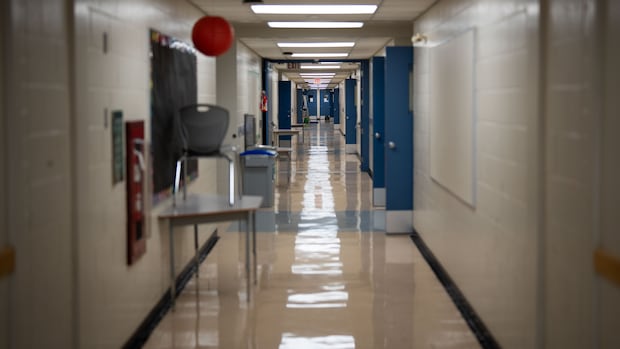
Significant numbers of students in Edmonton are missing school regularly, raising alarms among education experts. Data obtained by CBC News reveals that nearly one in three public school students are chronically absent, indicating a worrying trend that has persisted since the COVID-19 pandemic. Chronic absenteeism is defined as missing at least 10 percent of the academic year, which translates to approximately 18 days of school.
The issue is particularly pronounced in Edmonton’s public schools, where over 39,600 students were identified as chronically absent last year. This figure represents about one-third of the total enrollment in the public school system, a dramatic increase from around 14,000 students in the 2019-20 academic year, the first affected by the pandemic. This rise in absenteeism comes despite a 14 percent increase in overall enrollment during the same period.
Worsening Trends in Absenteeism
The trends observed in Edmonton are echoed in Catholic schools, where chronic absenteeism has also surged. Data indicates that while attendance in elementary schools remains relatively stable, junior high and high school students have exhibited a significant rise in chronic absenteeism, increasing by approximately 85 percent since the 2018-19 school year.
Jacqueline Leighton, a professor of educational psychology at the University of Alberta, expressed deep concern regarding these figures. “As a parent, as a teacher, I would be very concerned,” she stated. Leighton noted that chronic absenteeism could signal deeper issues in students’ lives, potentially leading to long-term academic challenges.
The data collected by CBC News tracked various categories of absences, including chronic absenteeism, excused absences, illness, and unexcused absences. The public school data was limited to records from the 2019-20 academic year onward because of difficulties in data collection during the previous year.
Impact of Mental Health and Environment
Mental health has emerged as a significant factor in school attendance, with experts emphasizing that students who miss school frequently may struggle with social and emotional skills. The COVID-19 pandemic has exacerbated these challenges, as many students have faced isolation and anxiety during remote learning periods.
Education policies in Alberta mandate that children aged six to 16 must attend school, yet various factors contribute to absenteeism. These range from health issues and transportation difficulties to anxiety, bullying, and even family dynamics. Leighton pointed out that younger students, in particular, may be influenced by family-related reasons, noting that almost two in five students in pre-K to Grade 3 missed at least 10 percent of the school year.
The Edmonton Public Schools Division acknowledged the importance of attendance, although they did not provide direct commentary for this report. A spokesperson emphasized that various strategies are in place to promote attendance, tailored to individual student needs.
School authorities are legally required to make “reasonable efforts” to ensure students attend class. Strategies may include regular check-ins, setting attendance goals, and collaborating with external resources to address attendance barriers effectively.
In Catholic schools, the superintendent of learning services, Ryan Feehan, remarked on the societal shift in attitudes towards health, noting a growing understanding of the importance of staying home when unwell. This change, influenced by the pandemic, has led to increased illness-related absences, particularly among high school students.
To tackle chronic absenteeism, both public and Catholic school boards are focusing on engaging with students and families to identify specific challenges. In some cases, collaboration with Alberta’s Office of Student Attendance and Re-engagement may be necessary to address persistent absenteeism.
Both Leighton and Joshua Childs, an associate professor at the University of Texas at Austin, highlighted the significance of strong student-teacher relationships. Such connections can motivate students to attend school, reinforcing the notion that educators play a crucial role in fostering a supportive environment.
As Edmonton and other cities grapple with these attendance challenges, the collective response from school authorities, educators, and communities will be vital in addressing the underlying issues contributing to chronic absenteeism and ensuring students receive the education they deserve.

Meta Plans Major Layoffs as AI Costs Surge

Alberta’s Referendum Could Pave Way for U.S. Statehood

Minooka District 201 Plans Enhanced Bilingual Support for Students

Canmore Approves Multiple Development Permits for New Projects

Remembering Bradly Castillo Shearsmith: A Life of Friendship and Joy

BIS Urges Watchdogs to Integrate Synthetic Risk Transfers in Stress Tests

Teva Transforms: Shifting Focus from Generics to Branded Success

Apple Launches AirPods Max 2 with Enhanced Audio Features

Ontario Ends Funding for Seven Supervised Injection Sites

Toyoake City Proposes Daily Two-Hour Smartphone Use Limit

Pedestrian Fatally Injured in Esquimalt Collision on August 14

B.C. Review Reveals Urgent Need for Rare-Disease Drug Reforms

Dark Adventure Game “Bye Sweet Carole” Set for October Release

Konami Revives Iconic Metal Gear Solid Delta Ahead of Release

Victoria’s Pop-Up Shop Shines Light on B.C.’s Wolf Cull

Jimmy Lai’s Defense Challenges Charges Under National Security Law

Snapmaker U1 Color 3D Printer Redefines Speed and Sustainability

Apple Expands Self-Service Repair Program to Canada
-
 Science11 months ago
Toyoake City Proposes Daily Two-Hour Smartphone Use Limit
-
 Top Stories11 months ago
Pedestrian Fatally Injured in Esquimalt Collision on August 14
-
 Health11 months ago
B.C. Review Reveals Urgent Need for Rare-Disease Drug Reforms
-
 Technology11 months ago
Dark Adventure Game “Bye Sweet Carole” Set for October Release
-
 Technology11 months ago
Konami Revives Iconic Metal Gear Solid Delta Ahead of Release
-
 Lifestyle11 months ago
Victoria’s Pop-Up Shop Shines Light on B.C.’s Wolf Cull
-
 World11 months ago
Jimmy Lai’s Defense Challenges Charges Under National Security Law
-
 Technology11 months ago
Snapmaker U1 Color 3D Printer Redefines Speed and Sustainability
-
 Technology11 months ago
Apple Expands Self-Service Repair Program to Canada
-

 Technology11 months ago
AION Folding Knife: Redefining EDC Design with Premium Materials
-

 Technology11 months ago
Solve Today’s Wordle Challenge: Hints and Answer for August 19
-

 Business11 months ago
Gordon Murray Automotive Unveils S1 LM and Le Mans GTR at Monterey