
Education
Edmonton Public Schools Report Highlights Declines and Challenges

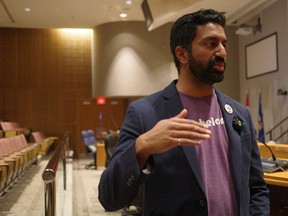
A recent report on educational outcomes at Edmonton Public Schools has revealed significant declines in perceptions of education quality, access to support services, and safe learning environments. During a board meeting on March 15, 2024, trustees reviewed the division’s annual education results report, which indicated a drop of between 1.4 and 1.7 points in these areas compared to the previous three-year averages. These findings align with broader trends observed across the province.
School boards are mandated to compile and submit an annual results report detailing various performance metrics, including provincial achievement tests and quality measures derived from surveys. Trustee Julie Kusiek emphasized the need for caution in interpreting the data this year. She noted that Alberta Education had issued ten cautions regarding the reliability of the results due to various factors, including the impact of COVID-19, shifts in funding, changes to diploma and Provincial Achievement Tests (PAT), the introduction of new curricula, and the effects of wildfires.
The caution notes, which appear at the beginning of the report, highlight essential context that may influence the reported outcomes. Additional caveats throughout the document also address challenges, such as job action by support workers affecting access to services. Notably, changes in identifying students for English as an Additional Language (EAL) programs led to a significant reduction in the number of students recorded, subsequently impacting performance data.
Provincial achievement test results for EAL students showed a marked decline, with a 10-point difference in acceptable grades for the Grade 9 PAT compared to past averages. Furthermore, the three-year high school completion rate for EAL students fell by nearly 15.4 points. Metrics from the annual assurance survey, which gauges perceptions of education quality among parents, teachers, and students, also faced limitations. A decrease of nearly 20 percent in family participation was attributed to changes mandated by the province in the survey’s administration.
Despite the cautious interpretation of results, Saadiq Sumar, board chairman, highlighted a decline in test scores for last year’s junior high cohort. He noted slight improvements in literacy test results for students in grades 4 to 6 but acknowledged that junior high students faced challenges. “The timing of the pandemic has potentially impacted this particular group,” Sumar remarked. He described the past few years as “volatile,” insisting that the narrative should not rely solely on specific metrics but rather reflect ongoing improvement and growth.
As of last year, Edmonton Public Schools reported over 120,000 students, signifying a growth of 9.4 percent over three years. Among these students, more than 28,000 are classified as EAL, representing a 10 percent increase during the same period. The number of Indigenous students remained stable, while the population requiring special education services surged past 16,000, a rise of nearly 24 percent.
Amidst the challenges, Sumar pointed to successes within the division, particularly the introduction of CARE classrooms in 2023. These classrooms focus on early intervention for students in grades 4 to 6, emphasizing mental health and well-being. Last year’s results indicated high satisfaction levels, although many cohorts faced additional students on waiting lists.
At the meeting, Philip Ney, a guest speaker from Inclusion Alberta, addressed the report’s shortcomings regarding data on the use of seclusion rooms and restraints. He noted that while the board had made progress in reducing these practices, the latest report provided less detailed information than previous iterations. “Previous reports broke down seclusion and restraint usage by month, but now we see only the annual total,” Ney explained.
Trustee Sarah Doll later inquired about ongoing efforts to further limit the use of seclusion in schools. Superintendent Ron Thompson emphasized that reducing the use of seclusion rooms requires time and research, reiterating that seclusion should only be a last resort in classrooms. “Seclusion is used only when all other strategies have failed, and it is essential for ensuring safety,” he stated.
The board approved the annual results report during the meeting, with a final version scheduled for submission to Alberta Education by the end of the week. When asked about his hopes for the ministry’s reception of the results, Sumar expressed a desire for the ministry to consider the potential for growth when adequately funded and supported. “A well-funded public education system will reflect the positive trends we see in our annual results report,” he concluded.

Meta Plans Major Layoffs as AI Costs Surge

Alberta’s Referendum Could Pave Way for U.S. Statehood

Minooka District 201 Plans Enhanced Bilingual Support for Students

Canmore Approves Multiple Development Permits for New Projects

Remembering Bradly Castillo Shearsmith: A Life of Friendship and Joy

BIS Urges Watchdogs to Integrate Synthetic Risk Transfers in Stress Tests

Teva Transforms: Shifting Focus from Generics to Branded Success

Apple Launches AirPods Max 2 with Enhanced Audio Features

Ontario Ends Funding for Seven Supervised Injection Sites

Toyoake City Proposes Daily Two-Hour Smartphone Use Limit

Pedestrian Fatally Injured in Esquimalt Collision on August 14

B.C. Review Reveals Urgent Need for Rare-Disease Drug Reforms

Dark Adventure Game “Bye Sweet Carole” Set for October Release

Konami Revives Iconic Metal Gear Solid Delta Ahead of Release

Victoria’s Pop-Up Shop Shines Light on B.C.’s Wolf Cull

Jimmy Lai’s Defense Challenges Charges Under National Security Law

Snapmaker U1 Color 3D Printer Redefines Speed and Sustainability

Apple Expands Self-Service Repair Program to Canada
-
 Science11 months ago
Toyoake City Proposes Daily Two-Hour Smartphone Use Limit
-
 Top Stories11 months ago
Pedestrian Fatally Injured in Esquimalt Collision on August 14
-
 Health11 months ago
B.C. Review Reveals Urgent Need for Rare-Disease Drug Reforms
-
 Technology11 months ago
Dark Adventure Game “Bye Sweet Carole” Set for October Release
-
 Technology11 months ago
Konami Revives Iconic Metal Gear Solid Delta Ahead of Release
-
 Lifestyle11 months ago
Victoria’s Pop-Up Shop Shines Light on B.C.’s Wolf Cull
-
 World11 months ago
Jimmy Lai’s Defense Challenges Charges Under National Security Law
-
 Technology11 months ago
Snapmaker U1 Color 3D Printer Redefines Speed and Sustainability
-
 Technology11 months ago
Apple Expands Self-Service Repair Program to Canada
-

 Technology11 months ago
AION Folding Knife: Redefining EDC Design with Premium Materials
-

 Technology11 months ago
Solve Today’s Wordle Challenge: Hints and Answer for August 19
-

 Business11 months ago
Gordon Murray Automotive Unveils S1 LM and Le Mans GTR at Monterey