
Education
Illinois Launches Comprehensive Plan to Boost Math Skills

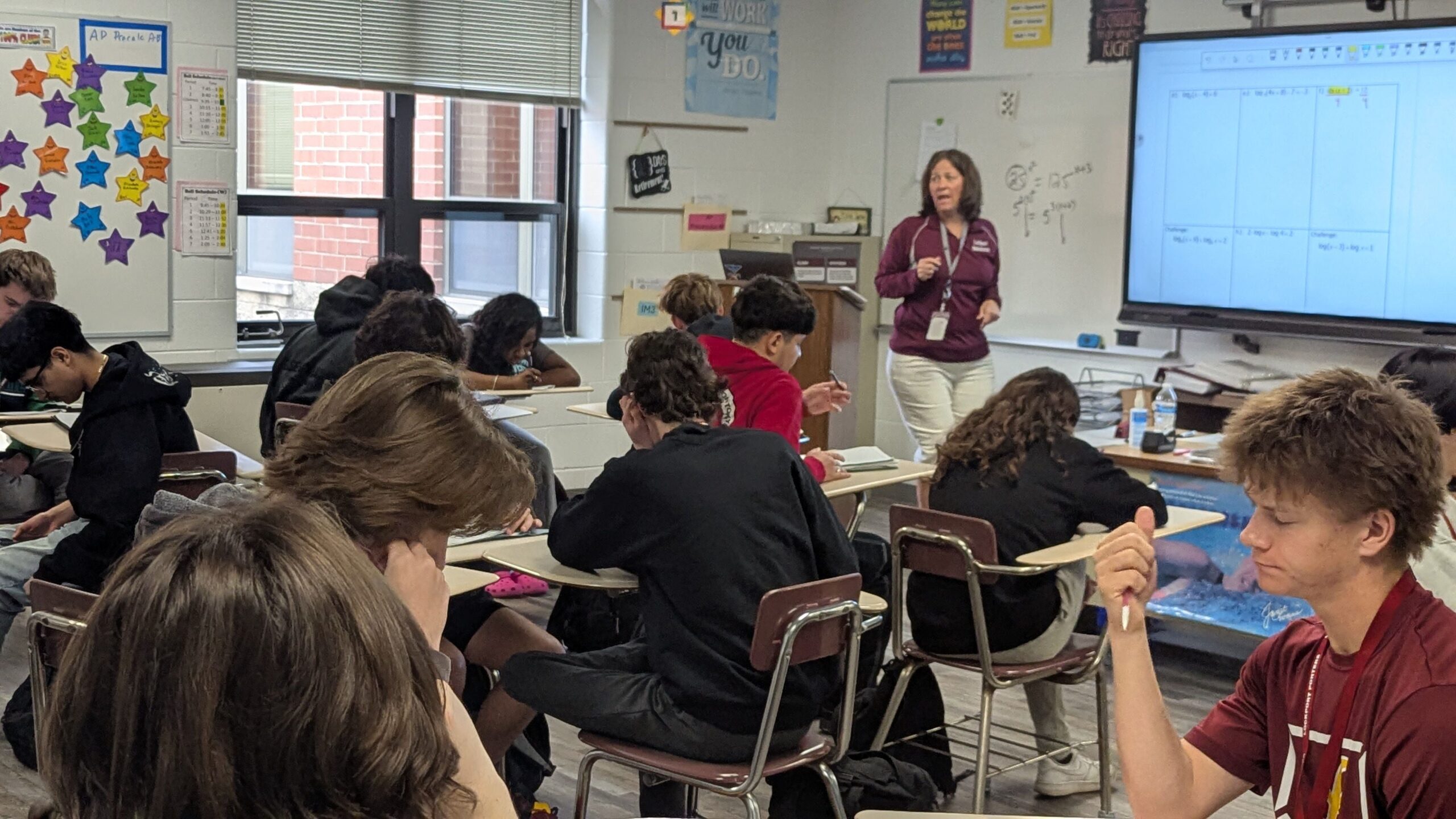
Students in Illinois are facing a persistent challenge in mathematics, with only 38.4% of them achieving proficiency according to the latest 2025 report card. This figure is notably lower than the 52.4% proficiency rate in English language arts. Recognizing this trend, the Illinois State Board of Education (ISBE) is taking decisive action by developing a comprehensive “numeracy plan” aimed at improving math skills statewide.
The issue of math competence is not unique to Illinois. According to the National Assessment of Educational Progress, known as the “nation’s report card,” only 59% of eighth graders across the United States scored at or above the basic level in math in 2024, while 66% achieved the same in reading. Furthermore, international assessments such as the 2023 Trends in International Mathematics and Science Study (TIMSS) reveal that American students lag behind their peers in countries like Singapore, Japan, and Australia.
Addressing the Math Competence Gap
To tackle this pressing issue, ISBE officials are focusing on a holistic approach with the new numeracy plan. This initiative will not only redefine how math is taught in classrooms but also how math teachers are trained and how programs are administered across school districts. Tony Sanders, the State Superintendent of Education, initiated the project, which emphasizes building procedural knowledge from conceptual understanding rather than merely memorizing math facts.
Retired math teacher and current president of the National Council of Teachers of Mathematics, Latrenda Knighten, highlights the cultural perception surrounding math in America. She notes that many individuals openly admit to being “not a math person,” which can negatively influence young learners. Knighten argues for a shift in mindset, encouraging students to question why they struggle with math instead of accepting it as a given.
Meanwhile, education professor Beth MacDonald of Illinois State University attributes the problem partly to teaching methodologies influenced by the No Child Left Behind Act of 2001. This legislation mandated standardized testing, which she believes has led to educators focusing more on curriculum pacing rather than understanding individual student needs.
From Assessment to Action
In developing the numeracy plan, ISBE has conducted a thorough needs assessment, engaging various stakeholders, including teachers, administrators, and regional education superintendents. This collaborative effort aims to identify key components necessary for a successful numeracy framework. A summit meeting held in June helped analyze survey results and form a team to draft the initial plan.
The first draft, released in October, emphasizes that numeracy encompasses more than just arithmetic. It aims to equip students with the ability to understand, interpret, and apply mathematical concepts in diverse real-world contexts. While some feedback from educators indicated that the document may be overly technical, it lays the groundwork for a significant shift in math education.
The plan also acknowledges the financial challenges many school districts face, which often lack adequate resources for effective math instruction. As the ISBE continues refining the plan, a second draft is scheduled for presentation to the state board in February, with a final version expected by June. MacDonald expresses optimism about the initiative but stresses the importance of adequate funding to support comprehensive changes.
The push for a robust numeracy plan in Illinois reflects a growing recognition of the need to elevate math education standards and outcomes, with significant implications for students’ future success in an increasingly math-centric world.

Meta Plans Major Layoffs as AI Costs Surge

Alberta’s Referendum Could Pave Way for U.S. Statehood

Minooka District 201 Plans Enhanced Bilingual Support for Students

Canmore Approves Multiple Development Permits for New Projects

Remembering Bradly Castillo Shearsmith: A Life of Friendship and Joy

BIS Urges Watchdogs to Integrate Synthetic Risk Transfers in Stress Tests

Teva Transforms: Shifting Focus from Generics to Branded Success

Apple Launches AirPods Max 2 with Enhanced Audio Features

Ontario Ends Funding for Seven Supervised Injection Sites

Toyoake City Proposes Daily Two-Hour Smartphone Use Limit

Pedestrian Fatally Injured in Esquimalt Collision on August 14

B.C. Review Reveals Urgent Need for Rare-Disease Drug Reforms

Dark Adventure Game “Bye Sweet Carole” Set for October Release

Konami Revives Iconic Metal Gear Solid Delta Ahead of Release

Victoria’s Pop-Up Shop Shines Light on B.C.’s Wolf Cull

Jimmy Lai’s Defense Challenges Charges Under National Security Law

Snapmaker U1 Color 3D Printer Redefines Speed and Sustainability

Apple Expands Self-Service Repair Program to Canada
-
 Science11 months ago
Toyoake City Proposes Daily Two-Hour Smartphone Use Limit
-
 Top Stories11 months ago
Pedestrian Fatally Injured in Esquimalt Collision on August 14
-
 Health11 months ago
B.C. Review Reveals Urgent Need for Rare-Disease Drug Reforms
-
 Technology11 months ago
Dark Adventure Game “Bye Sweet Carole” Set for October Release
-
 Technology11 months ago
Konami Revives Iconic Metal Gear Solid Delta Ahead of Release
-
 Lifestyle11 months ago
Victoria’s Pop-Up Shop Shines Light on B.C.’s Wolf Cull
-
 World11 months ago
Jimmy Lai’s Defense Challenges Charges Under National Security Law
-
 Technology11 months ago
Snapmaker U1 Color 3D Printer Redefines Speed and Sustainability
-
 Technology11 months ago
Apple Expands Self-Service Repair Program to Canada
-

 Technology11 months ago
AION Folding Knife: Redefining EDC Design with Premium Materials
-

 Technology11 months ago
Solve Today’s Wordle Challenge: Hints and Answer for August 19
-

 Business11 months ago
Gordon Murray Automotive Unveils S1 LM and Le Mans GTR at Monterey