
Education
Music Classes Enhance Toddler Development at Toronto Conservatory

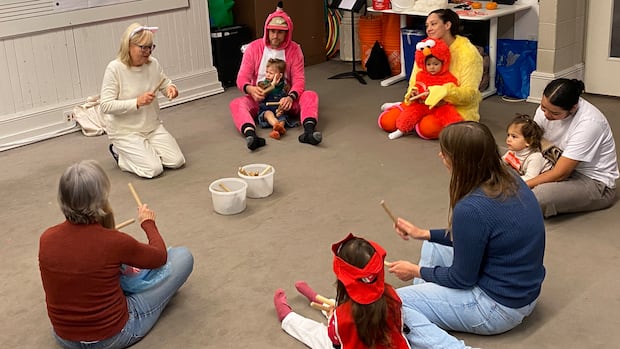
On a chilly morning in Toronto, toddlers and their caregivers gather at the Royal Conservatory of Music for a lively music class. Under the guidance of instructor Michaela Tomiska, the young participants engage in singing, tapping rhythm sticks, and playing with colorful toys. This structured and research-based approach aims to enhance not just musical skills but also broader cognitive abilities.
Parents like Syd Healey have noticed significant benefits in their children. His son, Charlie, has become more engaged in these music classes compared to other activities such as gymnastics and soccer. “He listens a lot better, and he’s starting to pick up on a bit of the rhythm,” Healey remarked, emphasizing how the dynamic nature of the class keeps children focused and involved.
Music as a Tool for Cognitive Development
Experts assert that early music education can play a vital role in brain development. According to Sean Hutchins, a neuroscientist and director of research at the Royal Conservatory of Music, structured music classes can enhance attention, memory, and language skills in young children. “Music cannot only train musical development but also linguistic and cognitive development,” Hutchins explained.
His research has led to the creation of the Smart Start program, which targets children from infancy to kindergarten. This curriculum is tailored to different age groups, recognizing that the learning needs of a one-year-old differ significantly from those of a four-year-old. The program has already been piloted in various locations, including the Vancouver Academy of Music and the Wisconsin Conservatory of Music.
Expanding Access to Music Education
The post-pandemic revival of music classes marks an important shift, especially as many institutions faced budget cuts. In response, Hutchins and other educators are eager to broaden access to music education. A recent $1 million donation from a Calgary-born board member will facilitate the introduction of the Smart Start program in underserved communities across Western Canada.
While formal music budgets in public schools often face reductions, Hutchins believes that principles from the Smart Start curriculum could benefit primary education as well. He encourages all adults to engage with children through music, regardless of their singing ability. “The voice is such a powerful instrument,” Hutchins noted, highlighting the importance of simple, everyday musical interactions.
As children participate in these classes, they not only learn musical skills but also develop essential cognitive abilities. Sheila Lee, a certified music therapist and instructor, emphasizes how music stimulates curiosity and exploration in young children. “It’s just a really natural and fun way for kids to be curious about the world,” she said.
Parents have begun to see the impact of these classes on their children. Laurie Mitchell, a regular attendee at the RCM’s toddler music classes, has observed her granddaughter, Clara, becoming more engaged and imaginative. “She definitely sings as she’s playing,” Mitchell shared, expressing hope that Clara will continue to develop her musical talents in the future.
The growing recognition of music education’s importance in early childhood development suggests that programs like Smart Start could have far-reaching implications, providing young children with the tools they need for cognitive growth and lifelong learning.

Meta Plans Major Layoffs as AI Costs Surge

Alberta’s Referendum Could Pave Way for U.S. Statehood

Minooka District 201 Plans Enhanced Bilingual Support for Students

Canmore Approves Multiple Development Permits for New Projects

Remembering Bradly Castillo Shearsmith: A Life of Friendship and Joy

BIS Urges Watchdogs to Integrate Synthetic Risk Transfers in Stress Tests

Teva Transforms: Shifting Focus from Generics to Branded Success

Apple Launches AirPods Max 2 with Enhanced Audio Features

Ontario Ends Funding for Seven Supervised Injection Sites

Toyoake City Proposes Daily Two-Hour Smartphone Use Limit

Pedestrian Fatally Injured in Esquimalt Collision on August 14

B.C. Review Reveals Urgent Need for Rare-Disease Drug Reforms

Dark Adventure Game “Bye Sweet Carole” Set for October Release

Konami Revives Iconic Metal Gear Solid Delta Ahead of Release

Victoria’s Pop-Up Shop Shines Light on B.C.’s Wolf Cull

Jimmy Lai’s Defense Challenges Charges Under National Security Law

Snapmaker U1 Color 3D Printer Redefines Speed and Sustainability

Apple Expands Self-Service Repair Program to Canada
-
 Science1 year ago
Toyoake City Proposes Daily Two-Hour Smartphone Use Limit
-
 Top Stories1 year ago
Pedestrian Fatally Injured in Esquimalt Collision on August 14
-
 Health1 year ago
B.C. Review Reveals Urgent Need for Rare-Disease Drug Reforms
-
 Technology1 year ago
Dark Adventure Game “Bye Sweet Carole” Set for October Release
-
 Technology1 year ago
Konami Revives Iconic Metal Gear Solid Delta Ahead of Release
-
 Lifestyle1 year ago
Victoria’s Pop-Up Shop Shines Light on B.C.’s Wolf Cull
-
 World1 year ago
Jimmy Lai’s Defense Challenges Charges Under National Security Law
-
 Technology1 year ago
Snapmaker U1 Color 3D Printer Redefines Speed and Sustainability
-
 Technology1 year ago
Apple Expands Self-Service Repair Program to Canada
-

 Technology1 year ago
AION Folding Knife: Redefining EDC Design with Premium Materials
-

 Technology1 year ago
Solve Today’s Wordle Challenge: Hints and Answer for August 19
-

 Business1 year ago
Gordon Murray Automotive Unveils S1 LM and Le Mans GTR at Monterey