
Education
Ontario Premier Doug Ford’s Comments Ignite Craft Education Debate

The Ontario government has recently made significant cuts to the Ontario Student Assistance Program (OSAP), reducing the maximum funding from 85 percent to 25 percent. This decision has sparked considerable backlash from students across the province. In response to the outcry, Ontario Premier Doug Ford indicated that he had received “thousands of calls” from concerned students. His suggestion to them was to focus on education that leads to in-demand jobs, a statement that has drawn criticism from proponents of craft education.
During a February news conference addressing the OSAP cuts, Ford remarked that students were enrolling in courses such as basket weaving, stating, “You’re picking basket-weaving courses, and there’s not too many baskets being sold out there.” His comments implied that programs focused on craft lack value in today’s job market. Instead, he urged students to consider fields such as trades, STEM, and health care, which he deemed more viable for post-graduation employment.
Critics argue that Ford’s perspective reflects a misunderstanding of the cultural and economic significance of craft practices in Canada. Responding to the Premier’s remarks, basket-weavers and craft organizations from across the country have highlighted the lucrative nature of their work and the transferable skills gained through craft education. For instance, Spencer Lunham Jr., a basket-maker from the Chippewas of Kettle and Stony Point First Nation, reported selling hundreds of baskets each year, with prices ranging from $150 to $3,000.
Data from the Canadian Chamber of Commerce supports this viewpoint, revealing that the arts and culture sector’s GDP grew nearly 8 percent in October 2025, compared to an overall economic growth of 4 percent. The same report indicated that this sector supports 13 jobs for every million in output, surpassing traditional industries such as oil and gas, manufacturing, and agriculture. Ontario is among the provinces that have experienced significant economic benefits from the cultural sector.
Ford’s dismissal of craft practices as unimportant has also been challenged by the recent winners of the prestigious Sobey Art Award, many of whom incorporate craft methodologies into their artistic work. Notably, Ursula Johnson, a 2017 award winner and artist from the Eskasoni First Nation in Cape Breton, Nova Scotia, uses basket-making as a medium to address themes of colonization and the role of contemporary museums. Her work illustrates that basket weaving is not only traditional but also innovative and relevant.
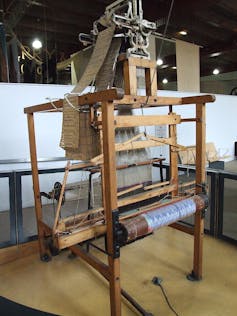
Craft practices are intrinsically linked to technological advancements. Scholars suggest that the inventor of the computer, Charles Babbage, may have drawn inspiration from the Jacquard loom, a machine that revolutionized the weaving industry during the Industrial Revolution. Similarly, recent discussions about artificial intelligence have drawn parallels to the Luddites of the 19th century, who opposed the mass industrialization of weaving.
While some members of the Toronto Guild of Spinners and Weavers acknowledge that basket-weaving courses are often framed in terms of educational rather than monetary value, they emphasize that these classes foster critical thinking and problem-solving skills. This aspect of education is where Ford’s viewpoint appears to falter. Learning transcends mere fact retention; it involves developing the ability to think critically and creatively, skills that are cultivated in diverse fields, including basket weaving.
Johnson’s grandmother taught her that the maker does not simply manipulate the materials but lets the materials guide the creation. Such lessons underscore the educational value of craft, promoting collaboration and foundational skills.
As Scott White, a college admissions expert, noted in Forbes Magazine, education systems should prioritize critical thinking and emotional intelligence over rote memorization. Many advocates for educational reform argue that current models still reflect outdated notions of the workforce, focusing on factory-like thinking rather than nurturing creative innovators.
The Ford government’s approach to higher education seems fixated on creating a pipeline to traditional jobs, often undermining programs that foster critical and creative thinking. Recent reports indicate that funding for Ontario’s post-secondary education remains low compared to support in other provinces, further complicating the landscape for students pursuing craft and arts education.
The historical significance of craft practices has been noted by authors like Ursula K. Le Guin, who argued that the first human tools—such as baskets—were essential for survival. Craft education, therefore, is not merely supplementary; it plays a crucial role in carrying forward culture, belongings, and sustenance.
If society focuses solely on profit-driven education, it risks losing an integral part of its identity. Engaging in craft education enables individuals to learn about their heritage while also developing essential problem-solving skills that are relevant in today’s world. As the debate continues, the value of craft practices and education remains a vital conversation in Ontario and beyond.

Meta Plans Major Layoffs as AI Costs Surge

Alberta’s Referendum Could Pave Way for U.S. Statehood

Minooka District 201 Plans Enhanced Bilingual Support for Students

Canmore Approves Multiple Development Permits for New Projects

Remembering Bradly Castillo Shearsmith: A Life of Friendship and Joy

BIS Urges Watchdogs to Integrate Synthetic Risk Transfers in Stress Tests

Teva Transforms: Shifting Focus from Generics to Branded Success

Apple Launches AirPods Max 2 with Enhanced Audio Features

Ontario Ends Funding for Seven Supervised Injection Sites

Toyoake City Proposes Daily Two-Hour Smartphone Use Limit

Pedestrian Fatally Injured in Esquimalt Collision on August 14

B.C. Review Reveals Urgent Need for Rare-Disease Drug Reforms

Dark Adventure Game “Bye Sweet Carole” Set for October Release

Konami Revives Iconic Metal Gear Solid Delta Ahead of Release

Victoria’s Pop-Up Shop Shines Light on B.C.’s Wolf Cull

Jimmy Lai’s Defense Challenges Charges Under National Security Law

Snapmaker U1 Color 3D Printer Redefines Speed and Sustainability

Apple Expands Self-Service Repair Program to Canada
-
 Science1 year ago
Toyoake City Proposes Daily Two-Hour Smartphone Use Limit
-
 Top Stories1 year ago
Pedestrian Fatally Injured in Esquimalt Collision on August 14
-
 Health1 year ago
B.C. Review Reveals Urgent Need for Rare-Disease Drug Reforms
-
 Technology1 year ago
Dark Adventure Game “Bye Sweet Carole” Set for October Release
-
 Technology1 year ago
Konami Revives Iconic Metal Gear Solid Delta Ahead of Release
-
 Lifestyle1 year ago
Victoria’s Pop-Up Shop Shines Light on B.C.’s Wolf Cull
-
 World1 year ago
Jimmy Lai’s Defense Challenges Charges Under National Security Law
-
 Technology1 year ago
Snapmaker U1 Color 3D Printer Redefines Speed and Sustainability
-
 Technology1 year ago
Apple Expands Self-Service Repair Program to Canada
-

 Technology1 year ago
AION Folding Knife: Redefining EDC Design with Premium Materials
-

 Technology1 year ago
Solve Today’s Wordle Challenge: Hints and Answer for August 19
-

 Business1 year ago
Gordon Murray Automotive Unveils S1 LM and Le Mans GTR at Monterey