
Education
Ottawa School Board Faces $14.4 Million Shortfall, Supervisor Warns

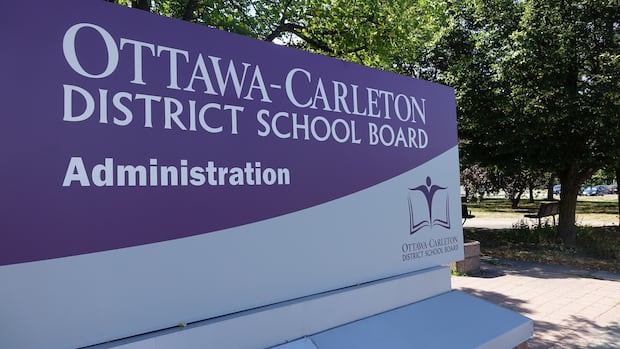
The Ottawa-Carleton District School Board (OCDSB) is grappling with a significant financial shortfall, now estimated at $14.4 million for the 2025-2026 school year. Bob Plamondon, the provincial supervisor overseeing the board, communicated this alarming update during a Special Education Advisory Committee (SEAC) meeting on Wednesday. This figure exceeds the $10.3 million deficit projected when the board adopted its budget in June 2025, raising concerns about the sustainability of special education funding.
The financial outlook for the OCDSB has deteriorated since the provincial government intervened in June, appointing Plamondon to manage the board’s affairs. Education Minister Paul Calandra cited chronic fiscal mismanagement, which has led to consecutive deficits that depleted reserves, as the reason for the intervention. Plamondon noted that the overall deficit for the board could reach $20 million without one-time revenue adjustments.
During the meeting, Plamondon emphasized that achieving a balanced budget will not be a swift process. “We are ultimately looking to balance our budget but it’s not going to happen, I don’t think, in the very near term because we’re starting with a $20 million hole that we have to work our way out of,” he stated, according to a recording provided to CBC. He highlighted the necessity of presenting a “credible, complete, honest budget” for the 2026-2027 school year, indicating that the timeline for balance remains uncertain.
The budget deficit for the previous 2024-2025 school year was reported at $5.4 million, a figure that represents the overall financial situation of the OCDSB rather than focusing solely on special education. Derek McMaster, the finance general manager, explained that without utilizing one-time revenues, the board would be facing a more pronounced deficit.
Special education funding is a critical aspect of the OCDSB budget, comprising approximately 13 percent of the total operating budget of $1.2 billion. In the 2023-2024 fiscal year, spending in this area exceeded revenues by $8.1 million. McMaster acknowledged that the shortfall would have been larger without the use of deferred revenue to mitigate the impact.
Kate Stoudt, the superintendent of learning support services, noted that many school boards across Ontario face similar challenges. “The reality is that we are overspending in special education based on our current formula,” she remarked. This situation raises questions about how the OCDSB will address the ongoing fiscal gap.
The discussion at SEAC also touched on the implications for students requiring special education services. Anthony Wong, a SEAC member, questioned where the funds would come from to address the deficit, expressing concern over potential impacts on other students. Plamondon reassured attendees that he views special education as the last area to cut. “These are our most vulnerable students that have the most acute needs,” he stated.
In response to the ongoing financial challenges, board spokesperson Diane Pernari reiterated the OCDSB’s commitment to developing a balanced budget for the upcoming fiscal year. She emphasized that the board is reviewing all service delivery models to ensure efficiency and effectiveness in spending.
The situation has raised critical questions about the governance of the OCDSB. Donna Blackburn, a former trustee sidelined by the provincial government, criticized the decision to place the board under supervision. She labeled the special education shortfall as “substantial” and argued that the funding received is “woefully underfunded.” Blackburn expressed skepticism about the effectiveness of appointing Plamondon, particularly in light of his substantial salary, which reportedly exceeds $350,000 per year.
As the board navigates these fiscal challenges, the lack of accountability has become a point of contention. Blackburn pointed out the absence of media engagement from Plamondon and challenged the rationale behind the provincial takeover of the board. “The notion that the OCDSB was mismanaged is a complete and total fabrication,” she stated, emphasizing the need for transparency in addressing the board’s financial difficulties.
The OCDSB’s budgetary challenges underscore the broader issues facing educational institutions in Ontario, particularly in the realm of special education funding. As the board works to address its financial shortfall, the coming months will be crucial in determining its path to stability and sustainability.

Meta Plans Major Layoffs as AI Costs Surge

Alberta’s Referendum Could Pave Way for U.S. Statehood

Minooka District 201 Plans Enhanced Bilingual Support for Students

Canmore Approves Multiple Development Permits for New Projects

Remembering Bradly Castillo Shearsmith: A Life of Friendship and Joy

BIS Urges Watchdogs to Integrate Synthetic Risk Transfers in Stress Tests

Teva Transforms: Shifting Focus from Generics to Branded Success

Apple Launches AirPods Max 2 with Enhanced Audio Features

Ontario Ends Funding for Seven Supervised Injection Sites

Toyoake City Proposes Daily Two-Hour Smartphone Use Limit

Pedestrian Fatally Injured in Esquimalt Collision on August 14

B.C. Review Reveals Urgent Need for Rare-Disease Drug Reforms

Dark Adventure Game “Bye Sweet Carole” Set for October Release

Konami Revives Iconic Metal Gear Solid Delta Ahead of Release

Victoria’s Pop-Up Shop Shines Light on B.C.’s Wolf Cull

Jimmy Lai’s Defense Challenges Charges Under National Security Law

Snapmaker U1 Color 3D Printer Redefines Speed and Sustainability

Apple Expands Self-Service Repair Program to Canada
-
 Science1 year ago
Toyoake City Proposes Daily Two-Hour Smartphone Use Limit
-
 Top Stories1 year ago
Pedestrian Fatally Injured in Esquimalt Collision on August 14
-
 Health1 year ago
B.C. Review Reveals Urgent Need for Rare-Disease Drug Reforms
-
 Technology1 year ago
Dark Adventure Game “Bye Sweet Carole” Set for October Release
-
 Technology1 year ago
Konami Revives Iconic Metal Gear Solid Delta Ahead of Release
-
 Lifestyle1 year ago
Victoria’s Pop-Up Shop Shines Light on B.C.’s Wolf Cull
-
 World1 year ago
Jimmy Lai’s Defense Challenges Charges Under National Security Law
-
 Technology1 year ago
Snapmaker U1 Color 3D Printer Redefines Speed and Sustainability
-
 Technology1 year ago
Apple Expands Self-Service Repair Program to Canada
-

 Technology1 year ago
AION Folding Knife: Redefining EDC Design with Premium Materials
-

 Technology1 year ago
Solve Today’s Wordle Challenge: Hints and Answer for August 19
-

 Business1 year ago
Gordon Murray Automotive Unveils S1 LM and Le Mans GTR at Monterey