
Education
Scholastic Thrives in Canadian Schools as Book Fair Tradition Endures

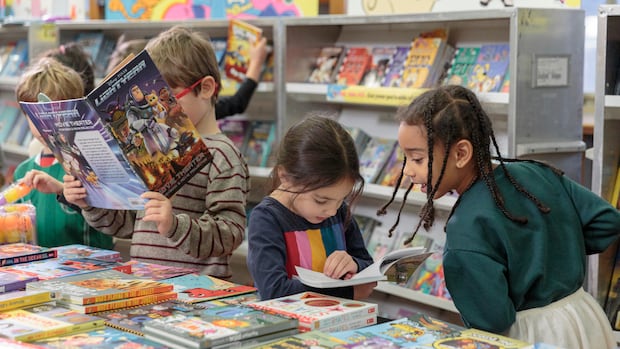
Scholastic has become a significant cultural touchstone for Canadian children, with its book fairs and catalogues continuing to spark excitement among young readers. The company, which has established a strong presence in schools across the country, has shipped an average of three million books annually, engaging students in a tradition that dates back to its first Canadian book fair in 1983.
Many Canadians recall the thrill of flipping through colorful catalogues, circling their must-have books, and browsing tables filled with various trinkets during book fair week. For Roberta MacDonald, a retired elementary school teacher with over 50 years of experience, these events have encouraged a love for reading among generations of students. “Kids bought one [book], then the next month, they were looking forward to [another], and it was just a great way to inspire kids to read,” she explained.
Scholastic’s Expansion and Community Impact
According to the company, Scholastic book fairs and catalogues are now present in 88 percent of Canada’s publicly funded elementary schools. Last year, nearly 9,000 book fairs were held across the country, with similar numbers expected this school year. The initiative not only promotes reading but also supports schools financially, with teachers receiving a percentage of sales that can be redeemed for books and materials.
Joseph Jeffery, a district-level teacher-librarian in northern British Columbia and chair of the non-profit Canadian School Libraries, highlighted the importance of these fairs. “When I ran Scholastic book fairs, I typically generated about $3,000 in funding, which was essential for bridging the gap in school library budgets,” he noted. Canadian schools reportedly earned a combined $20 million in rewards through book fairs and clubs last year, with 90 percent of that amount redeemed for classroom resources.
Founded in 1920 by Maurice R. “Robbie” Robinson in Pennsylvania, Scholastic began as a magazine publisher for young readers before publishing its first book in 1926. The company launched book clubs in 1948, allowing students to order books directly, a pivotal moment in its history. In 1981, Scholastic introduced its book fair concept, transforming school spaces into vibrant marketplaces for literature.
Challenges and Criticism of Scholastic Book Fairs
Despite the positive impact, some educators express concerns about the commercialization of book fairs. Danika Ellis, an editor at Book Riot and former bookseller, described these events as a form of “really conspicuous consumption” in schools. She questioned whether a for-profit model is the best way to encourage a love for reading. “We have kids walking away with huge stacks of books and toys, while others leave empty-handed,” she remarked.
Critics argue that the fairs sometimes prioritize merchandise over literary engagement. Mark Leslie Lefebvre, former president of the Canadian Booksellers Association, acknowledged this perspective but maintained that items like toys can still generate interest in reading. “A wand from Harry Potter or a stuffed animal from a popular book can intrigue a child and encourage them to explore the stories behind those characters,” he stated.
In response to the feedback, Scholastic aims to meet children where they are, providing products that inspire creativity and writing. They noted that schools ultimately determine the items offered at their fairs. Some educators have explored alternatives, such as book swaps, where students exchange gently used books, eliminating financial disparities.
MacDonald, who has seen the impact of Scholastic firsthand, believes the variety of books available has fostered a lifelong love of reading among her students. “When they discovered the Titanic, out came a Scholastic book on the Titanic,” she recalled. She used Scholastic rewards to ensure all her students had access to books, even ordering extra copies to include in report card envelopes.
As the world’s largest publisher and distributor of children’s books, Scholastic maintains significant purchasing power, allowing it to keep prices low while providing access to diverse reading materials. “It’s really important for young people to have the autonomy of owning a book,” Lefebvre emphasized. “The work that Scholastic does in schools helps bring more access to students and young people.”
In an age where digital platforms dominate, the enduring appeal of Scholastic book fairs highlights the unique role they play in fostering a love of reading among children across Canada.

Meta Plans Major Layoffs as AI Costs Surge

Alberta’s Referendum Could Pave Way for U.S. Statehood

Minooka District 201 Plans Enhanced Bilingual Support for Students

Canmore Approves Multiple Development Permits for New Projects

Remembering Bradly Castillo Shearsmith: A Life of Friendship and Joy

BIS Urges Watchdogs to Integrate Synthetic Risk Transfers in Stress Tests

Teva Transforms: Shifting Focus from Generics to Branded Success

Apple Launches AirPods Max 2 with Enhanced Audio Features

Ontario Ends Funding for Seven Supervised Injection Sites

Toyoake City Proposes Daily Two-Hour Smartphone Use Limit

Pedestrian Fatally Injured in Esquimalt Collision on August 14

B.C. Review Reveals Urgent Need for Rare-Disease Drug Reforms

Dark Adventure Game “Bye Sweet Carole” Set for October Release

Konami Revives Iconic Metal Gear Solid Delta Ahead of Release

Victoria’s Pop-Up Shop Shines Light on B.C.’s Wolf Cull

Jimmy Lai’s Defense Challenges Charges Under National Security Law

Snapmaker U1 Color 3D Printer Redefines Speed and Sustainability

Apple Expands Self-Service Repair Program to Canada
-
 Science1 year ago
Toyoake City Proposes Daily Two-Hour Smartphone Use Limit
-
 Top Stories1 year ago
Pedestrian Fatally Injured in Esquimalt Collision on August 14
-
 Health1 year ago
B.C. Review Reveals Urgent Need for Rare-Disease Drug Reforms
-
 Technology1 year ago
Dark Adventure Game “Bye Sweet Carole” Set for October Release
-
 Technology1 year ago
Konami Revives Iconic Metal Gear Solid Delta Ahead of Release
-
 Lifestyle1 year ago
Victoria’s Pop-Up Shop Shines Light on B.C.’s Wolf Cull
-
 World1 year ago
Jimmy Lai’s Defense Challenges Charges Under National Security Law
-
 Technology1 year ago
Snapmaker U1 Color 3D Printer Redefines Speed and Sustainability
-
 Technology1 year ago
Apple Expands Self-Service Repair Program to Canada
-

 Technology1 year ago
AION Folding Knife: Redefining EDC Design with Premium Materials
-

 Technology1 year ago
Solve Today’s Wordle Challenge: Hints and Answer for August 19
-

 Business1 year ago
Gordon Murray Automotive Unveils S1 LM and Le Mans GTR at Monterey