
Health
Expanding School Security Measures: A Question of Effectiveness

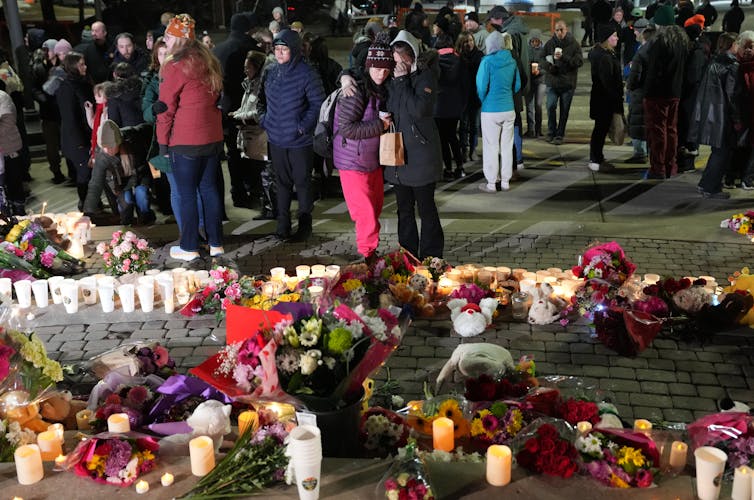
A recent mass school shooting in Tumbler Ridge, B.C., has reignited debates about school safety and the effectiveness of increased security measures. Following the tragedy, discussions surrounding the necessity of enhanced surveillance and police presence in educational settings have gained traction across Canada. This situation raises important questions about the true efficacy of such measures in preventing future incidents.
Pressure for Immediate Action
The urgency to respond to violent incidents often leads governments and school leaders to implement security policies that prioritize visible control over comprehensive evaluation of their impact. According to market research from the United States, billions of dollars are spent annually on “securing” schools, particularly in the aftermath of shootings. While these measures may seem to provide immediate reassurance, historical evidence suggests that they do not significantly reduce the occurrence of serious violent incidents.
Following the Tumbler Ridge shooting, there have been calls for a review of emergency procedures not only in British Columbia but also in provinces like Manitoba and Alberta. Premier Danielle Smith has indicated that the Alberta Ministry of Education may expand the role of school resource officers following safety audits.
Expanding Police Presence and Its Implications
The recent tragedy reflects a growing trend in Canadian jurisdictions to enhance police presence in schools as a response to violence. In British Columbia, the Ministry of Education dismissed the Victoria School Board for prohibiting police from being present in schools. In Ontario, Bill 33 aims to expand policing in educational settings, which critics argue could undermine democratic oversight of school boards.
While some studies suggest positive outcomes from school policing, such as a 2018 evaluation in Ontario’s Peel Region, these findings are contested. Notably, the evaluation did not compare schools with and without police presence or assess the actual impact on serious violent incidents. A 2020 study across the United States indicated that while police funding led to a decrease in non-weapon physical fights, it did not reduce gun-related incidents and was associated with higher rates of suspensions and expulsions, particularly affecting Black students and those with disabilities.
Human rights commissions in both Ontario and British Columbia have cautioned that any policing programs in schools must meet stringent legal standards. They express concerns regarding disproportionate impacts on marginalized groups, including Black, Indigenous, racialized, disabled, and 2SLGBTQ+ students. This raises critical questions about the safety being constructed through increased police presence and who truly benefits from these measures.
Furthermore, as schools adopt threat assessment models that incorporate digital monitoring tools, the need for proportionality and democratic oversight becomes even more pressing. These models are marketed as preventative, aimed at identifying suspicious behavior early. However, evidence supporting such assessments emphasizes the necessity for early identification and intervention rather than a permanent police presence or routine intelligence gathering.
The rise of digital threat assessments is also linked to the development of artificial intelligence tools designed for schools. These tools monitor social media activity, flag keywords, and generate “risk scores” based on behavioral data. This means students’ online activities can be captured and shared across educational and law enforcement systems in ways that were not feasible a decade ago.
Research indicates that mass school shootings are rare and context-specific events. While visible security measures may signal a response, they often fail to address the social disconnection and relational breakdowns that can lead to youth violence. Students who feel marginalized are at a higher risk of experiencing negative school climates, where the focus should be on support and trust-building rather than surveillance and control.
Studies consistently highlight the importance of protective social connections among students, families, and educators in preventing youth violence. Effective prevention efforts require collaboration among multidisciplinary teams, including educators and mental health professionals, without resorting to measures that risk human rights violations or increased criminalization of students.
Leaders’ decisions in times of collective grief can shape school policies for years to come. If the goal is to enhance safety, attention must be paid to the relational infrastructure within schools. Effective prevention involves creating environments where students feel supported and encouraged to seek help, ultimately fostering a culture of safety that transcends mere surveillance.
Beyhan Farhadi, who conducts research funded by the Social Sciences and Humanities Research Council of Canada, emphasizes that prioritizing education and support for youth, rather than increased policing, is crucial for building safer school communities.

Meta Plans Major Layoffs as AI Costs Surge

Alberta’s Referendum Could Pave Way for U.S. Statehood

Minooka District 201 Plans Enhanced Bilingual Support for Students

Canmore Approves Multiple Development Permits for New Projects

Remembering Bradly Castillo Shearsmith: A Life of Friendship and Joy

BIS Urges Watchdogs to Integrate Synthetic Risk Transfers in Stress Tests

Teva Transforms: Shifting Focus from Generics to Branded Success

Apple Launches AirPods Max 2 with Enhanced Audio Features

Ontario Ends Funding for Seven Supervised Injection Sites

Toyoake City Proposes Daily Two-Hour Smartphone Use Limit

Pedestrian Fatally Injured in Esquimalt Collision on August 14

B.C. Review Reveals Urgent Need for Rare-Disease Drug Reforms

Dark Adventure Game “Bye Sweet Carole” Set for October Release

Konami Revives Iconic Metal Gear Solid Delta Ahead of Release

Victoria’s Pop-Up Shop Shines Light on B.C.’s Wolf Cull

Jimmy Lai’s Defense Challenges Charges Under National Security Law

Snapmaker U1 Color 3D Printer Redefines Speed and Sustainability

Apple Expands Self-Service Repair Program to Canada
-
 Science11 months ago
Toyoake City Proposes Daily Two-Hour Smartphone Use Limit
-
 Top Stories11 months ago
Pedestrian Fatally Injured in Esquimalt Collision on August 14
-
 Health11 months ago
B.C. Review Reveals Urgent Need for Rare-Disease Drug Reforms
-
 Technology11 months ago
Dark Adventure Game “Bye Sweet Carole” Set for October Release
-
 Technology11 months ago
Konami Revives Iconic Metal Gear Solid Delta Ahead of Release
-
 Lifestyle11 months ago
Victoria’s Pop-Up Shop Shines Light on B.C.’s Wolf Cull
-
 World11 months ago
Jimmy Lai’s Defense Challenges Charges Under National Security Law
-
 Technology11 months ago
Snapmaker U1 Color 3D Printer Redefines Speed and Sustainability
-
 Technology11 months ago
Apple Expands Self-Service Repair Program to Canada
-

 Technology11 months ago
AION Folding Knife: Redefining EDC Design with Premium Materials
-

 Technology11 months ago
Solve Today’s Wordle Challenge: Hints and Answer for August 19
-

 Business11 months ago
Gordon Murray Automotive Unveils S1 LM and Le Mans GTR at Monterey