
Health
N.W.T. Leaders Demand Fair Funding for Indigenous Healthcare

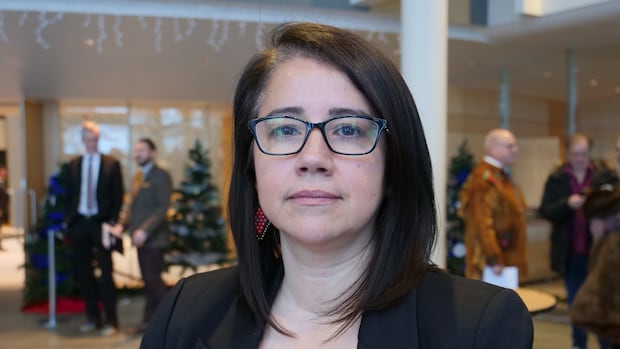
Leaders in the Northwest Territories (N.W.T.) are raising concerns over significant underfunding of the federal Non-Insured Health Benefits (NIHB) program, which is intended to ensure access to essential medical services for Indigenous peoples. According to several officials, inadequate federal funding has resulted in millions of dollars in costs being shouldered by the territorial government.
The NIHB program, administered by Indigenous Services Canada (ISC), covers various medical expenses, including dental care, vision services, and travel costs for First Nations and Inuit individuals requiring care outside their territory. In a statement to CBC News, a spokesperson for the N.W.T. government indicated that the expenses associated with medical travel have surged, while federal funding levels have remained stagnant.
“This funding shortfall creates pressure on the territorial health system,” the spokesperson noted. To mitigate the impact on residents, the N.W.T. government has been compelled to fill the financial gap, ensuring that eligible individuals can access the full range of benefits without incurring additional out-of-pocket expenses.
Denny Rodgers, the Member of the Legislative Assembly (MLA) for Inuvik Boot Lake, voiced his frustrations about the funding situation during a recent session in the Legislative Assembly. “ISC continues to underfund this program, leaving our territorial health system to subsidize a federal responsibility,” he said. “It is like asking a small mom-and-pop shop to cover the cost of a billion-dollar corporation. It simply isn’t fair and it is not sustainable.”
The N.W.T. Minister of Health, Lesa Semmler, echoed these concerns, stating that financial deficiencies from Ottawa have resulted in substantial losses for the territory. Semmler highlighted that the government anticipates spending $13 million in the 2024/25 fiscal year to help offset the costs of the NIHB program.
Discussions about this funding issue have been ongoing between the N.W.T. government and Indigenous Services Canada. In a response to inquiries, ISC acknowledged that talks are taking place but did not provide specific details regarding the negotiations. The most recent agreement governing the NIHB program expired in March 2024.
“Discussions with each territorial government are ongoing related to the renewal of the NIHB agreement for the 2025/26 fiscal year,” ISC stated. In the meantime, the N.W.T. government continues to manage the delivery of integrated healthcare services for all residents.
To address the rising costs associated with medical travel and healthcare administration, the territory received an additional $24 million from Indigenous Services Canada for the 2024/25 fiscal year, supplementing its existing NIHB funding. Nonetheless, Semmler noted that the N.W.T. government has consistently spent more on the NIHB program than it has received from Ottawa in previous years.
“The years before we could probably calculate $20 million to $25 million on average that we’ve been overspending, and with the cost of inflation, it’s only going up,” she explained in the legislature.
The ongoing discussions about funding for the NIHB program highlight the critical need for equitable financial support for Indigenous healthcare in the Northwest Territories. As the N.W.T. government continues to advocate for increased funding, the impact on residents’ access to necessary medical services remains a pressing concern.

Meta Plans Major Layoffs as AI Costs Surge

Alberta’s Referendum Could Pave Way for U.S. Statehood

Minooka District 201 Plans Enhanced Bilingual Support for Students

Canmore Approves Multiple Development Permits for New Projects

Remembering Bradly Castillo Shearsmith: A Life of Friendship and Joy

BIS Urges Watchdogs to Integrate Synthetic Risk Transfers in Stress Tests

Teva Transforms: Shifting Focus from Generics to Branded Success

Apple Launches AirPods Max 2 with Enhanced Audio Features

Ontario Ends Funding for Seven Supervised Injection Sites

Toyoake City Proposes Daily Two-Hour Smartphone Use Limit

Pedestrian Fatally Injured in Esquimalt Collision on August 14

B.C. Review Reveals Urgent Need for Rare-Disease Drug Reforms

Dark Adventure Game “Bye Sweet Carole” Set for October Release

Konami Revives Iconic Metal Gear Solid Delta Ahead of Release

Victoria’s Pop-Up Shop Shines Light on B.C.’s Wolf Cull

Jimmy Lai’s Defense Challenges Charges Under National Security Law

Snapmaker U1 Color 3D Printer Redefines Speed and Sustainability

Apple Expands Self-Service Repair Program to Canada
-
 Science12 months ago
Toyoake City Proposes Daily Two-Hour Smartphone Use Limit
-
 Top Stories12 months ago
Pedestrian Fatally Injured in Esquimalt Collision on August 14
-
 Health12 months ago
B.C. Review Reveals Urgent Need for Rare-Disease Drug Reforms
-
 Technology12 months ago
Dark Adventure Game “Bye Sweet Carole” Set for October Release
-
 Technology12 months ago
Konami Revives Iconic Metal Gear Solid Delta Ahead of Release
-
 Lifestyle12 months ago
Victoria’s Pop-Up Shop Shines Light on B.C.’s Wolf Cull
-
 World12 months ago
Jimmy Lai’s Defense Challenges Charges Under National Security Law
-
 Technology12 months ago
Snapmaker U1 Color 3D Printer Redefines Speed and Sustainability
-
 Technology12 months ago
Apple Expands Self-Service Repair Program to Canada
-

 Technology12 months ago
AION Folding Knife: Redefining EDC Design with Premium Materials
-

 Technology12 months ago
Solve Today’s Wordle Challenge: Hints and Answer for August 19
-

 Business12 months ago
Gordon Murray Automotive Unveils S1 LM and Le Mans GTR at Monterey