
Health
Probiotic Breakthrough Offers Hope for Bats Facing Deadly Fungal Disease

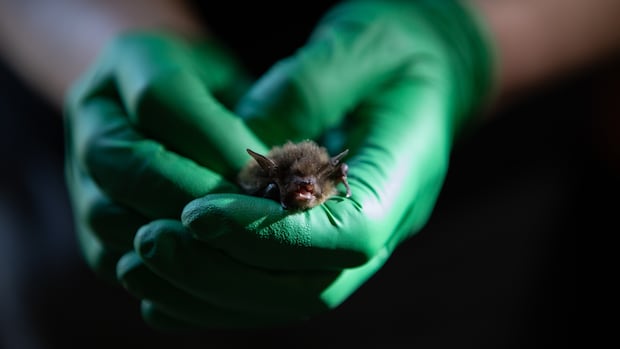
As the threat of white-nose syndrome looms over bat populations in North America, a small group of dedicated volunteers in Washington State is on a mission to protect these vital creatures. Under the guidance of Abby Tobin from the Washington State Department of Fish and Wildlife, the team aims to capture bats to examine them for signs of the deadly fungus, Pseudogymnoascus destructans. This fungus has caused the deaths of over six million bats since it first emerged in eastern North America in 2006, leading to significant ecological concerns.
The fungus disrupts bats’ hibernation patterns, leading to dehydration and starvation. Anouk Simard, a biologist with the Quebec Ministry of the Environment, emphasizes the alarming decline in bat populations, stating, “We see very few bats flying in Quebec now.” She recalls instances where colonies that once numbered in the thousands have dramatically dwindled to near extinction.
Cori Lausen, a research scientist based in British Columbia and affectionately known as the “Bat Lady,” believes she has discovered a potential solution through a specially formulated probiotic cocktail. This innovative approach aims to enhance the natural defenses of bats against the fungus.
Probiotic Research Offers New Hope
Lausen’s research indicates that the probiotic formula—which contains four bacterial strains that can suppress the fungus—could be instrumental in saving bat populations. While the fungus has not yet been detected in bats in British Columbia, it has been found in guano in Alberta and Washington, raising concerns about its potential spread.
Lausen explains the importance of bats in maintaining ecological balance, noting that a single bat can consume its body weight in insects each night. This natural pest control helps reduce reliance on chemical pesticides, which not only saves farmers money but also lessens environmental pollution.
Research published in the journal Science highlights a potential correlation between declining bat populations and increased human infant mortality rates in affected areas. The theory posits that as bat numbers decrease, farmers resort to higher pesticide use, which can have harmful effects on human health.
Fieldwork and Community Involvement
In the lead-up to winter, Lausen and her team are actively fortifying defenses against white-nose syndrome. At the Hayward Recreation Site near Stave Lake, she is applying her probiotic cocktail to bat roosts. “I call it the Robin Hood approach,” she states, explaining that they are transferring beneficial bacteria from healthy bats to those at risk.
The early results from this probiotic treatment have been encouraging, suggesting that it may bolster the bats’ ability to combat the fungus. In Snohomish County, volunteers are capturing bats to monitor for symptoms of white-nose syndrome, as well as to check for evidence of the probiotic’s presence.
The team employs various protective measures, including wearing gloves and goggles to prevent disease transmission. They quickly set up a large net and, amid the excitement, capture around twenty bats. Each bat is carefully examined, with data collected regarding its health and any signs of the fungus.
Tobin, who oversees the examination process, identifies potential white-nose syndrome symptoms on the bats. “Over here looks more suspicious of white-nose damage,” she notes during the analysis. After gathering necessary data, the bats are released back into the night sky, highlighting the ongoing battle against this devastating disease.
Lausen warns that if a treatment is not identified soon, the consequences for bat populations in the western regions could be dire. Unlike their eastern counterparts, western bats often hibernate in smaller groups, making it more challenging for scientists to monitor their health and population status. “If they’re just getting into the ground to hibernate, then we won’t see the impacts of white-nose syndrome because they’ll just die underground,” she explains.
The urgency of the situation cannot be overstated. With the winter season approaching, Lausen’s innovative probiotic cocktail may offer a glimmer of hope for the future of bat conservation in North America. The work being done by scientists and volunteers alike is crucial not only for the survival of bats but also for the ecological balance that relies upon these often-overlooked creatures.

Meta Plans Major Layoffs as AI Costs Surge

Alberta’s Referendum Could Pave Way for U.S. Statehood

Minooka District 201 Plans Enhanced Bilingual Support for Students

Canmore Approves Multiple Development Permits for New Projects

Remembering Bradly Castillo Shearsmith: A Life of Friendship and Joy

BIS Urges Watchdogs to Integrate Synthetic Risk Transfers in Stress Tests

Teva Transforms: Shifting Focus from Generics to Branded Success

Apple Launches AirPods Max 2 with Enhanced Audio Features

Ontario Ends Funding for Seven Supervised Injection Sites

Toyoake City Proposes Daily Two-Hour Smartphone Use Limit

Pedestrian Fatally Injured in Esquimalt Collision on August 14

B.C. Review Reveals Urgent Need for Rare-Disease Drug Reforms

Dark Adventure Game “Bye Sweet Carole” Set for October Release

Konami Revives Iconic Metal Gear Solid Delta Ahead of Release

Victoria’s Pop-Up Shop Shines Light on B.C.’s Wolf Cull

Jimmy Lai’s Defense Challenges Charges Under National Security Law

Snapmaker U1 Color 3D Printer Redefines Speed and Sustainability

Apple Expands Self-Service Repair Program to Canada
-
 Science11 months ago
Toyoake City Proposes Daily Two-Hour Smartphone Use Limit
-
 Top Stories11 months ago
Pedestrian Fatally Injured in Esquimalt Collision on August 14
-
 Health11 months ago
B.C. Review Reveals Urgent Need for Rare-Disease Drug Reforms
-
 Technology11 months ago
Dark Adventure Game “Bye Sweet Carole” Set for October Release
-
 Technology11 months ago
Konami Revives Iconic Metal Gear Solid Delta Ahead of Release
-
 Lifestyle11 months ago
Victoria’s Pop-Up Shop Shines Light on B.C.’s Wolf Cull
-
 World11 months ago
Jimmy Lai’s Defense Challenges Charges Under National Security Law
-
 Technology11 months ago
Snapmaker U1 Color 3D Printer Redefines Speed and Sustainability
-
 Technology11 months ago
Apple Expands Self-Service Repair Program to Canada
-

 Technology11 months ago
AION Folding Knife: Redefining EDC Design with Premium Materials
-

 Technology11 months ago
Solve Today’s Wordle Challenge: Hints and Answer for August 19
-

 Business11 months ago
Gordon Murray Automotive Unveils S1 LM and Le Mans GTR at Monterey