
Health
Sault Area Hospital Reduces Ambulance Offload Delays Significantly

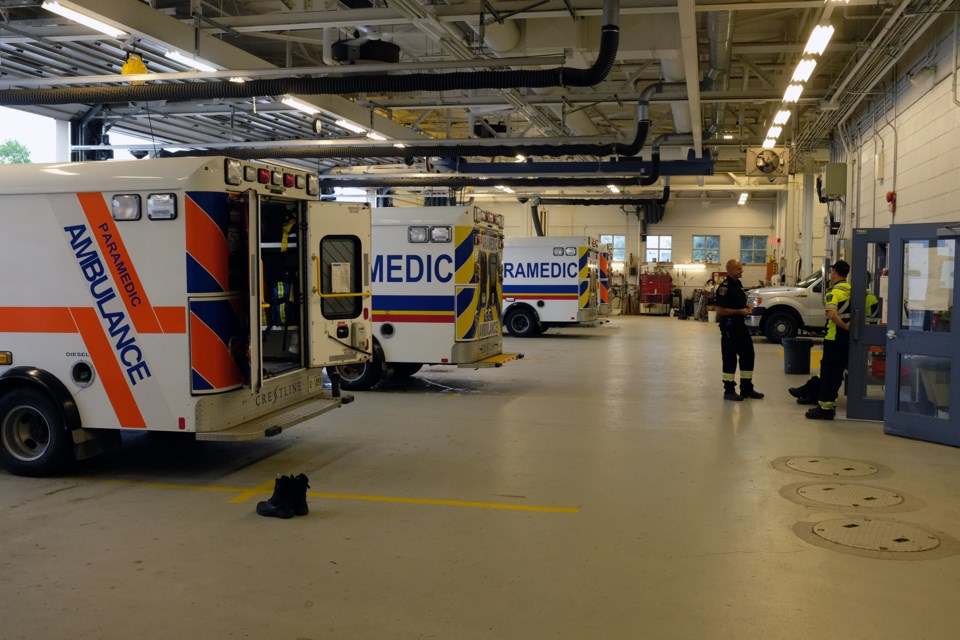
A collaborative effort between Sault Area Hospital and local paramedic services has successfully reduced ambulance offload delays, a longstanding challenge that hindered emergency response capabilities. This initiative aims to enhance patient care while ensuring that paramedics can return to their vital duties more promptly.
Historically, offload delays occur when paramedics arrive at the emergency department but are unable to transfer patient care to hospital staff. These delays have previously forced paramedics to wait with patients for extended periods, thus limiting their availability for other emergency calls. As Mike Nadeau, CEO of the District of Sault Ste. Marie Social Services Administration Board (DSSAB), noted, “There were times when there were no ambulances on the road from Wawa to the Sault. This is really, really important.”
Joint Initiative Improves Response Times
Over the years, the DSSAB and Sault Area Hospital have implemented various strategies to combat offload delays. One notable solution introduced in 2023 was the offload nurse program, which allocated provincial funding to hire dedicated offload nurses. This initiative allowed paramedics to transfer patients more efficiently and resume their emergency response roles.
Earlier this year, Paramedic Chief Katie Kirkham indicated that the DSSAB was awaiting a report from Optimus SBR, a consultancy firm, expected in September. This report provided a comprehensive analysis of emergency department operations, paramedic practices, patient flow, and the systemic challenges facing the healthcare system. The recommendations from Optimus SBR included establishing a formal offload escalation plan and enhancing alignment of processes and data to ensure that emergency care remains accessible when needed most.
The implementation of these recommendations has led to marked improvements in offload delay metrics. In November 2025, only nine patients experienced an offload delay exceeding 30 minutes, a significant decrease compared to 228 patients in November 2024. Additionally, the average offload time has dropped from 36 minutes to just over 10 minutes, while the 90th-percentile offload time improved to 14 minutes, well below the provincial target.
Looking Ahead: Continued Collaboration
“Reducing ambulance offload delays means paramedics can get back on the road faster and be there when residents need them most,” stated Stephanie Pagnucco, chair of the DSSAB. She emphasized the importance of collaboration and data-driven decision-making in achieving these advancements.
Mindy Lindstedt, vice-president of clinical operations and chief nursing executive at Sault Area Hospital, remarked on the innovative approaches being adopted, including a virtual home waiting room pilot and dedicated patient flow roles. “While we are seeing meaningful improvements, we continue to focus on further enhancing emergency department flow to reduce wait times for all patients,” Lindstedt added.
The DSSAB has committed to continuing the implementation of the remaining Optimus SBR recommendations. This ongoing collaboration with Sault Area Hospital underscores the shared goal of ensuring that emergency care is readily available to the community whenever it is required. As these initiatives progress, both organizations remain focused on enhancing the efficiency of the local emergency medical services system.

Meta Plans Major Layoffs as AI Costs Surge

Alberta’s Referendum Could Pave Way for U.S. Statehood

Minooka District 201 Plans Enhanced Bilingual Support for Students

Canmore Approves Multiple Development Permits for New Projects

Remembering Bradly Castillo Shearsmith: A Life of Friendship and Joy

BIS Urges Watchdogs to Integrate Synthetic Risk Transfers in Stress Tests

Teva Transforms: Shifting Focus from Generics to Branded Success

Apple Launches AirPods Max 2 with Enhanced Audio Features

Ontario Ends Funding for Seven Supervised Injection Sites

Toyoake City Proposes Daily Two-Hour Smartphone Use Limit

Pedestrian Fatally Injured in Esquimalt Collision on August 14

B.C. Review Reveals Urgent Need for Rare-Disease Drug Reforms

Dark Adventure Game “Bye Sweet Carole” Set for October Release

Konami Revives Iconic Metal Gear Solid Delta Ahead of Release

Victoria’s Pop-Up Shop Shines Light on B.C.’s Wolf Cull

Jimmy Lai’s Defense Challenges Charges Under National Security Law

Snapmaker U1 Color 3D Printer Redefines Speed and Sustainability

Apple Expands Self-Service Repair Program to Canada
-
 Science1 year ago
Toyoake City Proposes Daily Two-Hour Smartphone Use Limit
-
 Top Stories1 year ago
Pedestrian Fatally Injured in Esquimalt Collision on August 14
-
 Health1 year ago
B.C. Review Reveals Urgent Need for Rare-Disease Drug Reforms
-
 Technology1 year ago
Dark Adventure Game “Bye Sweet Carole” Set for October Release
-
 Technology1 year ago
Konami Revives Iconic Metal Gear Solid Delta Ahead of Release
-
 Lifestyle1 year ago
Victoria’s Pop-Up Shop Shines Light on B.C.’s Wolf Cull
-
 World1 year ago
Jimmy Lai’s Defense Challenges Charges Under National Security Law
-
 Technology1 year ago
Snapmaker U1 Color 3D Printer Redefines Speed and Sustainability
-
 Technology1 year ago
Apple Expands Self-Service Repair Program to Canada
-

 Technology1 year ago
AION Folding Knife: Redefining EDC Design with Premium Materials
-

 Technology1 year ago
Solve Today’s Wordle Challenge: Hints and Answer for August 19
-

 Business1 year ago
Gordon Murray Automotive Unveils S1 LM and Le Mans GTR at Monterey