
Lifestyle
BC Government Criticized Over Absence from Musqueam Rights Agreement

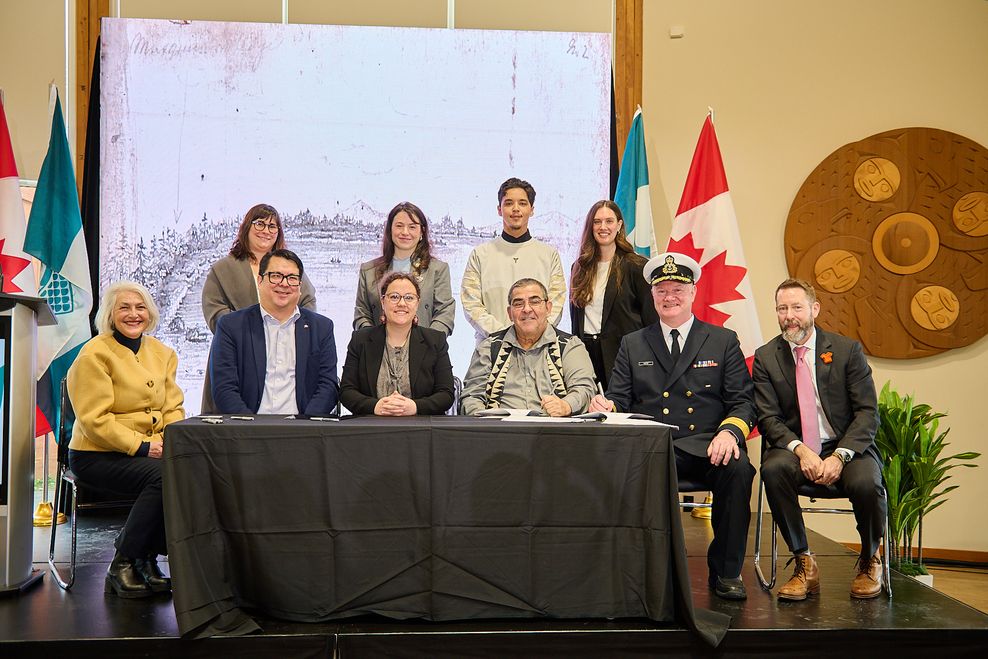
The British Columbia (BC) government, led by the NDP, is facing criticism for its lack of involvement in a significant agreement regarding the Aboriginal rights of the Musqueam Indian Band. The February 20, 2026, federal agreement recognizes the Musqueam’s rights and establishes a framework for pursuing Aboriginal title in Metro Vancouver and surrounding areas.
During a recent question period at the legislature, BC Conservative MLA Scott McInnis challenged the government, emphasizing the implications of the agreement for British Columbians. He questioned Premier David Eby about the province’s recognition of Aboriginal rights and title, asking for clarity on what these terms mean in today’s context.
In response, Spencer Chandra-Herbert, Minister of Indigenous Relations and Reconciliation, clarified that the provincial government was not a signatory to the agreement and had not participated in its negotiations. “The agreement that the member refers to was an agreement signed with the federal government, not the provincial government,” Chandra-Herbert stated, reiterating that the province “was not at the negotiating table.”
The lack of engagement has raised concerns among opposition members. Trevor Halford, interim leader of the BC Conservatives, expressed worry that the provincial government is disconnected from discussions that could have significant implications for the province’s residents.
In a press conference later that day, Premier Eby acknowledged that he was not briefed on the agreement at the political level, stating, “To the best of my understanding, the provincial government was not briefed.” Despite this, he indicated that he was not surprised by the federal government’s engagement with the Musqueam, considering the ongoing legal and constitutional issues tied to fishing rights and Aboriginal title claims against the federal government.
Eby emphasized the importance of the provincial government engaging with federal authorities to comprehend the agreement’s implications. He recognized the significance of the work ahead, given the historical context of the Musqueam’s claims.
Interestingly, just hours after his statements, it was revealed that Eby had attended the signing event for the agreement last month but still lacked knowledge of its specific contents.
The Musqueam Indian Band later issued a statement highlighting the purpose of the agreement. The agreements aim to reinforce Musqueam’s stewardship of the Fraser River and create workgroups focused on marine management, spill response, environmental protection, and fisheries. They emphasized that the agreements do not pertain to land ownership and have “absolutely no impacts to fee simple lands/private property.”
The First Nation referenced the public reaction following the August 2025 court ruling involving the Cowichan Tribes’ Aboriginal title claim in southeast Richmond. They reiterated their commitment to not infringe upon private property, with Chief Sparrow stating, “Musqueam is not coming for anyone’s private property. Our approach to traditional unceded territory is one of partnership and relationship with our neighbours.”
A copy of the agreement published by Global News reveals that it contains a crucial assertion: “Musqueam has unextinguished Rights and Title within the Musqueam Territory.” This means that the Musqueam’s rights were never legally extinguished, a recognition linked to Canada’s Constitution Act of 1982, which affirms Aboriginal rights.
Importantly, the document clarifies that the agreement is not a final treaty or land claim settlement. It specifies that “This Agreement does not constitute a treaty or lands claims agreements,” protecting Musqueam’s legal standing by stating that it does not redefine their rights.
The agreement outlines a gradual approach to implementing Musqueam’s rights, with provisions for incremental negotiations on specific agreements over time. It is binding on both parties, ensuring that both the federal government and Musqueam are committed to acting in good faith.
Additionally, the agreement aligns with the United Nations Declaration on the Rights of Indigenous Peoples, requiring both sides to implement it respectfully. It also includes legal protections, asserting that nothing in the agreement can be interpreted as an admission of liability by either party.
The ongoing dialogue surrounding Aboriginal rights in British Columbia is crucial, particularly as the province navigates its commitments to Indigenous communities. The engagement of the provincial government in future discussions may shape the path forward for the Musqueam and other First Nations in their quest for recognition and rights.

Meta Plans Major Layoffs as AI Costs Surge

Alberta’s Referendum Could Pave Way for U.S. Statehood

Minooka District 201 Plans Enhanced Bilingual Support for Students

Canmore Approves Multiple Development Permits for New Projects

Remembering Bradly Castillo Shearsmith: A Life of Friendship and Joy

BIS Urges Watchdogs to Integrate Synthetic Risk Transfers in Stress Tests

Teva Transforms: Shifting Focus from Generics to Branded Success

Apple Launches AirPods Max 2 with Enhanced Audio Features

Ontario Ends Funding for Seven Supervised Injection Sites

Toyoake City Proposes Daily Two-Hour Smartphone Use Limit

Pedestrian Fatally Injured in Esquimalt Collision on August 14

B.C. Review Reveals Urgent Need for Rare-Disease Drug Reforms

Dark Adventure Game “Bye Sweet Carole” Set for October Release

Konami Revives Iconic Metal Gear Solid Delta Ahead of Release

Victoria’s Pop-Up Shop Shines Light on B.C.’s Wolf Cull

Jimmy Lai’s Defense Challenges Charges Under National Security Law

Snapmaker U1 Color 3D Printer Redefines Speed and Sustainability

Apple Expands Self-Service Repair Program to Canada
-
 Science11 months ago
Toyoake City Proposes Daily Two-Hour Smartphone Use Limit
-
 Top Stories11 months ago
Pedestrian Fatally Injured in Esquimalt Collision on August 14
-
 Health11 months ago
B.C. Review Reveals Urgent Need for Rare-Disease Drug Reforms
-
 Technology11 months ago
Dark Adventure Game “Bye Sweet Carole” Set for October Release
-
 Technology11 months ago
Konami Revives Iconic Metal Gear Solid Delta Ahead of Release
-
 Lifestyle11 months ago
Victoria’s Pop-Up Shop Shines Light on B.C.’s Wolf Cull
-
 World11 months ago
Jimmy Lai’s Defense Challenges Charges Under National Security Law
-
 Technology11 months ago
Snapmaker U1 Color 3D Printer Redefines Speed and Sustainability
-
 Technology11 months ago
Apple Expands Self-Service Repair Program to Canada
-

 Technology11 months ago
AION Folding Knife: Redefining EDC Design with Premium Materials
-

 Technology11 months ago
Solve Today’s Wordle Challenge: Hints and Answer for August 19
-

 Business11 months ago
Gordon Murray Automotive Unveils S1 LM and Le Mans GTR at Monterey