
Lifestyle
Canada Secures Eighth Place in 2026 Passport Rankings

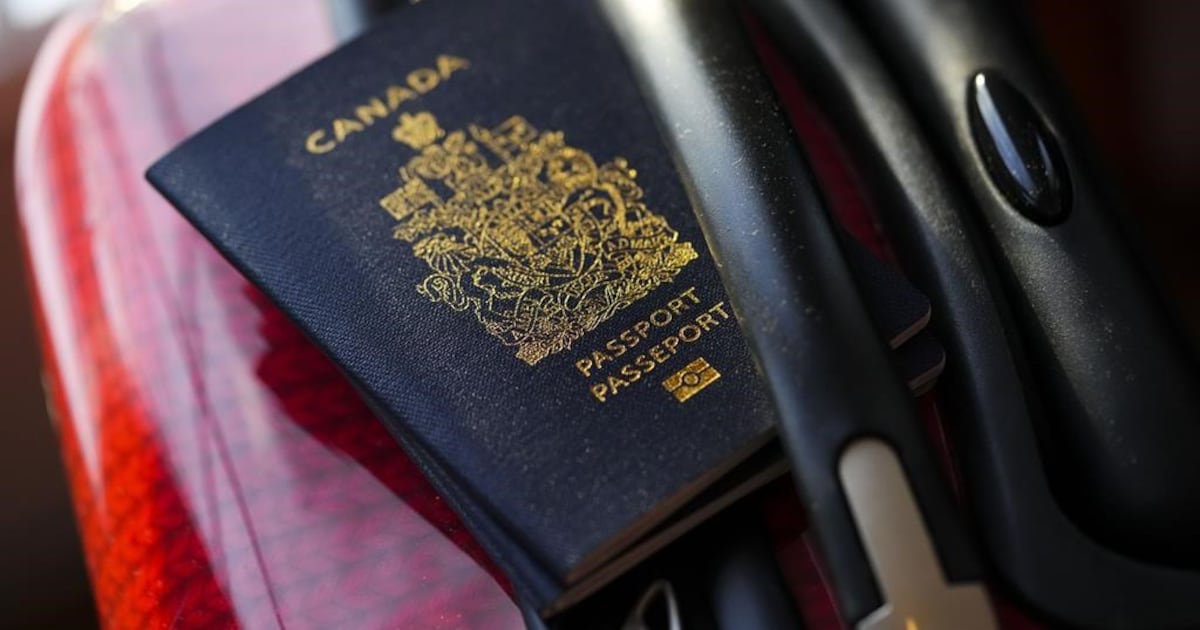
Canada’s passport ranks eighth globally in the 2026 Henley Passport Index, affirming its status as one of the world’s most powerful travel documents. With this position, Canada surpasses the United States and stands alongside Iceland and Lithuania, providing its citizens with visa-free or visa-on-arrival access to 181 countries. The Henley Passport Index is compiled by London-based Henley & Partners and uses data from the International Air Transport Association, which tracks visa access to 227 countries and territories.
The rankings serve as a crucial measure of global mobility, diplomatic influence, and international credibility. Basil Mohr-Elzeki, managing partner at Henley & Partners, explained that the rankings are calculated based on straightforward criteria focused on visa access. “It’s quite a simple calculation,” he noted in an interview with CTVNews.ca. “The Canadian passport allows Canadians to travel to 181 countries without a visa, meaning you don’t need to apply for paperwork in advance.”
The index distinguishes between visa-free access and visas on arrival. Mohr-Elzeki described this distinction as procedural rather than substantive, stating, “Visa-free is when you go through customs and enter the country without applying for anything. Visa on arrival adds an extra step, where you apply when you land.”
A Closer Look at Passport Rankings
While Canada’s passport is regarded as strong, experts caution against a simplistic interpretation of the rankings. Randall Hansen, Canada research chair in global migration at the University of Toronto, emphasized that the index reflects visa policies set by wealthier nations rather than a comprehensive view of mobility rights. “What this really measures is the number of visa requirements a particular passport faces,” he explained. “The sorting will always be rich countries with good passports and poor countries with bad passports, because visa requirements are set by wealthy countries.”
Hansen pointed out that the index does not account for the right to live and work abroad, which he argues is a more meaningful measure of mobility. He noted that passports from the European Union (EU) offer greater practical freedom. “A German or Spanish passport should arguably be number one or two, because they give you the right to work in 27 countries,” he said.
Despite its eighth-place ranking, Canada has maintained a strong position over the years, although it has seen a slight decline since its peak ranking of second in 2014. Mohr-Elzeki explained that increasing competition from European and Asian countries and changing global visa policies have contributed to this shift. He noted, “Canada allows only 54 countries visa-free entry, whereas other countries allow more – and that reciprocity matters.”
The Canadian passport’s relatively high visa requirements for certain nations partly explain its placement. Hansen highlighted that traditional high visa costs can disproportionately affect younger travelers or students. “If you’re a Bay Street lawyer paying C$80 for a visa, it doesn’t worry you. If you’re a young student, the increment is punitive,” he said.
Looking ahead, Hansen suggested that Canada could enhance its ranking by adopting more favorable visa policies. “Canada could do it tomorrow,” he stated, advocating for fewer visa requirements and expanding safe country destinations.
Global Passport Landscape
The current rankings reflect a continuing trend of Asian passports leading the list. Singapore holds the top position, granting visa-free access to 192 destinations. It is followed closely by Japan and South Korea, which are tied for second place with access to 188 countries. European countries dominate much of the upper tier, with Denmark, Luxembourg, Spain, Sweden, and Switzerland sharing third place, each with access to 186 destinations.
Interestingly, the United Kingdom has experienced a significant drop, now tied for seventh place with access to 182 destinations, losing visa-free access to eight countries in the past year. The United States ranks tenth, with access to 179 destinations, marking a return to the top ten after a brief decline.
At the lower end of the spectrum, Afghanistan continues to rank last, with visa-free access to just 24 countries, followed by Syria and Iraq. The growing gap between the top and bottom-ranked passports now stands at 168 countries.
Mohr-Elzeki remarked on the potential for mid-tier countries to improve their rankings, noting that many nations are beginning to recognize the importance of enhancing passport power to facilitate international travel and business opportunities.

Meta Plans Major Layoffs as AI Costs Surge

Alberta’s Referendum Could Pave Way for U.S. Statehood

Minooka District 201 Plans Enhanced Bilingual Support for Students

Canmore Approves Multiple Development Permits for New Projects

Remembering Bradly Castillo Shearsmith: A Life of Friendship and Joy

BIS Urges Watchdogs to Integrate Synthetic Risk Transfers in Stress Tests

Teva Transforms: Shifting Focus from Generics to Branded Success

Apple Launches AirPods Max 2 with Enhanced Audio Features

Ontario Ends Funding for Seven Supervised Injection Sites

Toyoake City Proposes Daily Two-Hour Smartphone Use Limit

Pedestrian Fatally Injured in Esquimalt Collision on August 14

B.C. Review Reveals Urgent Need for Rare-Disease Drug Reforms

Dark Adventure Game “Bye Sweet Carole” Set for October Release

Konami Revives Iconic Metal Gear Solid Delta Ahead of Release

Victoria’s Pop-Up Shop Shines Light on B.C.’s Wolf Cull

Jimmy Lai’s Defense Challenges Charges Under National Security Law

Snapmaker U1 Color 3D Printer Redefines Speed and Sustainability

Apple Expands Self-Service Repair Program to Canada
-
 Science11 months ago
Toyoake City Proposes Daily Two-Hour Smartphone Use Limit
-
 Top Stories11 months ago
Pedestrian Fatally Injured in Esquimalt Collision on August 14
-
 Health11 months ago
B.C. Review Reveals Urgent Need for Rare-Disease Drug Reforms
-
 Technology11 months ago
Dark Adventure Game “Bye Sweet Carole” Set for October Release
-
 Technology11 months ago
Konami Revives Iconic Metal Gear Solid Delta Ahead of Release
-
 Lifestyle11 months ago
Victoria’s Pop-Up Shop Shines Light on B.C.’s Wolf Cull
-
 World11 months ago
Jimmy Lai’s Defense Challenges Charges Under National Security Law
-
 Technology11 months ago
Snapmaker U1 Color 3D Printer Redefines Speed and Sustainability
-
 Technology11 months ago
Apple Expands Self-Service Repair Program to Canada
-

 Technology11 months ago
AION Folding Knife: Redefining EDC Design with Premium Materials
-

 Technology11 months ago
Solve Today’s Wordle Challenge: Hints and Answer for August 19
-

 Business11 months ago
Gordon Murray Automotive Unveils S1 LM and Le Mans GTR at Monterey