
Lifestyle
Dr. Ahmad Ashrafi Leads Healthcare Mission to Afghanistan

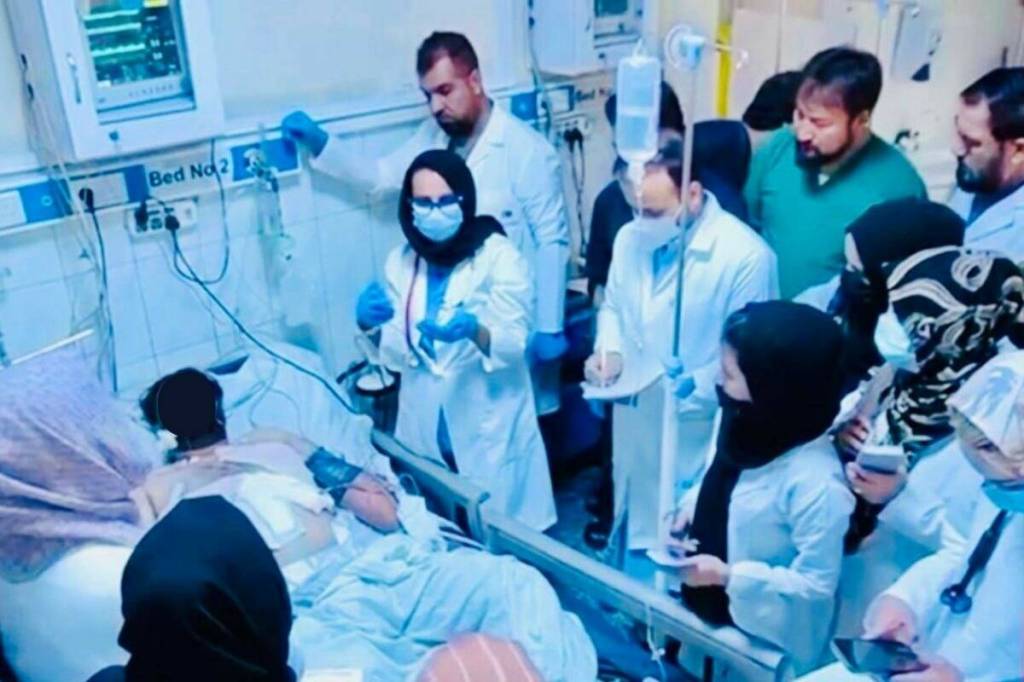
In October 2024, Dr. Ahmad Ashrafi, a surgeon at Surrey Memorial Hospital, led a dedicated team of healthcare professionals on a mission to Afghanistan. Their objective was to enhance medical education and practices among local healthcare workers in the nation’s capital, Kabul.
Afghanistan, which has endured over four decades of conflict, presents significant challenges to healthcare delivery. Dr. Ashrafi, the regional division head of thoracic surgery at Surrey Memorial, acknowledged the difficulties, stating, “Afghanistan is considered a very difficult place to go to because it’s been in war for over four decades.” This prolonged instability has severely disrupted essential services, including health care.
Dr. Ashrafi’s motivation for this mission is deeply personal. Born in Afghanistan, he immigrated to Canada in 1983. His passion for global health and surgery stems from his own experiences. “I’ve always been interested in global health and global surgery,” he noted, reflecting on his journey. His earlier experiences included humanitarian missions in Mongolia and Uzbekistan, where he established thoracic surgery programs to share knowledge and improve local medical practices.
Following a visit to the Ali Abad Teaching Hospital in March 2024, Dr. Ashrafi recognized the eagerness of Afghan medical staff to learn. Upon returning to Canada, he assembled a robust team for the mission, including anesthesiologist Dr. Jean Gelinas; registered critical care nurses Tayne Bong and Sajia Yousofi; nurse practitioner Dorothy Suliga; and intensivist Dr. Angela Babuk. The team also included Lais Hamidi, a medical engineer who developed a backup power system for the operating room.
The team arrived in Afghanistan on October 18, 2024, and spent approximately two weeks there. They performed numerous surgeries and provided extensive teaching, hosting a symposium focused on gastrointestinal malignancies that included lectures and hands-on training. Dr. Ashrafi described the Afghan healthcare workers as “very humble and open to learning,” emphasizing their desire to improve despite the challenges faced in their healthcare system.
The mission was classified into two teams: surgical and critical care. Dr. Ashrafi, Dr. Gelinas, and Ms. Suliga focused on surgical procedures, while Ms. Bong, Ms. Yousofi, and Dr. Babuk concentrated on critical care. Dr. Gelinas highlighted the importance of his role, stating, “Without him, my job would not have been possible,” referring to the critical need for anesthesia in successful surgeries.
Dr. Gelinas, who has experience in medical humanitarian missions, noted the stark differences in training between Canadian and Afghan anesthesiologists. He remarked, “The medical infrastructure has been so heavily damaged, including the training of the local anesthesiologists,” underscoring the urgent need for improved education in Afghanistan.
The team members were deeply moved by the hospitality of the Afghan people. Ms. Suliga expressed her surprise at the warm reception, stating, “I thought we would face barriers such as language or cultural, and there were cultural differences, but it was like in this really embracing one another’s cultures.” Dr. Ashrafi echoed this sentiment, describing Afghan hospitality as “unmatched.”
The mission had a profound personal impact on Ms. Yousofi, who had not returned to her native Afghanistan since emigrating with her family at the age of three. She described the experience as both grounding and heartbreaking. “As a nurse, I’ve been blessed to grow in a country like Canada… but stepping into a place that still feels like home, yet seeing the struggles and lack of the most basic resources, was devastating,” she reflected.
Throughout their time in Afghanistan, team members maintained communication with local healthcare workers, who continue to implement the practices learned during the mission. Ms. Yousofi noted, “They’ve also been messaging me with videos to show how they’re doing rounds, and they’re still doing what we did and doing it in that structure.”
Another team member, Ms. Bong, observed disparities in education levels between male and female healthcare workers. She noted that cultural barriers often limited women’s opportunities for training. Consequently, the team tailored their teaching to address these gaps, ensuring that female nurses received the necessary skills to enhance their practice.
Dr. Babuk, who has Afghan roots, was struck by the motivation of local healthcare workers to improve their standards of care. Her ongoing collaboration with Afghan medical administrators via Zoom aims to finalize a comprehensive critical care program, which is already being implemented.
Looking ahead, Dr. Ashrafi aspires to return to Afghanistan with a new team but acknowledges the uncertainty surrounding the country’s future due to shifting political dynamics. As he stated, “It will be a ‘wait and see’ situation,” reflecting the ever-changing landscape of international relations and internal stability in Afghanistan.
The mission to Afghanistan not only provided immediate medical assistance but also fostered lasting connections between healthcare professionals across borders, highlighting the enduring spirit of collaboration in the face of adversity.

Meta Plans Major Layoffs as AI Costs Surge

Alberta’s Referendum Could Pave Way for U.S. Statehood

Minooka District 201 Plans Enhanced Bilingual Support for Students

Canmore Approves Multiple Development Permits for New Projects

Remembering Bradly Castillo Shearsmith: A Life of Friendship and Joy

BIS Urges Watchdogs to Integrate Synthetic Risk Transfers in Stress Tests

Teva Transforms: Shifting Focus from Generics to Branded Success

Apple Launches AirPods Max 2 with Enhanced Audio Features

Ontario Ends Funding for Seven Supervised Injection Sites

Toyoake City Proposes Daily Two-Hour Smartphone Use Limit

Pedestrian Fatally Injured in Esquimalt Collision on August 14

B.C. Review Reveals Urgent Need for Rare-Disease Drug Reforms

Dark Adventure Game “Bye Sweet Carole” Set for October Release

Konami Revives Iconic Metal Gear Solid Delta Ahead of Release

Victoria’s Pop-Up Shop Shines Light on B.C.’s Wolf Cull

Jimmy Lai’s Defense Challenges Charges Under National Security Law

Snapmaker U1 Color 3D Printer Redefines Speed and Sustainability

Apple Expands Self-Service Repair Program to Canada
-
 Science11 months ago
Toyoake City Proposes Daily Two-Hour Smartphone Use Limit
-
 Top Stories11 months ago
Pedestrian Fatally Injured in Esquimalt Collision on August 14
-
 Health11 months ago
B.C. Review Reveals Urgent Need for Rare-Disease Drug Reforms
-
 Technology11 months ago
Dark Adventure Game “Bye Sweet Carole” Set for October Release
-
 Technology11 months ago
Konami Revives Iconic Metal Gear Solid Delta Ahead of Release
-
 Lifestyle11 months ago
Victoria’s Pop-Up Shop Shines Light on B.C.’s Wolf Cull
-
 World11 months ago
Jimmy Lai’s Defense Challenges Charges Under National Security Law
-
 Technology11 months ago
Snapmaker U1 Color 3D Printer Redefines Speed and Sustainability
-
 Technology11 months ago
Apple Expands Self-Service Repair Program to Canada
-

 Technology11 months ago
AION Folding Knife: Redefining EDC Design with Premium Materials
-

 Technology11 months ago
Solve Today’s Wordle Challenge: Hints and Answer for August 19
-

 Business11 months ago
Gordon Murray Automotive Unveils S1 LM and Le Mans GTR at Monterey