
Lifestyle
Hudson’s Bay Point Coat Sparks Debate on Cultural Legacy

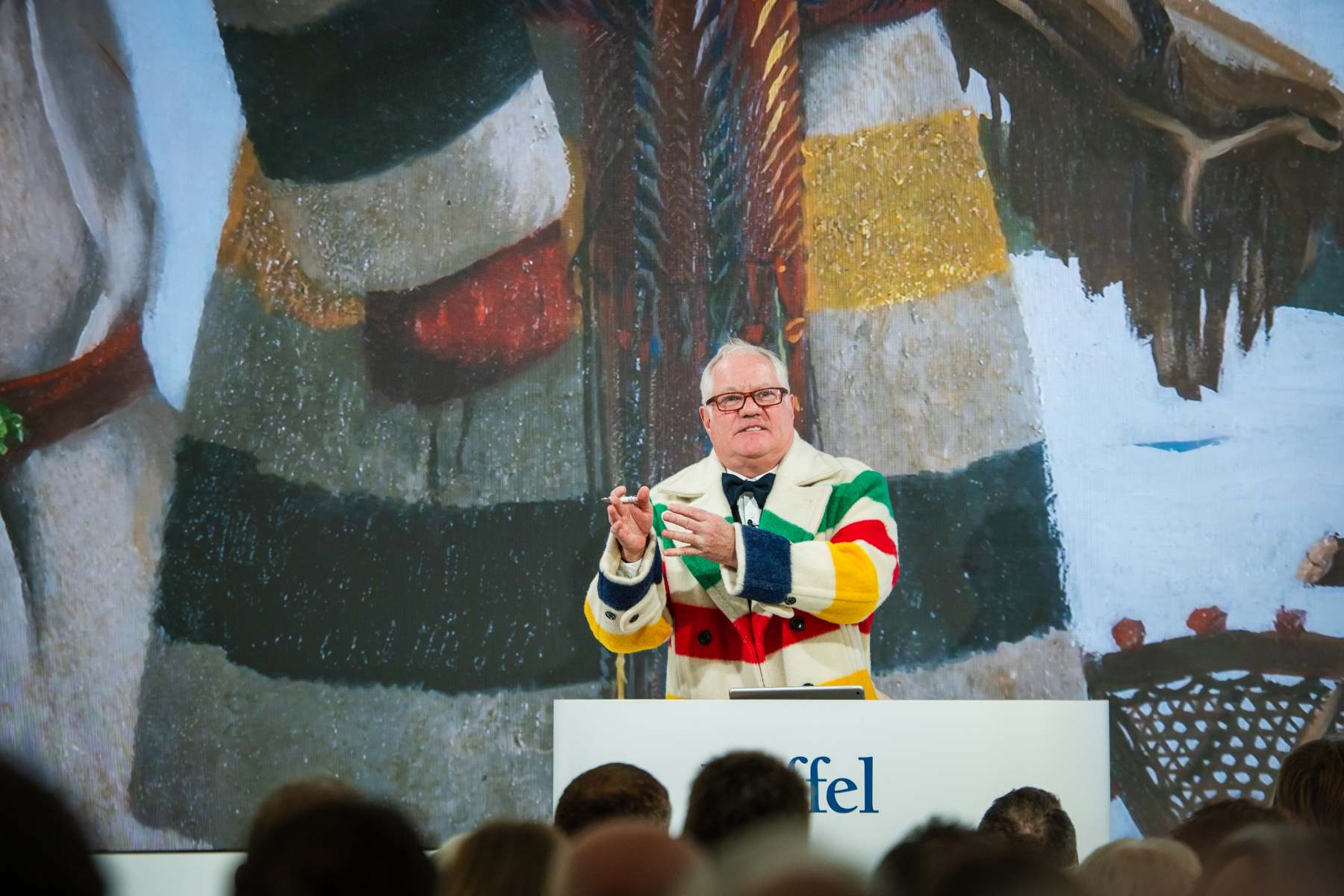
The Hudson’s Bay point coat, an iconic piece of Canadian history, has ignited discussions about cultural appropriation and colonial legacy. Originally created in 1811 by Indigenous women for British soldiers, the coat has become a symbol not only of national pride but also of colonialism and its lasting impacts on Indigenous communities.
Many Canadians recognize the coat for its distinctive multi-stripe design, a feature that has made it emblematic of the country itself. The Hudson’s Bay Company (HBC), established in 1670, began selling point blankets commercially in 1922. According to author Stephen R. Bown, these blankets were “immediately popular,” constituting a significant portion of trade goods in the late 18th century.
Recently, an individual visiting a garment recycling centre came across one of these coats, prompting reflection on its historical significance. Although the coat evokes feelings of nostalgia for many, it simultaneously represents a painful chapter in Canadian history. The HBC played a pivotal role in the colonization process, leading to the assimilation and displacement of Indigenous populations across vast territories. The legacy of disease and cultural loss associated with the company has left enduring scars.
As the company faced financial difficulties, culminating in its filing for creditor protection in June 2025, the public’s fascination with the coat remained. At clearance sales, these coats became highly sought after, with similar jackets listed for approximately $692 on resale platforms like eBay.
For Indigenous communities, the coat’s legacy is complex. Stephanie Eagletail, an Indigenous designer, revealed in an interview with the CBC that her grandfather still wears point blanket coats to signify resilience against historical trauma. In contrast, Tanya Talaga, a writer of Anishinaabe descent, articulated discomfort, stating that the sight of a point blanket often evokes memories of smallpox and colonization.
The question arises: is wearing a Hudson’s Bay point coat today equivalent to donning a symbol of oppression? Cody Caetano, an Indigenous author, expressed ambivalence, noting that while some may find it offensive, personal aesthetics play a role in individual perceptions. He stated, “I do know some Native [people] might take offence about anything related to the Bay…because of the connotations and heft of the legacy.”
The recent popularity of the coat has also been showcased in social media, where influencers were seen wearing it at a winter festival in Banff, raising concerns about cultural appropriation. The blending of Indigenous designs with non-Indigenous fashion has resulted in a complicated dynamic, as these styles often carry historical significance that is overlooked in contemporary fashion contexts.
As society grapples with these complexities, the fate of the Hudson’s Bay brand remains uncertain. Despite its decline, Canadian Tire announced in May 2025 that it would acquire HBC’s intellectual property, including the point blanket design. The company pledged to contribute all net proceeds, along with a minimum of $1 million annually, to the Blanket Fund, which supports Indigenous cultural and educational initiatives.
This move reflects a recognition of the contentious history associated with the brand while attempting to foster reconciliation. Engaging with the coat’s design presents a challenge; it embodies both a rich heritage and a troubled past.
For now, the Hudson’s Bay point coat remains a conversation starter, one that evokes a range of emotions from pride to discomfort. The garment, which has found its way into modern wardrobes, symbolizes the ongoing struggle to reconcile nostalgia with historical realities. The coat discovered in the recycling centre has not yet found a permanent home, residing instead in storage, a testament to the complicated feelings it elicits.
As discussions continue, the Hudson’s Bay point coat serves as a powerful reminder of the narratives woven into our clothing, compelling us to consider the stories that every garment tells.

Meta Plans Major Layoffs as AI Costs Surge

Alberta’s Referendum Could Pave Way for U.S. Statehood

Minooka District 201 Plans Enhanced Bilingual Support for Students

Canmore Approves Multiple Development Permits for New Projects

Remembering Bradly Castillo Shearsmith: A Life of Friendship and Joy

BIS Urges Watchdogs to Integrate Synthetic Risk Transfers in Stress Tests

Teva Transforms: Shifting Focus from Generics to Branded Success

Apple Launches AirPods Max 2 with Enhanced Audio Features

Ontario Ends Funding for Seven Supervised Injection Sites

Toyoake City Proposes Daily Two-Hour Smartphone Use Limit

Pedestrian Fatally Injured in Esquimalt Collision on August 14

B.C. Review Reveals Urgent Need for Rare-Disease Drug Reforms

Dark Adventure Game “Bye Sweet Carole” Set for October Release

Konami Revives Iconic Metal Gear Solid Delta Ahead of Release

Victoria’s Pop-Up Shop Shines Light on B.C.’s Wolf Cull

Jimmy Lai’s Defense Challenges Charges Under National Security Law

Snapmaker U1 Color 3D Printer Redefines Speed and Sustainability

Apple Expands Self-Service Repair Program to Canada
-
 Science12 months ago
Toyoake City Proposes Daily Two-Hour Smartphone Use Limit
-
 Top Stories12 months ago
Pedestrian Fatally Injured in Esquimalt Collision on August 14
-
 Health12 months ago
B.C. Review Reveals Urgent Need for Rare-Disease Drug Reforms
-
 Technology12 months ago
Dark Adventure Game “Bye Sweet Carole” Set for October Release
-
 Technology12 months ago
Konami Revives Iconic Metal Gear Solid Delta Ahead of Release
-
 Lifestyle12 months ago
Victoria’s Pop-Up Shop Shines Light on B.C.’s Wolf Cull
-
 World12 months ago
Jimmy Lai’s Defense Challenges Charges Under National Security Law
-
 Technology12 months ago
Snapmaker U1 Color 3D Printer Redefines Speed and Sustainability
-
 Technology12 months ago
Apple Expands Self-Service Repair Program to Canada
-

 Technology12 months ago
AION Folding Knife: Redefining EDC Design with Premium Materials
-

 Technology12 months ago
Solve Today’s Wordle Challenge: Hints and Answer for August 19
-

 Business12 months ago
Gordon Murray Automotive Unveils S1 LM and Le Mans GTR at Monterey