
Science
Alberta Declares Wild Boars a Pests, Imposing New Restrictions

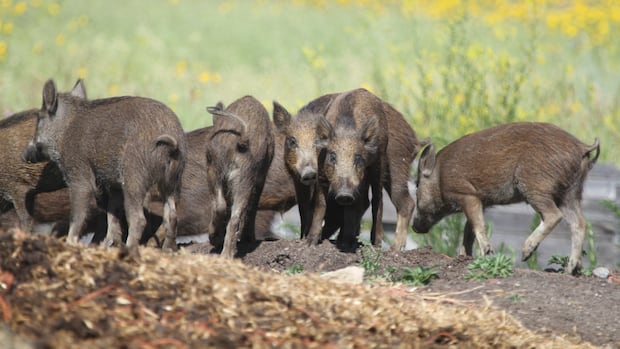
The Alberta government has officially classified wild boars as “a pest in all circumstances,” effective December 1, 2023. This designation brings new regulations on the management and hunting of these animals, aiming to mitigate their negative impact on agriculture and the environment.
Under the new rules, it is now illegal to keep, buy, sell, or transport wild boars in Alberta without a permit. Additionally, no new wild boar farms will be allowed in the province. While landowners are permitted to kill wild boars on their property, hunting and trapping these animals has been largely banned. Those who do kill a wild boar must report the date, location, and number of animals killed to provincial authorities as soon as possible.
Hannah McKenzie, Alberta’s wild boar specialist, explained that these changes were implemented due to the ongoing threats posed by existing wild boar populations. She highlighted that these animals not only damage crops and ecosystems but also pose a serious risk for the introduction and spread of foreign animal diseases, including African swine fever and foot and mouth disease. “These diseases could have a massive financial impact on the pork industry and our trade relationships,” McKenzie stated.
The wild boar, primarily the Eurasian wild pig and its hybrids with domestic swine, was introduced to Canada in the late 20th century for livestock purposes. Over time, some were able to escape and establish feral populations, particularly in the Prairie provinces. “As they spread and become a greater threat, we’ve seen other provinces make changes to their wild boar management to combat disease and trade risks,” McKenzie noted.
In Ontario, a similar situation has unfolded, with pork producers facing a ban on Eurasian wild boars starting January 1, 2024. Hans Lindenmann, a pork producer in eastern Ontario, expressed uncertainty about the future, as these boars comprised half of his business.
Alberta is currently working with 12 existing wild boar farms, allowing them to either maintain their operations under stricter conditions or accept compensation from the province to exit the industry. The government has allocated $590 per boar, along with additional funds for fencing, as part of an estimated $2.6 million program aimed at managing wild boar populations.
Charlotte Shipp, programs manager for Alberta Pork, acknowledged that the new regulations present a “challenging issue” for the organization. She emphasized the need to balance the risks of the industry while ensuring that producers remain integral parts of rural communities. “Tightening restrictions around wild boar farming and offering exit incentives are steps in the right direction,” Shipp added.
The threat of African swine fever, which has recently caused outbreaks in Spain, further complicates the situation. Although the disease is harmless to humans, it can decimate pig populations. McKenzie noted that tracking wild boar populations in Alberta is particularly challenging due to their nocturnal habits and preference for densely forested areas.
Ryan Brook, a professor at the University of Saskatchewan and an advocate for stricter wild boar management, remarked on the environmental destruction caused by these invasive animals. “They destroy the environment because, unlike a lot of our native wildlife, wild boars actually rip up the ground, called rooting,” Brook explained. He has long argued for the ban on sport hunting, stating that it has not effectively reduced wild boar populations.
Brook pointed out that sport hunting can disrupt groups of wild boars, causing them to scatter, which ultimately complicates population control efforts. He believes that hunting does not remove enough individuals quickly enough due to their high reproduction rates, averaging two litters of six piglets each year.
The Alberta government’s new restrictions represent a significant shift in wildlife management strategy, reflecting growing concerns around the ecological impact of wild boars and the potential economic repercussions of disease spread. With ongoing efforts to control their populations, the situation will continue to evolve as the province navigates the complexities of agriculture, wildlife, and public health.

Meta Plans Major Layoffs as AI Costs Surge

Alberta’s Referendum Could Pave Way for U.S. Statehood

Minooka District 201 Plans Enhanced Bilingual Support for Students

Canmore Approves Multiple Development Permits for New Projects

Remembering Bradly Castillo Shearsmith: A Life of Friendship and Joy

BIS Urges Watchdogs to Integrate Synthetic Risk Transfers in Stress Tests

Teva Transforms: Shifting Focus from Generics to Branded Success

Apple Launches AirPods Max 2 with Enhanced Audio Features

Ontario Ends Funding for Seven Supervised Injection Sites

Toyoake City Proposes Daily Two-Hour Smartphone Use Limit

Pedestrian Fatally Injured in Esquimalt Collision on August 14

B.C. Review Reveals Urgent Need for Rare-Disease Drug Reforms

Dark Adventure Game “Bye Sweet Carole” Set for October Release

Konami Revives Iconic Metal Gear Solid Delta Ahead of Release

Victoria’s Pop-Up Shop Shines Light on B.C.’s Wolf Cull

Jimmy Lai’s Defense Challenges Charges Under National Security Law

Snapmaker U1 Color 3D Printer Redefines Speed and Sustainability

Apple Expands Self-Service Repair Program to Canada
-
 Science12 months ago
Toyoake City Proposes Daily Two-Hour Smartphone Use Limit
-
 Top Stories12 months ago
Pedestrian Fatally Injured in Esquimalt Collision on August 14
-
 Health12 months ago
B.C. Review Reveals Urgent Need for Rare-Disease Drug Reforms
-
 Technology12 months ago
Dark Adventure Game “Bye Sweet Carole” Set for October Release
-
 Technology12 months ago
Konami Revives Iconic Metal Gear Solid Delta Ahead of Release
-
 Lifestyle12 months ago
Victoria’s Pop-Up Shop Shines Light on B.C.’s Wolf Cull
-
 World12 months ago
Jimmy Lai’s Defense Challenges Charges Under National Security Law
-
 Technology12 months ago
Snapmaker U1 Color 3D Printer Redefines Speed and Sustainability
-
 Technology12 months ago
Apple Expands Self-Service Repair Program to Canada
-

 Technology12 months ago
AION Folding Knife: Redefining EDC Design with Premium Materials
-

 Technology12 months ago
Solve Today’s Wordle Challenge: Hints and Answer for August 19
-

 Business12 months ago
Gordon Murray Automotive Unveils S1 LM and Le Mans GTR at Monterey