
Science
Dalhousie University Launches Digital Agriculture Institute for Farmers

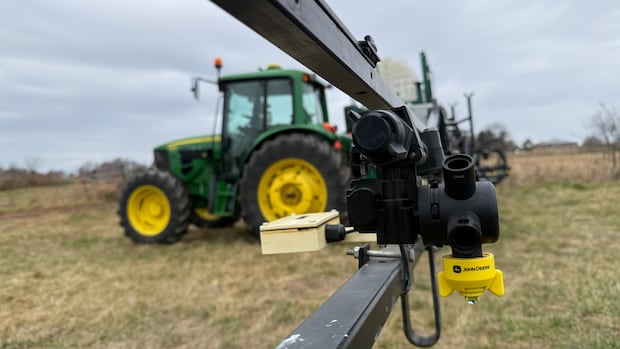
A new initiative at Dalhousie University is set to transform agriculture in Atlantic Canada. The university recently launched the Atlantic Institute for Digital Agriculture, aimed at helping local farmers adopt innovative technologies to address evolving agricultural challenges.
Peter Swinkels, a wild blueberry farmer from Belmont, Nova Scotia, is one of the first to embrace these advancements. After over four decades of harvesting blueberries by hand, he now utilizes artificial intelligence as part of his farming practices. Swinkels, a former president of the Wild Blueberry Producers Association of Nova Scotia, expressed enthusiasm about the initiative, particularly in the face of climate change, which poses significant risks to his crop.
The institute’s focus includes developing tailored solutions for farmers, particularly smaller-scale operations that may struggle to adopt conventional farming technologies. According to Travis Esau, the director of the Atlantic Institute for Digital Agriculture, the goal is to create solutions that are financially viable for small and medium-sized farms across the region. “You really have to have, for a lot of cases, large acres to be able to make the technology pay for itself,” Esau explained. “So the solutions need to be adapted to be applicable for the small and medium-sized farms in Atlantic Canada.”
One of the promising projects underway involves using AI-driven precision sprayers. Patrick Hennessy, a PhD student at Dalhousie University, is working on a system that requires 4,000 images of weeds to be labelled and processed. This technology allows farmers to deploy cameras mounted on equipment to identify weeds, which then trigger targeted pesticide application without the need for an internet connection. Hennessy noted, “Everything on the sprayer operates on the sprayer; it does not have to communicate with an outside network at all.”
The institute is also developing a mobile application designed to assist farmers in counting wild blueberry buds, which will help determine the optimal timing for fungicide application. This tool aims to improve efficiency and effectiveness in managing crops.
As part of the initiative, Dalhousie University is planning to construct a dedicated facility for the institute at its agricultural campus in Bible Hill, Nova Scotia. While no specific timeline or budget has been disclosed, university representatives are currently engaging in fundraising and seeking partnerships to support this venture.
In addition to AI technology, drone usage is emerging as another innovative approach for wild blueberry farmers. Although the application of pesticides by drones is advancing in some countries, Canadian regulations currently limit the products that can be used. According to Health Canada, only five pesticide products are approved for drone application through the Pest Management Regulatory Agency, with additional products under review. Hennessy remarked that drone-based spraying could minimize crop damage associated with traditional large farm equipment, stating, “We’re in the process of collecting data to see how effective that is, if it works just as well as ground-based spraying.”
The push for technological innovation comes at a challenging time for wild blueberry farmers. Swinkels reported that wild blueberry yields have recently suffered due to drought conditions, among other climate-related factors. “We’re very fortunate that the wild blueberry plant is very hardy, and I feel with a little support from technology that we might be able to work through these extreme climate changes,” he said.
The establishment of the Atlantic Institute for Digital Agriculture signals a positive step towards enhancing agricultural resilience in Atlantic Canada. As farmers like Swinkels adapt to changing conditions, the integration of advanced technologies may prove crucial for the future of farming in the region.

Meta Plans Major Layoffs as AI Costs Surge

Alberta’s Referendum Could Pave Way for U.S. Statehood

Minooka District 201 Plans Enhanced Bilingual Support for Students

Canmore Approves Multiple Development Permits for New Projects

Remembering Bradly Castillo Shearsmith: A Life of Friendship and Joy

BIS Urges Watchdogs to Integrate Synthetic Risk Transfers in Stress Tests

Teva Transforms: Shifting Focus from Generics to Branded Success

Apple Launches AirPods Max 2 with Enhanced Audio Features

Ontario Ends Funding for Seven Supervised Injection Sites

Toyoake City Proposes Daily Two-Hour Smartphone Use Limit

Pedestrian Fatally Injured in Esquimalt Collision on August 14

B.C. Review Reveals Urgent Need for Rare-Disease Drug Reforms

Dark Adventure Game “Bye Sweet Carole” Set for October Release

Konami Revives Iconic Metal Gear Solid Delta Ahead of Release

Victoria’s Pop-Up Shop Shines Light on B.C.’s Wolf Cull

Jimmy Lai’s Defense Challenges Charges Under National Security Law

Snapmaker U1 Color 3D Printer Redefines Speed and Sustainability

Apple Expands Self-Service Repair Program to Canada
-
 Science12 months ago
Toyoake City Proposes Daily Two-Hour Smartphone Use Limit
-
 Top Stories12 months ago
Pedestrian Fatally Injured in Esquimalt Collision on August 14
-
 Health12 months ago
B.C. Review Reveals Urgent Need for Rare-Disease Drug Reforms
-
 Technology12 months ago
Dark Adventure Game “Bye Sweet Carole” Set for October Release
-
 Technology12 months ago
Konami Revives Iconic Metal Gear Solid Delta Ahead of Release
-
 Lifestyle12 months ago
Victoria’s Pop-Up Shop Shines Light on B.C.’s Wolf Cull
-
 World12 months ago
Jimmy Lai’s Defense Challenges Charges Under National Security Law
-
 Technology12 months ago
Snapmaker U1 Color 3D Printer Redefines Speed and Sustainability
-
 Technology12 months ago
Apple Expands Self-Service Repair Program to Canada
-

 Technology12 months ago
AION Folding Knife: Redefining EDC Design with Premium Materials
-

 Technology12 months ago
Solve Today’s Wordle Challenge: Hints and Answer for August 19
-

 Business12 months ago
Gordon Murray Automotive Unveils S1 LM and Le Mans GTR at Monterey