
Science
DNA Advances Solve Cold Cases, Deliver Justice After Decades

In a landmark ruling last October, the murder case of Marie-Chantale Desjardins reached a resolution in a Quebec courtroom. Her mother, Sylvie Desjardins, confronted her daughter’s killer, Réal Courtemanche, delivering a powerful message 30 years in the making. “You thought you were taking a life, but in truth, you only added weight to your own existence,” she stated, underscoring the emotional toll of a case that had haunted her family since 1994.
Marie-Chantale, a 10-year-old girl, was found dead four days after she left a friend’s home, her bicycle abandoned nearby. The case remained unsolved for decades until recent advancements in DNA analysis led to the identification and conviction of Courtemanche for second-degree murder. This resolution is emblematic of the significant breakthroughs in forensic science that are now enabling law enforcement to tackle cold cases that have lingered for years.
Breakthroughs in Forensic Science
The head of Quebec’s DNA forensic lab, Diane Séguin, reported that the lab processes approximately 50 cold cases annually, successfully resolving between eight and ten cases in recent years. The lab’s advancements include improved DNA extraction techniques and the use of genetic genealogy, which compares DNA from crime scenes against public databases. “I’m optimistic… the more people put their DNA in those banks and accept to be part of criminal research, the more there will be matches,” Séguin noted.
The process of identifying suspects through DNA started with analyzing samples from crime scenes, which are then uploaded to a national database known as the crime scene index. The lab handles between 30,000 and 40,000 pieces of evidence each year, generating 4,000 to 5,000 DNA profiles for potential matches.
In some instances, DNA profiles from decades-old evidence have been retested using modern technology, significantly increasing the chances of identification. Furthermore, the lab employs “patronymic research,” linking unknown DNA to surnames, which can aid in constructing family trees through genetic genealogy.
Recent Cases Resolved Through DNA
The application of these techniques has led to notable resolutions beyond the Desjardins case. In September 2025, authorities arrested a suspect linked to a 1979 home invasion in Causapscal, Quebec, citing advancements in DNA analysis. Similarly, police identified the remains of a missing man from Quebec in July 2025, whose body had been discovered in Prince Edward Island in 1997.
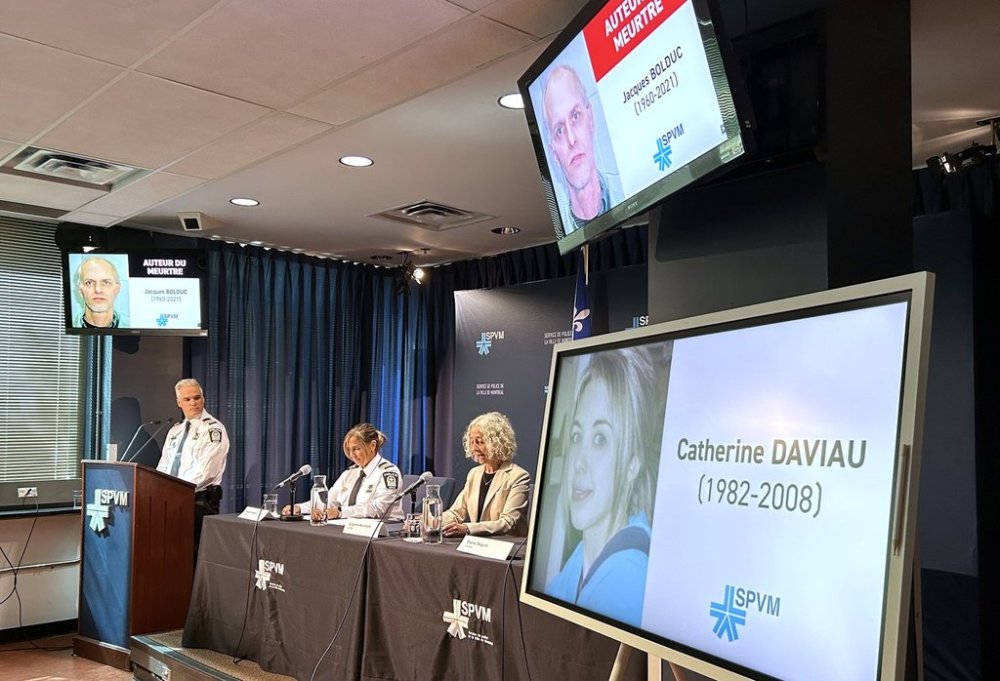
In a separate case, investigators used genetic genealogy to identify the killer of Catherine Daviau, who was murdered in her Montreal apartment in December 2008. The process revealed a connection between a DNA sample found at the scene and profiles in public databases, ultimately leading to the identification of Jacques Bolduc, who had passed away in 2021 while serving a prison sentence for unrelated charges. Although Bolduc did not know Daviau personally, the investigation uncovered that he had responded to an online advertisement she posted.
While the results from genetic genealogy provide valuable leads, Séguin stresses that these findings must be corroborated by further evidence collected by law enforcement.
The potential for these techniques extends beyond cold cases. Séguin advocates for applying genetic genealogy to active cases, especially in situations where there is a risk of further crimes. “It’s good to work on cold cases, but it’s also good to work on contemporary cases to prevent future assaults,” she explained.
In light of these advancements, some experts, including criminologist Michael Arntfield, argue for expanding the list of crimes requiring DNA samples for national databases. While this raises concerns about civil rights and privacy, Arntfield believes that broader implementation of these techniques could dramatically reduce the number of cold cases. “With increased buy-in, there will be a time when you could almost retire the term cold case,” he stated, suggesting that real-time application in homicides could prevent cases from stagnating.
The progress made in DNA analysis marks a significant step forward in the ongoing quest for justice for victims and their families. As technology continues to evolve, the hope remains that even more cold cases will be resolved, bringing closure to those affected and accountability to those responsible.

Meta Plans Major Layoffs as AI Costs Surge

Alberta’s Referendum Could Pave Way for U.S. Statehood

Minooka District 201 Plans Enhanced Bilingual Support for Students

Canmore Approves Multiple Development Permits for New Projects

Remembering Bradly Castillo Shearsmith: A Life of Friendship and Joy

BIS Urges Watchdogs to Integrate Synthetic Risk Transfers in Stress Tests

Teva Transforms: Shifting Focus from Generics to Branded Success

Apple Launches AirPods Max 2 with Enhanced Audio Features

Ontario Ends Funding for Seven Supervised Injection Sites

Toyoake City Proposes Daily Two-Hour Smartphone Use Limit

Pedestrian Fatally Injured in Esquimalt Collision on August 14

B.C. Review Reveals Urgent Need for Rare-Disease Drug Reforms

Dark Adventure Game “Bye Sweet Carole” Set for October Release

Konami Revives Iconic Metal Gear Solid Delta Ahead of Release

Victoria’s Pop-Up Shop Shines Light on B.C.’s Wolf Cull

Jimmy Lai’s Defense Challenges Charges Under National Security Law

Snapmaker U1 Color 3D Printer Redefines Speed and Sustainability

Apple Expands Self-Service Repair Program to Canada
-
 Science12 months ago
Toyoake City Proposes Daily Two-Hour Smartphone Use Limit
-
 Top Stories12 months ago
Pedestrian Fatally Injured in Esquimalt Collision on August 14
-
 Health12 months ago
B.C. Review Reveals Urgent Need for Rare-Disease Drug Reforms
-
 Technology12 months ago
Dark Adventure Game “Bye Sweet Carole” Set for October Release
-
 Technology12 months ago
Konami Revives Iconic Metal Gear Solid Delta Ahead of Release
-
 Lifestyle12 months ago
Victoria’s Pop-Up Shop Shines Light on B.C.’s Wolf Cull
-
 World12 months ago
Jimmy Lai’s Defense Challenges Charges Under National Security Law
-
 Technology12 months ago
Snapmaker U1 Color 3D Printer Redefines Speed and Sustainability
-
 Technology12 months ago
Apple Expands Self-Service Repair Program to Canada
-

 Technology12 months ago
AION Folding Knife: Redefining EDC Design with Premium Materials
-

 Technology12 months ago
Solve Today’s Wordle Challenge: Hints and Answer for August 19
-

 Business12 months ago
Gordon Murray Automotive Unveils S1 LM and Le Mans GTR at Monterey