
Science
International Team Investigates Roman Empire’s Leather Economy

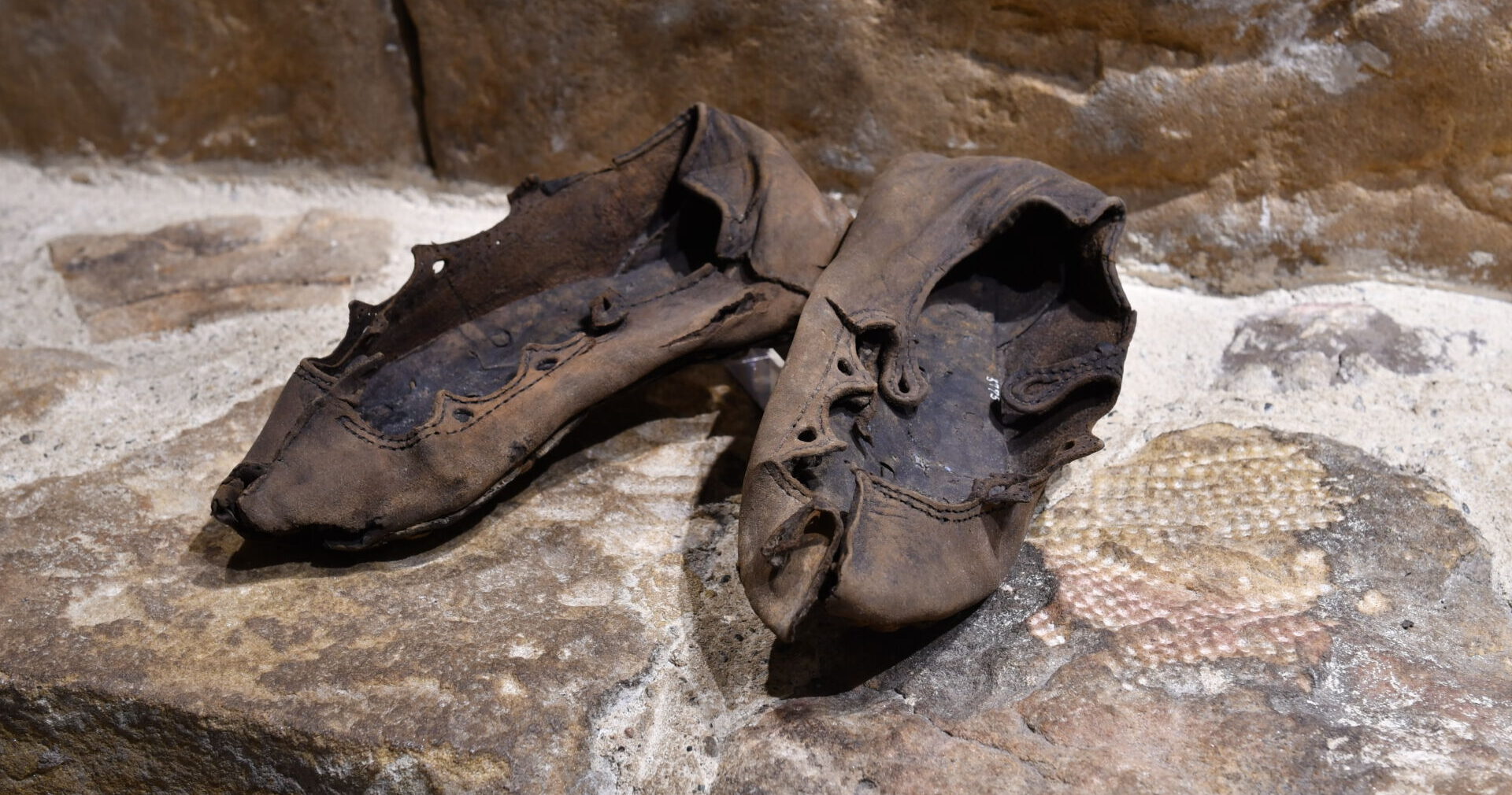
An international research team is exploring the leather economy of the Roman Empire, aiming to enhance understanding of ancient manufacturing, agriculture, trade, and daily life. Led by Gillian Taylor from Teesside University in Middlesbrough, England, the project involves Elizabeth M. Greene, a renowned expert in Roman footwear and Canada Research Chair in Roman Archaeology. This three-year initiative has secured £1.3 million (approximately $2.4 million CAD) in funding from the U.K. Research and Innovation Arts and Humanities Research Council.
The research seeks to uncover how leather was produced, traded, and utilized across the Roman Empire, a subject that has remained largely unexplored due to the scarcity of preserved organic materials. “Archaeological leather fascinates the public because it offers a glimpse into the past, showcasing the preservation of shoes and everyday objects from nearly two thousand years ago,” Greene stated, reflecting on her decade-long study of leather artifacts found at Vindolanda, a significant archaeological site near Hadrian’s Wall.
Insights from Key Roman Sites
The research will utilize advanced scientific techniques, including ancient DNA sequencing, to analyze leather artifacts from prominent Roman locations such as Vindolanda, Trimontium in Scotland, and sites in the Netherlands like Valkenburg and Vechten. The team aims to integrate scientific data with historical models to create a comprehensive understanding of the Roman economy. “This work will help us understand not just how people lived, but how they adapted, innovated, and connected across vast distances,” Taylor noted.
The Vindolanda Trust, the National Museum of Scotland, and the Dutch National Museum of Antiquities will collaborate with the research team, providing access to collections and supporting outreach activities that engage global audiences.
Greene emphasized the project’s goal of filling knowledge gaps related to the complete leather manufacturing process in antiquity. Understanding this process is essential for grasping the impacts of Roman conquest and military occupation in various provinces of the empire.
Significance of the Vindolanda Collection
Greene also leads the Vindolanda Archaeological Leather Project (VALP), which has been funded by the Social Sciences and Humanities Research Council since 2018. Every other summer, she brings undergraduate students from Western University for a fieldwork course at Vindolanda, while graduate students and postdoctoral researchers explore various aspects of its leather collection.
The VALP centers on a scientific database with extensive data points that allow researchers to cross-reference information about nearly 8,000 leather objects. “Vindolanda has the largest collection of archaeological leather from any site in the Roman world, making it critical for understanding the leather economy and trade practices throughout the empire,” Greene explained.
The research team employs a technique known as Zooarchaeology by Mass Spectrometry (ZooMS) to analyze proteins found in leather artifacts. Collaborating with Matthew Breen from North Carolina State University, the team aims to identify the species of animals used to create various leather items and determine their sex and origin.
Greene highlighted the rich information that archaeological leather holds beyond what is immediately apparent. For example, the Roman army’s need for thousands of tents each year underlines the agricultural practices and labor involved in producing such equipment. “Yet we know very little about how it all happened with certainty at this point,” she remarked.
The ongoing impacts of climate change pose significant challenges for archaeological sites like Vindolanda. As organic materials deteriorate, the research findings will inform future policies for archaeological recovery and the preservation of leather artifacts.
“For a long time, archaeologists believed it was best to preserve sites for future investigations when scientific techniques would be more advanced. We’re now rethinking that idea, especially where organic material like leather forms a rich part of the archaeological record,” Greene stated. “We need to prioritize sites that still contain these extraordinary objects before they are gone.”
This endeavor not only aims to shed light on the complex layers of Roman economic history but also underscores the urgent need for sustainable practices in archaeological research.

Meta Plans Major Layoffs as AI Costs Surge

Alberta’s Referendum Could Pave Way for U.S. Statehood

Minooka District 201 Plans Enhanced Bilingual Support for Students

Canmore Approves Multiple Development Permits for New Projects

Remembering Bradly Castillo Shearsmith: A Life of Friendship and Joy

BIS Urges Watchdogs to Integrate Synthetic Risk Transfers in Stress Tests

Teva Transforms: Shifting Focus from Generics to Branded Success

Apple Launches AirPods Max 2 with Enhanced Audio Features

Ontario Ends Funding for Seven Supervised Injection Sites

Toyoake City Proposes Daily Two-Hour Smartphone Use Limit

Pedestrian Fatally Injured in Esquimalt Collision on August 14

B.C. Review Reveals Urgent Need for Rare-Disease Drug Reforms

Dark Adventure Game “Bye Sweet Carole” Set for October Release

Konami Revives Iconic Metal Gear Solid Delta Ahead of Release

Victoria’s Pop-Up Shop Shines Light on B.C.’s Wolf Cull

Jimmy Lai’s Defense Challenges Charges Under National Security Law

Snapmaker U1 Color 3D Printer Redefines Speed and Sustainability

Apple Expands Self-Service Repair Program to Canada
-
 Science12 months ago
Toyoake City Proposes Daily Two-Hour Smartphone Use Limit
-
 Top Stories12 months ago
Pedestrian Fatally Injured in Esquimalt Collision on August 14
-
 Health12 months ago
B.C. Review Reveals Urgent Need for Rare-Disease Drug Reforms
-
 Technology12 months ago
Dark Adventure Game “Bye Sweet Carole” Set for October Release
-
 Technology12 months ago
Konami Revives Iconic Metal Gear Solid Delta Ahead of Release
-
 Lifestyle12 months ago
Victoria’s Pop-Up Shop Shines Light on B.C.’s Wolf Cull
-
 World12 months ago
Jimmy Lai’s Defense Challenges Charges Under National Security Law
-
 Technology12 months ago
Snapmaker U1 Color 3D Printer Redefines Speed and Sustainability
-
 Technology12 months ago
Apple Expands Self-Service Repair Program to Canada
-

 Technology12 months ago
AION Folding Knife: Redefining EDC Design with Premium Materials
-

 Technology12 months ago
Solve Today’s Wordle Challenge: Hints and Answer for August 19
-

 Business12 months ago
Gordon Murray Automotive Unveils S1 LM and Le Mans GTR at Monterey