
Science
NASA Delays Artemis II Launch to March Due to Hydrogen Leaks

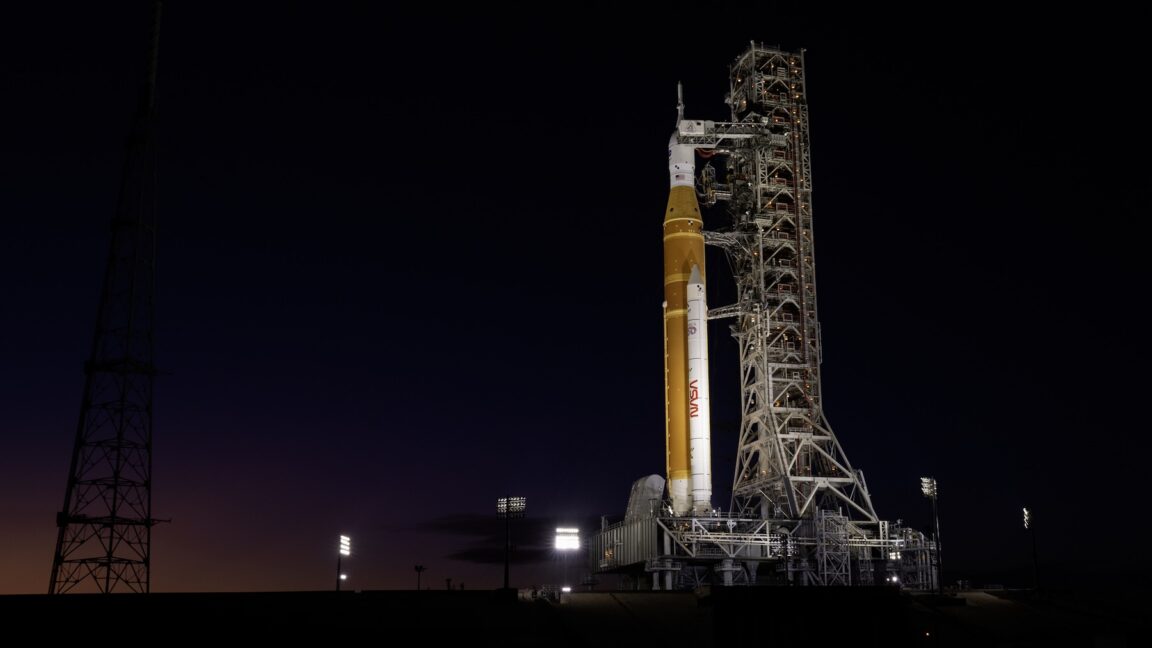
The launch of NASA’s Artemis II mission, marking the first crewed flight to the Moon in over 53 years, has been postponed until March due to hydrogen leaks discovered during a fueling test at the Kennedy Space Center in Florida. The test, which aimed to simulate a countdown, revealed persistent issues with hydrogen leaks between the rocket and its launch platform.
NASA reported that engineers faced several challenges during the two-day Wet Dress Rehearsal (WDR), yet they achieved numerous objectives. Following the test, NASA stated, “To allow teams to review data and conduct a second Wet Dress Rehearsal, NASA now will target March as the earliest possible launch opportunity for the flight test.” The delays echo previous issues encountered during the uncrewed Artemis I mission, which also faced hydrogen leak problems that postponed its launch.
Details of the Delayed Launch
Originally, NASA officials anticipated a smooth test that could have led to a launch as soon as February 8. The Artemis II mission is designed to send four astronauts aboard the Orion spacecraft on a trajectory around the far side of the Moon, paving the way for future lunar expeditions. The first opportunity for launch in March is set for March 6, with a two-hour window opening at 20:29 EST (01:26 UTC on March 7).
The astronauts involved in this mission—commander Reid Wiseman, pilot Victor Glover, mission specialist Christina Koch, and Canadian astronaut Jeremy Hansen—have been in medical quarantine since January 21 as part of standard pre-launch procedures. They will now exit quarantine to resume training while awaiting the revised launch schedule.
Challenges During the Test
The Artemis launch team initiated fueling operations around midday Monday, delayed by cold temperatures at the Florida spaceport. Shortly after starting to load super-cold liquid hydrogen into the core stage of the Space Launch System (SLS) rocket, the team detected hydrogen leaks in the same area that caused earlier delays during the Artemis I campaign.
Liquid hydrogen and oxygen are routed into the SLS core stage through Tail Service Mast Umbilicals (TSMUs). These connections are critical during fueling and are designed to disconnect as the rocket lifts off. Hydrogen, while an efficient rocket fuel, poses handling challenges due to its extremely low storage temperature of -423 degrees Fahrenheit (-253 degrees Celsius). This temperature can alter the shape and function of seals, creating potential leak paths.
During the practice countdown, hydrogen concentrations exceeded NASA’s safety limit multiple times. Engineers attempted to rectify the leaks by stopping the flow of liquid hydrogen, allowing the interface to warm up for reseating seals, and adjusting propellant flow.
Despite these efforts, the countdown was halted at T-minus 5 minutes and 15 seconds due to a spike in the hydrogen leak rate. This premature termination prevented the rocket from switching to internal power and fully pressurizing its propellant tanks.
Next Steps for NASA
Following the incomplete test, NASA managers decided to delay the Artemis II mission to allow for comprehensive data analysis and issue resolution. NASA Administrator Jared Isaacman emphasized the agency’s commitment to safety, stating, “We will only launch when we believe we are as ready to undertake this historic mission.”
Officials have not yet communicated when a second Wet Dress Rehearsal will occur or if the rocket will be returned to its assembly building for repairs. A press briefing is scheduled for Tuesday afternoon to provide further details regarding the test results and future plans. As NASA prepares for this pivotal mission, the focus remains on ensuring the safety and readiness of both the crew and the spacecraft.

Meta Plans Major Layoffs as AI Costs Surge

Alberta’s Referendum Could Pave Way for U.S. Statehood

Minooka District 201 Plans Enhanced Bilingual Support for Students

Canmore Approves Multiple Development Permits for New Projects

Remembering Bradly Castillo Shearsmith: A Life of Friendship and Joy

BIS Urges Watchdogs to Integrate Synthetic Risk Transfers in Stress Tests

Teva Transforms: Shifting Focus from Generics to Branded Success

Apple Launches AirPods Max 2 with Enhanced Audio Features

Ontario Ends Funding for Seven Supervised Injection Sites

Toyoake City Proposes Daily Two-Hour Smartphone Use Limit

Pedestrian Fatally Injured in Esquimalt Collision on August 14

B.C. Review Reveals Urgent Need for Rare-Disease Drug Reforms

Dark Adventure Game “Bye Sweet Carole” Set for October Release

Konami Revives Iconic Metal Gear Solid Delta Ahead of Release

Victoria’s Pop-Up Shop Shines Light on B.C.’s Wolf Cull

Jimmy Lai’s Defense Challenges Charges Under National Security Law

Snapmaker U1 Color 3D Printer Redefines Speed and Sustainability

Apple Expands Self-Service Repair Program to Canada
-
 Science11 months ago
Toyoake City Proposes Daily Two-Hour Smartphone Use Limit
-
 Top Stories11 months ago
Pedestrian Fatally Injured in Esquimalt Collision on August 14
-
 Health11 months ago
B.C. Review Reveals Urgent Need for Rare-Disease Drug Reforms
-
 Technology11 months ago
Dark Adventure Game “Bye Sweet Carole” Set for October Release
-
 Technology11 months ago
Konami Revives Iconic Metal Gear Solid Delta Ahead of Release
-
 Lifestyle11 months ago
Victoria’s Pop-Up Shop Shines Light on B.C.’s Wolf Cull
-
 World11 months ago
Jimmy Lai’s Defense Challenges Charges Under National Security Law
-
 Technology11 months ago
Snapmaker U1 Color 3D Printer Redefines Speed and Sustainability
-
 Technology11 months ago
Apple Expands Self-Service Repair Program to Canada
-

 Technology11 months ago
AION Folding Knife: Redefining EDC Design with Premium Materials
-

 Technology11 months ago
Solve Today’s Wordle Challenge: Hints and Answer for August 19
-

 Business11 months ago
Gordon Murray Automotive Unveils S1 LM and Le Mans GTR at Monterey