
Science
NASA Initiates Medical Evacuation from International Space Station

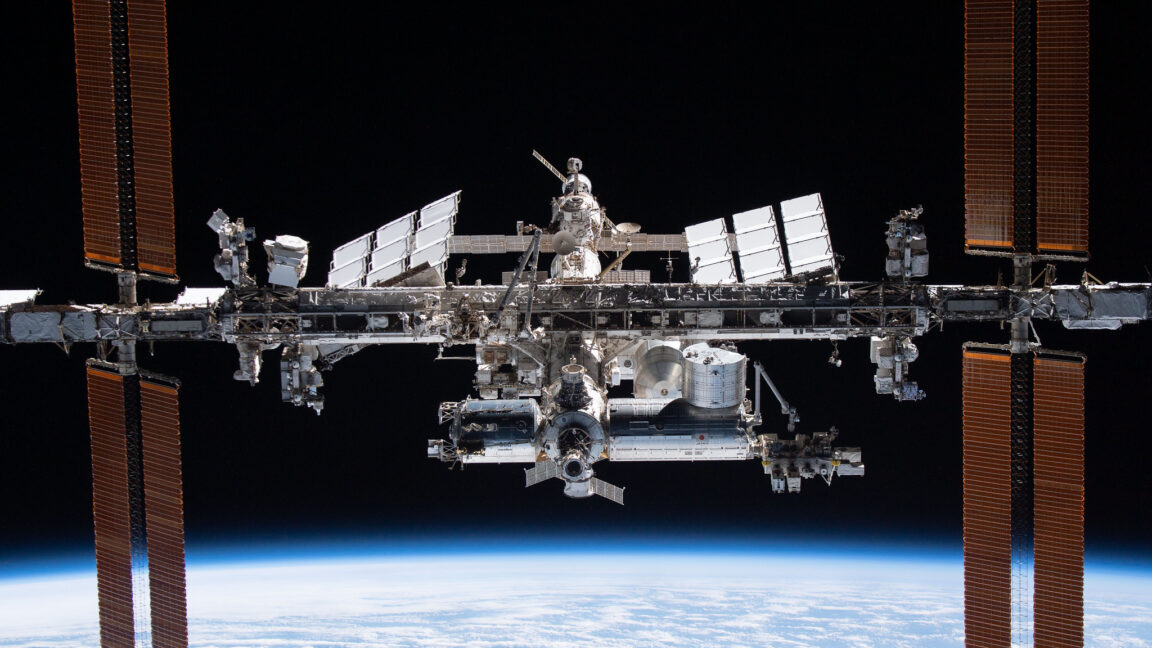
NASA has announced a “controlled medical evacuation” from the International Space Station (ISS) after a crew member experienced a medical situation earlier this week. The decision involves returning four of the seven astronauts currently aboard the station, although the specific individual affected has not been disclosed.
On Thursday, James “JD” Polk, NASA’s chief health and medical officer, confirmed that the astronaut in question is “absolutely stable.” However, the agency is prioritizing caution by opting for an early return. The affected astronaut is part of the Crew-11 mission, which launched on August 1, 2023, and was originally scheduled to return around February 20, 2024. Instead, Crew-11 will depart from the ISS in the coming days, aiming for a parachute-assisted splashdown in the Pacific Ocean off the coast of California.
Jared Isaacman, NASA Administrator, explained the decision to bring Crew-11 back early, stating, “After discussions with our chief health and medical officer and leadership across the agency, I’ve come to the decision that it’s in the best interests of our astronauts to return Crew-11 ahead of their planned departure.”
Mission Details and Medical Concerns
Crew-11 is led by Zena Cardman, who is concluding her first mission in space. She is joined by veteran astronaut Mike Fincke, Kimiya Yui from Japan, and Oleg Platonov from Russia. Isaacman indicated that further details regarding the schedule for Crew-11’s undocking and reentry will be available within the next 48 hours. The astronauts will return aboard the same SpaceX Crew Dragon spacecraft they launched in August.
Polk emphasized the importance of the crew’s health, stating “For over 60 years, NASA has set the standard for safety and security in crewed spaceflight. The health and well-being of our astronauts is always and will be our highest priority.” He noted that while the situation does not constitute an emergency, the decision to bring the crew home was prudent given the circumstances.
The specific medical issue remains undisclosed, with Polk citing privacy concerns. He refrained from discussing any diagnoses, urging respect for the astronaut’s privacy. Initial preparations for a spacewalk were underway for Cardman and Fincke when the medical situation arose, but Polk clarified that the incident was unrelated to these preparations.
Medical Protocols and Future Operations
On Wednesday afternoon, Yui initiated a private medical conference with mission controllers, requesting specific camera views inside the ISS. Following this, NASA acknowledged a medical concern before announcing the potential early return of the crew. Polk remarked on the crew’s training and quick response, which is integral to their preparedness for such incidents.
The ISS is equipped with a range of medical supplies and equipment, allowing astronauts to address emergencies. While the medical capabilities on the ISS are substantial, Polk acknowledged that they are not equivalent to those found in a fully equipped hospital. “We have a very robust suite of medical hardware onboard the ISS, but we don’t have the complete amount of hardware that I would have in the emergency department,” he explained.
NASA will take several days to finalize the timing of the Dragon spacecraft’s departure from the ISS. A recovery ship will be dispatched from Southern California to the splashdown zone, where conditions will be assessed to determine the best opportunity for reentry.
Despite the astronaut’s stability, Polk mentioned a “lingering risk” to the individual’s health if they remained in orbit, justifying the early decision to conclude the Crew-11 mission. This marks a significant moment for Isaacman, who recently assumed the role of NASA Administrator after a confirmation vote in the Senate.
The ISS will continue operations with a reduced crew of three until the upcoming arrival of SpaceX’s Crew-12 mission. The launch, currently set for February 15, 2024, may be expedited. Until then, the station’s crew consists of NASA astronaut Chris Williams and two Russian cosmonauts, who have their own means of evacuation.
This early return represents an unprecedented move by NASA, which has never before cut short a human spaceflight mission for medical reasons. As Polk noted, “It’s the first time we’ve done a controlled medical evacuation from the vehicle, so that is unusual.”
Over the past 25 years, NASA has developed robust protocols for medical emergencies in space, allowing astronauts to manage various health issues without requiring immediate evacuation. The ISS serves not only as a laboratory for scientific research but also as a crucial platform for understanding human health in space, particularly in preparation for future deep space missions.
Isaacman concluded, “We will absolutely learn from this situation as well, to see if that informs our future on-orbit operations, whether that be on the space station or our future lunar base that we’re pursuing right now, and eventually for deep space missions to Mars.”

Meta Plans Major Layoffs as AI Costs Surge

Alberta’s Referendum Could Pave Way for U.S. Statehood

Minooka District 201 Plans Enhanced Bilingual Support for Students

Canmore Approves Multiple Development Permits for New Projects

Remembering Bradly Castillo Shearsmith: A Life of Friendship and Joy

BIS Urges Watchdogs to Integrate Synthetic Risk Transfers in Stress Tests

Teva Transforms: Shifting Focus from Generics to Branded Success

Apple Launches AirPods Max 2 with Enhanced Audio Features

Ontario Ends Funding for Seven Supervised Injection Sites

Toyoake City Proposes Daily Two-Hour Smartphone Use Limit

Pedestrian Fatally Injured in Esquimalt Collision on August 14

B.C. Review Reveals Urgent Need for Rare-Disease Drug Reforms

Dark Adventure Game “Bye Sweet Carole” Set for October Release

Konami Revives Iconic Metal Gear Solid Delta Ahead of Release

Victoria’s Pop-Up Shop Shines Light on B.C.’s Wolf Cull

Jimmy Lai’s Defense Challenges Charges Under National Security Law

Snapmaker U1 Color 3D Printer Redefines Speed and Sustainability

Apple Expands Self-Service Repair Program to Canada
-
 Science11 months ago
Toyoake City Proposes Daily Two-Hour Smartphone Use Limit
-
 Top Stories11 months ago
Pedestrian Fatally Injured in Esquimalt Collision on August 14
-
 Health11 months ago
B.C. Review Reveals Urgent Need for Rare-Disease Drug Reforms
-
 Technology11 months ago
Dark Adventure Game “Bye Sweet Carole” Set for October Release
-
 Technology11 months ago
Konami Revives Iconic Metal Gear Solid Delta Ahead of Release
-
 Lifestyle11 months ago
Victoria’s Pop-Up Shop Shines Light on B.C.’s Wolf Cull
-
 World11 months ago
Jimmy Lai’s Defense Challenges Charges Under National Security Law
-
 Technology11 months ago
Snapmaker U1 Color 3D Printer Redefines Speed and Sustainability
-
 Technology11 months ago
Apple Expands Self-Service Repair Program to Canada
-

 Technology11 months ago
AION Folding Knife: Redefining EDC Design with Premium Materials
-

 Technology11 months ago
Solve Today’s Wordle Challenge: Hints and Answer for August 19
-

 Business11 months ago
Gordon Murray Automotive Unveils S1 LM and Le Mans GTR at Monterey