
Science
NASA’s Artemis II Rocket Begins Journey to Moon Launch Pad

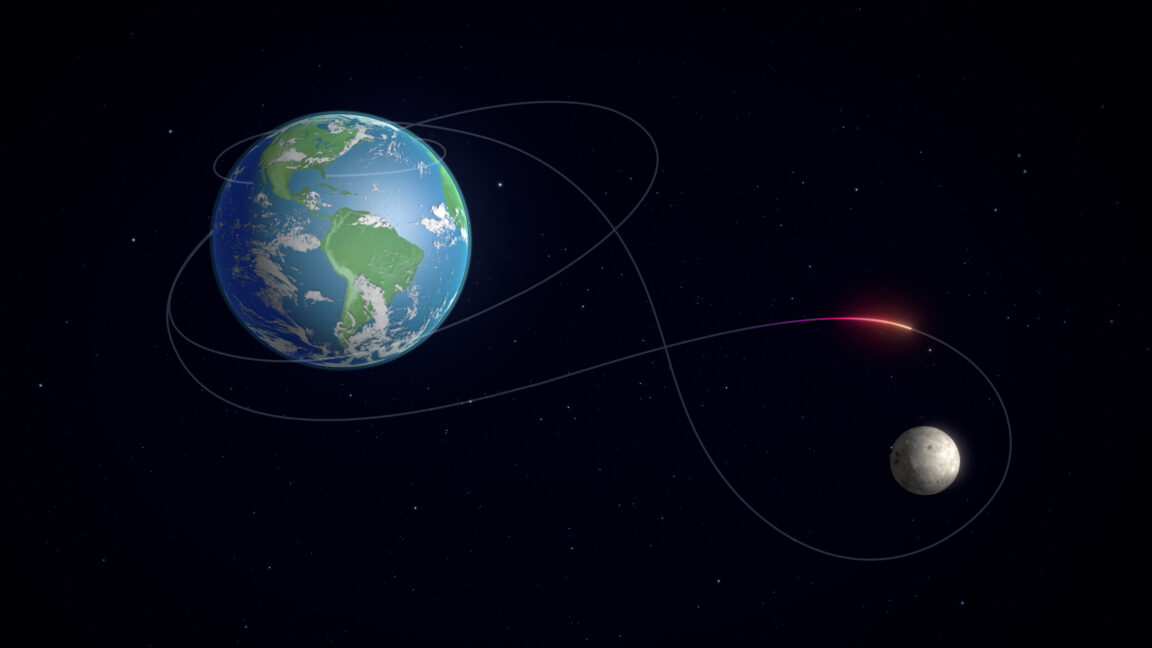
NASA is set to take a significant step forward in its Artemis II mission as the Space Launch System (SLS) rocket, carrying four astronauts, makes its way from the Vehicle Assembly Building at Kennedy Space Center in Florida to the launch pad. The rollout is scheduled for early Saturday, around 07:00 EST (11:00 UTC), marking the first human mission to the vicinity of the Moon since the Apollo program concluded in 1972.
The SLS rocket, along with its mobile launch platform, will traverse approximately four miles to Launch Complex 39B. This operation, dubbed a “crawl,” will be executed by one of NASA’s diesel-powered crawler transporters, renowned for being the world’s heaviest self-propelled vehicle, as certified by Guinness. The journey is expected to take between eight to ten hours, with the crawler moving at a speed of less than one mile per hour.
Artemis II aims to send astronauts around the far side of the Moon, setting a new record for the farthest distance humans have traveled from Earth. The crew, which includes NASA astronauts Reid Wiseman, Victor Glover, Christina Koch, and Canadian astronaut Jeremy Hansen, will experience a high-speed reentry of approximately 25,000 mph (40,000 km/h) over the Pacific Ocean.
Historic Journey Begins
The rollout of the fully assembled Moon rocket is a momentous occasion. Following its departure from the Vehicle Assembly Building, the crawler will navigate eastward, turning left before ascending the ramp to Pad 39B, which offers a view of the Atlantic Ocean. “We will be at a cruising speed of under one mile per hour,” stated Charlie Blackwell-Thompson, NASA’s launch director for Artemis II. The slow pace is crucial for safely maneuvering the massive structure.
Originally built to transport NASA’s Saturn V rockets, the crawler has played a pivotal role in various missions since the Space Shuttle Program. “These are the kinds of days that we live for in this line of work,” remarked John Honeycutt, chair of NASA’s Mission Management Team for Artemis II. He emphasized the significance of this moment, stating, “It really doesn’t get much better than this; we’re making history.”
Artemis II is the first crewed flight of NASA’s Artemis program, which aims to return humans to the Moon. The initiative, named after the Greek goddess and twin sister of Apollo, was officially announced in 2019. However, its roots can be traced back to earlier programs, including the Orion spacecraft and the Space Launch System, which have undergone extensive development over the past two decades.
Future Missions and Geopolitical Implications
The successful completion of Artemis II is critical for demonstrating the capabilities of the Orion spacecraft and SLS rocket within the Artemis architecture. NASA has invested tens of billions of dollars into developing this technology, and a successful mission will serve as a validation of these efforts. The agency currently relies on the SLS rocket for upcoming missions, which costs over $2 billion per flight.
As countries like China work towards their lunar ambitions, the geopolitical stakes for NASA’s lunar return have intensified. The United States aims to land astronauts on the Moon before China, which plans to send its own crew by 2030. This race underscores the importance of national prestige and potential access to lunar resources.
Preparations for Artemis II continue, with technicians finalizing checks at the launch pad. A crucial practice countdown, known as a Wet Dress Rehearsal (WDR), is scheduled for early February. During this rehearsal, the launch team will load the SLS rocket with super-cooled liquid hydrogen and liquid oxygen, essential for the rocket’s operation. Previous missions, particularly Artemis I, provided valuable lessons that will inform the Artemis II countdown.
NASA aims to launch Artemis II as early as February 6, 2024, though the schedule is tight, allowing for limited launch windows. If the mission does not launch by February 11, the next opportunity will not arise until March. With the astronauts and flight controllers completing final training at Johnson Space Center in Houston, the focus remains on ensuring the safety and success of the mission.
Honeycutt expressed his commitment to the mission, stating, “As chair of the MMT, my job is the safe return of Reid, Victor, Christina, and Jeremy. I consider that a duty and a trust.” As the world watches, NASA’s journey towards the Moon continues to unfold, with hopes set high for the future of lunar exploration.

Meta Plans Major Layoffs as AI Costs Surge

Alberta’s Referendum Could Pave Way for U.S. Statehood

Minooka District 201 Plans Enhanced Bilingual Support for Students

Canmore Approves Multiple Development Permits for New Projects

Remembering Bradly Castillo Shearsmith: A Life of Friendship and Joy

BIS Urges Watchdogs to Integrate Synthetic Risk Transfers in Stress Tests

Teva Transforms: Shifting Focus from Generics to Branded Success

Apple Launches AirPods Max 2 with Enhanced Audio Features

Ontario Ends Funding for Seven Supervised Injection Sites

Toyoake City Proposes Daily Two-Hour Smartphone Use Limit

Pedestrian Fatally Injured in Esquimalt Collision on August 14

B.C. Review Reveals Urgent Need for Rare-Disease Drug Reforms

Dark Adventure Game “Bye Sweet Carole” Set for October Release

Konami Revives Iconic Metal Gear Solid Delta Ahead of Release

Victoria’s Pop-Up Shop Shines Light on B.C.’s Wolf Cull

Jimmy Lai’s Defense Challenges Charges Under National Security Law

Snapmaker U1 Color 3D Printer Redefines Speed and Sustainability

Apple Expands Self-Service Repair Program to Canada
-
 Science11 months ago
Toyoake City Proposes Daily Two-Hour Smartphone Use Limit
-
 Top Stories11 months ago
Pedestrian Fatally Injured in Esquimalt Collision on August 14
-
 Health11 months ago
B.C. Review Reveals Urgent Need for Rare-Disease Drug Reforms
-
 Technology11 months ago
Dark Adventure Game “Bye Sweet Carole” Set for October Release
-
 Technology11 months ago
Konami Revives Iconic Metal Gear Solid Delta Ahead of Release
-
 Lifestyle11 months ago
Victoria’s Pop-Up Shop Shines Light on B.C.’s Wolf Cull
-
 World11 months ago
Jimmy Lai’s Defense Challenges Charges Under National Security Law
-
 Technology11 months ago
Snapmaker U1 Color 3D Printer Redefines Speed and Sustainability
-
 Technology11 months ago
Apple Expands Self-Service Repair Program to Canada
-

 Technology11 months ago
AION Folding Knife: Redefining EDC Design with Premium Materials
-

 Technology11 months ago
Solve Today’s Wordle Challenge: Hints and Answer for August 19
-

 Business11 months ago
Gordon Murray Automotive Unveils S1 LM and Le Mans GTR at Monterey