
Science
Rare Snowy Owl Sightings Surge in Southern Canada This Winter

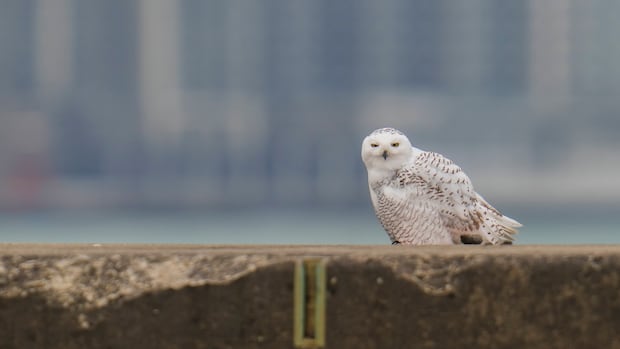
Unusually high numbers of snowy owls are being spotted in southern Canada this winter, presenting a unique opportunity for bird enthusiasts. The Owl Foundation, an owl rehabilitation centre located in Ontario’s Niagara region, reported on social media that it has already admitted two young snowy owls this season. This early influx suggests that this winter could potentially be a significant “irruption year” for the species.
An irruption refers to a sudden increase in the population of a species in a particular area, often driven by environmental factors. This year, researchers have noted a rise in young snowy owls arriving earlier than is typical for this time of year, both in southern Canada and the northern United States. Wildlife biologist and rehabilitator Brian Hayhoe from the Owl Foundation highlighted that in previous winters, the centre typically received between zero and two snowy owls annually, often not until December or January.
Reports from various wildlife centres across Ontario corroborate this trend, indicating a higher-than-usual number of snowy owls. Hayhoe remarked, “Rehabbers are kind of like the canary in the coal mine,” suggesting that their early observations can signal broader ecological changes.
Snowy Owls in Urban Areas
In addition to sightings in rural regions, snowy owls have recently attracted attention near urban areas such as Chicago. Scott Weidensaul, a researcher associated with the snowy owl GPS tracking program Project SNOWstorm, noted that most of the recent sightings have occurred in the central and western Great Lakes and the Prairies. There have even been reports of snowy owls as far west as British Columbia, a location where they have rarely been seen in recent years.
Understanding the phenomenon of snowy owl irruptions is crucial. According to Guy Fitzgérald, a veterinarian specializing in wild birds of prey at the Université de Montréal, these irruptions typically occur every six years. The last major irruption happened during the winter of 2013-2014, when thousands of snowy owls descended from the subarctic. Fitzgérald emphasized that these occurrences are not regular migrations but rather significant movements triggered by specific environmental conditions.
Factors Influencing Owl Movements
The breeding success of snowy owls is often linked to the availability of lemmings, their primary food source in the Arctic. Nicolas Lecomte, a professor at the Université de Moncton and a contributor to Project SNOWstorm, explained that irruptions typically coincide with years of high lemming populations, which enable snowy owls to produce many more chicks.
In years with abundant food, hundreds of nests can be found in concentrated areas. Lecomte noted, “It’s quite marvelous to see.” As the fall approaches, young owls may disperse southward in search of food. While some snowy owls migrate south every winter, the numbers seen this year could indicate a larger trend.
Birdwatchers, like Jody Allaire from Drumheller, Alberta, are already witnessing these beautiful creatures. Allaire, who often travels between Calgary and Drumheller, expressed his excitement: “You’re pretty much guaranteed to see a snowy owl in December or January, which is just amazing.”
Snowy owls are typically found in agricultural fields and coastal areas, where they hunt for rodents and waterfowl. Allaire encourages families to take the opportunity to observe these owls, provided they do so responsibly and from a distance.
Conservation Concerns
Despite the current increase in sightings, the snowy owl population has been facing significant challenges. The Committee on the Status of Endangered Wildlife in Canada reported a decline of over 40 percent in snowy owl numbers over the past 24 years, prompting recommendations for the species to be classified as threatened.
Birds Canada, which monitors bird populations through initiatives like the Christmas Bird Count, has documented a 56 percent decline in snowy owls since 1970. Allaire pointed out that climate change is likely a major factor affecting the species. Snowy owls are adapted to hunting in soft snow, and changing temperatures and ice conditions create challenging environments for these birds. Habitat loss and vehicle collisions also contribute to their decline.
Weidensaul hopes that increased visibility of snowy owls will foster greater public awareness of Arctic ecosystems and the challenges these animals face. “You’re not going to see a polar bear walking down the streets of Chicago,” he remarked. “But these snowy owls bring a piece of the Arctic south with them.”
As winter progresses, birdwatchers and researchers alike will be closely monitoring snowy owl populations. While early indications suggest a possible irruption year, definitive conclusions will only become clear as the season unfolds. The snowy owl’s presence offers a unique glimpse into the intricate balance of nature and the impact of environmental changes on wildlife.

Meta Plans Major Layoffs as AI Costs Surge

Alberta’s Referendum Could Pave Way for U.S. Statehood

Minooka District 201 Plans Enhanced Bilingual Support for Students

Canmore Approves Multiple Development Permits for New Projects

Remembering Bradly Castillo Shearsmith: A Life of Friendship and Joy

BIS Urges Watchdogs to Integrate Synthetic Risk Transfers in Stress Tests

Teva Transforms: Shifting Focus from Generics to Branded Success

Apple Launches AirPods Max 2 with Enhanced Audio Features

Ontario Ends Funding for Seven Supervised Injection Sites

Toyoake City Proposes Daily Two-Hour Smartphone Use Limit

Pedestrian Fatally Injured in Esquimalt Collision on August 14

B.C. Review Reveals Urgent Need for Rare-Disease Drug Reforms

Dark Adventure Game “Bye Sweet Carole” Set for October Release

Konami Revives Iconic Metal Gear Solid Delta Ahead of Release

Victoria’s Pop-Up Shop Shines Light on B.C.’s Wolf Cull

Jimmy Lai’s Defense Challenges Charges Under National Security Law

Snapmaker U1 Color 3D Printer Redefines Speed and Sustainability

Apple Expands Self-Service Repair Program to Canada
-
 Science12 months ago
Toyoake City Proposes Daily Two-Hour Smartphone Use Limit
-
 Top Stories12 months ago
Pedestrian Fatally Injured in Esquimalt Collision on August 14
-
 Health12 months ago
B.C. Review Reveals Urgent Need for Rare-Disease Drug Reforms
-
 Technology12 months ago
Dark Adventure Game “Bye Sweet Carole” Set for October Release
-
 Technology12 months ago
Konami Revives Iconic Metal Gear Solid Delta Ahead of Release
-
 Lifestyle12 months ago
Victoria’s Pop-Up Shop Shines Light on B.C.’s Wolf Cull
-
 World12 months ago
Jimmy Lai’s Defense Challenges Charges Under National Security Law
-
 Technology12 months ago
Snapmaker U1 Color 3D Printer Redefines Speed and Sustainability
-
 Technology12 months ago
Apple Expands Self-Service Repair Program to Canada
-

 Technology12 months ago
AION Folding Knife: Redefining EDC Design with Premium Materials
-

 Technology12 months ago
Solve Today’s Wordle Challenge: Hints and Answer for August 19
-

 Business12 months ago
Gordon Murray Automotive Unveils S1 LM and Le Mans GTR at Monterey