
Science
Renowned Mineralogist Desmond McConnell Passes Away at 95

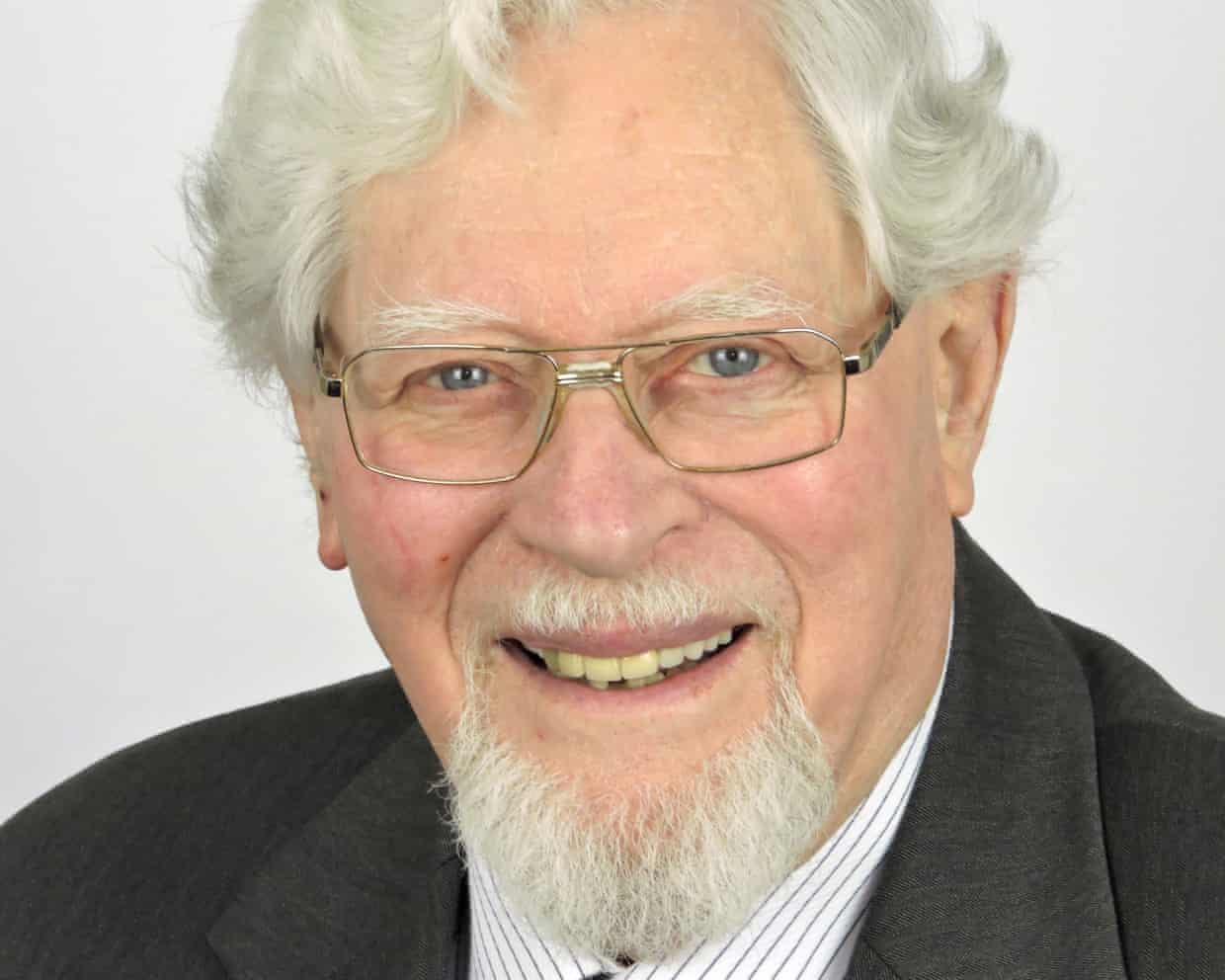
Desmond McConnell, a distinguished mineralogist whose work left an indelible mark on the field, passed away at the age of 95. His career spanned several decades, during which he contributed significantly to mineralogy and inspired generations of scientists globally.
Academic Contributions and Achievements
At Cambridge University during the 1960s and 70s, McConnell utilized advanced X-ray diffraction facilities to explore the complexities of crystal structures, particularly focusing on their incommensurate behaviour. This groundbreaking research, initially published with crystallographers Peter Gay and Mike Bown, challenged traditional understandings of crystallography, paving the way for new methodologies in mineral analysis.
McConnell also advanced the understanding of plagioclase feldspars, a group of minerals critical in geology. His expertise came to the forefront when he was selected to study lunar samples brought back by the Apollo 11 mission in 1969. At just ten years old, his child witnessed firsthand the lunar dust contained in a test tube, an experience that left a lasting impression on him.
Throughout his career, McConnell held positions at both Cambridge and Oxford University, with a notable interlude from 1983 to 1986 as the head of the Department of Rock Physics at Schlumberger Cambridge Research. During this time, he made significant contributions to the design of a new research facility, which has become known for its innovative architecture resembling a large tent.
In 1986, he was appointed to a newly established chair in the physics and chemistry of minerals at Oxford, where he ultimately became head of the Department of Earth Sciences until his retirement in 1995. His academic excellence earned him a fellowship with the Royal Society in 1987 and he also served as a founding fellow at Churchill College, Cambridge.
Legacy and Personal Life
Born in Lisburn, Northern Ireland, McConnell was the eldest of four children in a family where education was a priority. His father, Samuel McConnell, served as the headteacher of a local primary school, while his mother, Cathleen McConnell (née Coulter), was a secretary. Inspired by the natural landscapes of his youth, he pursued geology at Queen’s University Belfast, where he began his journey into the world of minerals.
In 1952, McConnell moved to Cambridge to undertake a PhD focused on rare minerals and the thermal metamorphism of sedimentary rocks in Ballycraigy, near Larne. He married Jean Ironside in 1956, and they had three children: Craig, Elspeth, and a son who has shared these memories. Jean McConnell passed away in 2014, and McConnell was predeceased by his two sisters, Margaret and Irene.
He is survived by his three children, four grandchildren, and six great-grandchildren, along with his brother John.
Beyond his academic pursuits, McConnell had a passion for music, possessing perfect pitch and a deep contrabass voice. He was also an accomplished watercolour painter, often focusing on architectural subjects, showcasing his artistic talents alongside his scientific achievements.
Desmond McConnell’s contributions to mineralogy and his dedication to education remain a lasting legacy that will inspire future generations of scientists.

Meta Plans Major Layoffs as AI Costs Surge

Alberta’s Referendum Could Pave Way for U.S. Statehood

Minooka District 201 Plans Enhanced Bilingual Support for Students

Canmore Approves Multiple Development Permits for New Projects

Remembering Bradly Castillo Shearsmith: A Life of Friendship and Joy

BIS Urges Watchdogs to Integrate Synthetic Risk Transfers in Stress Tests

Teva Transforms: Shifting Focus from Generics to Branded Success

Apple Launches AirPods Max 2 with Enhanced Audio Features

Ontario Ends Funding for Seven Supervised Injection Sites

Toyoake City Proposes Daily Two-Hour Smartphone Use Limit

Pedestrian Fatally Injured in Esquimalt Collision on August 14

B.C. Review Reveals Urgent Need for Rare-Disease Drug Reforms

Dark Adventure Game “Bye Sweet Carole” Set for October Release

Konami Revives Iconic Metal Gear Solid Delta Ahead of Release

Victoria’s Pop-Up Shop Shines Light on B.C.’s Wolf Cull

Jimmy Lai’s Defense Challenges Charges Under National Security Law

Snapmaker U1 Color 3D Printer Redefines Speed and Sustainability

Apple Expands Self-Service Repair Program to Canada
-
 Science11 months ago
Toyoake City Proposes Daily Two-Hour Smartphone Use Limit
-
 Top Stories11 months ago
Pedestrian Fatally Injured in Esquimalt Collision on August 14
-
 Health11 months ago
B.C. Review Reveals Urgent Need for Rare-Disease Drug Reforms
-
 Technology11 months ago
Dark Adventure Game “Bye Sweet Carole” Set for October Release
-
 Technology11 months ago
Konami Revives Iconic Metal Gear Solid Delta Ahead of Release
-
 Lifestyle11 months ago
Victoria’s Pop-Up Shop Shines Light on B.C.’s Wolf Cull
-
 World11 months ago
Jimmy Lai’s Defense Challenges Charges Under National Security Law
-
 Technology11 months ago
Snapmaker U1 Color 3D Printer Redefines Speed and Sustainability
-
 Technology11 months ago
Apple Expands Self-Service Repair Program to Canada
-

 Technology11 months ago
AION Folding Knife: Redefining EDC Design with Premium Materials
-

 Technology11 months ago
Solve Today’s Wordle Challenge: Hints and Answer for August 19
-

 Business11 months ago
Gordon Murray Automotive Unveils S1 LM and Le Mans GTR at Monterey