
Science
Researchers Achieve Real-Time Monitoring of Quantum Qubit Fluctuations

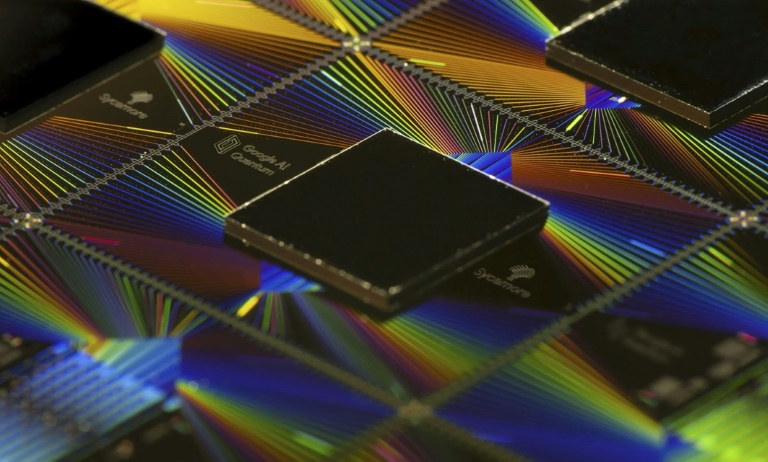
Scientists at the University of Copenhagen Niels Bohr Institute have made a significant advancement in quantum computing by developing a real-time monitoring system for qubit fluctuations. This innovative system tracks the rapid changes in qubit performance about 100 times faster than previous techniques, a breakthrough that could lead to more stable and scalable quantum processors.
Qubits, the basic units of quantum information, are known for their ability to exist in multiple states simultaneously due to a phenomenon called superposition. This unique property allows them to perform complex calculations more efficiently than traditional bits used in classical computing. Researchers manipulate quantum particles such as photons, electrons, and atoms to develop these qubits. However, the delicate nature of qubits makes them highly susceptible to environmental factors, with tiny defects in their materials causing rapid fluctuations.
Historically, measuring qubit performance was a slow process, with standard methods taking up to a minute to assess. This lag prevented scientists from capturing the quick changes that affect qubit stability, forcing them to rely on average energy loss rates that masked the qubits’ true behavior. Recognizing this challenge, the research team created an adaptive measurement system that can track changes in the qubit’s energy loss, known as relaxation rate, almost instantaneously.
Breakthrough Technology in Qubit Measurement
The new system employs a fast classical controller that updates its estimates of a qubit’s relaxation rate within milliseconds. This real-time capability aligns with the natural speed of qubit fluctuations, enabling precise adjustments. The researchers utilized a Field Programmable Gate Array (FPGA), a type of classical processor specifically designed for rapid operations. By executing the experiment directly on the FPGA, they can quickly generate a reliable estimate of how fast the qubit is losing energy using minimal measurements, eliminating the delays associated with traditional data transfers to conventional computers.
Programming FPGAs for such specialized tasks presents challenges, yet the researchers successfully updated the controller’s internal Bayesian model after each qubit measurement. This ongoing refinement allows the system to adapt continually to the qubit’s changing environment, resulting in a monitoring speed that is approximately one hundred times faster than previously achieved methods.
This groundbreaking work was published in the journal Physical Review X under the title “Real-Time Adaptive Tracking of Fluctuating Relaxation Rates in Superconducting Qubits.” The research not only enhances the understanding of qubit behavior but also paves the way for improved quantum computing technologies.
The implications of this advancement could be profound, as stabilizing qubits is critical for the development of reliable quantum processors. As researchers continue to explore the potentials of quantum computing, this real-time monitoring system represents a crucial step forward in harnessing the power of qubits for practical applications.

Meta Plans Major Layoffs as AI Costs Surge

Alberta’s Referendum Could Pave Way for U.S. Statehood

Minooka District 201 Plans Enhanced Bilingual Support for Students

Canmore Approves Multiple Development Permits for New Projects

Remembering Bradly Castillo Shearsmith: A Life of Friendship and Joy

BIS Urges Watchdogs to Integrate Synthetic Risk Transfers in Stress Tests

Teva Transforms: Shifting Focus from Generics to Branded Success

Apple Launches AirPods Max 2 with Enhanced Audio Features

Ontario Ends Funding for Seven Supervised Injection Sites

Toyoake City Proposes Daily Two-Hour Smartphone Use Limit

Pedestrian Fatally Injured in Esquimalt Collision on August 14

B.C. Review Reveals Urgent Need for Rare-Disease Drug Reforms

Dark Adventure Game “Bye Sweet Carole” Set for October Release

Konami Revives Iconic Metal Gear Solid Delta Ahead of Release

Jimmy Lai’s Defense Challenges Charges Under National Security Law

Victoria’s Pop-Up Shop Shines Light on B.C.’s Wolf Cull

Snapmaker U1 Color 3D Printer Redefines Speed and Sustainability

Apple Expands Self-Service Repair Program to Canada
-
 Science11 months ago
Toyoake City Proposes Daily Two-Hour Smartphone Use Limit
-
 Top Stories11 months ago
Pedestrian Fatally Injured in Esquimalt Collision on August 14
-
 Health11 months ago
B.C. Review Reveals Urgent Need for Rare-Disease Drug Reforms
-
 Technology11 months ago
Dark Adventure Game “Bye Sweet Carole” Set for October Release
-
 Technology11 months ago
Konami Revives Iconic Metal Gear Solid Delta Ahead of Release
-
 World11 months ago
Jimmy Lai’s Defense Challenges Charges Under National Security Law
-
 Lifestyle11 months ago
Victoria’s Pop-Up Shop Shines Light on B.C.’s Wolf Cull
-
 Technology11 months ago
Snapmaker U1 Color 3D Printer Redefines Speed and Sustainability
-
 Technology11 months ago
Apple Expands Self-Service Repair Program to Canada
-

 Technology11 months ago
AION Folding Knife: Redefining EDC Design with Premium Materials
-

 Technology11 months ago
Solve Today’s Wordle Challenge: Hints and Answer for August 19
-

 Business11 months ago
Gordon Murray Automotive Unveils S1 LM and Le Mans GTR at Monterey