
Science
Researchers Uncover Neural Mechanisms Behind Macaque Facial Gestures

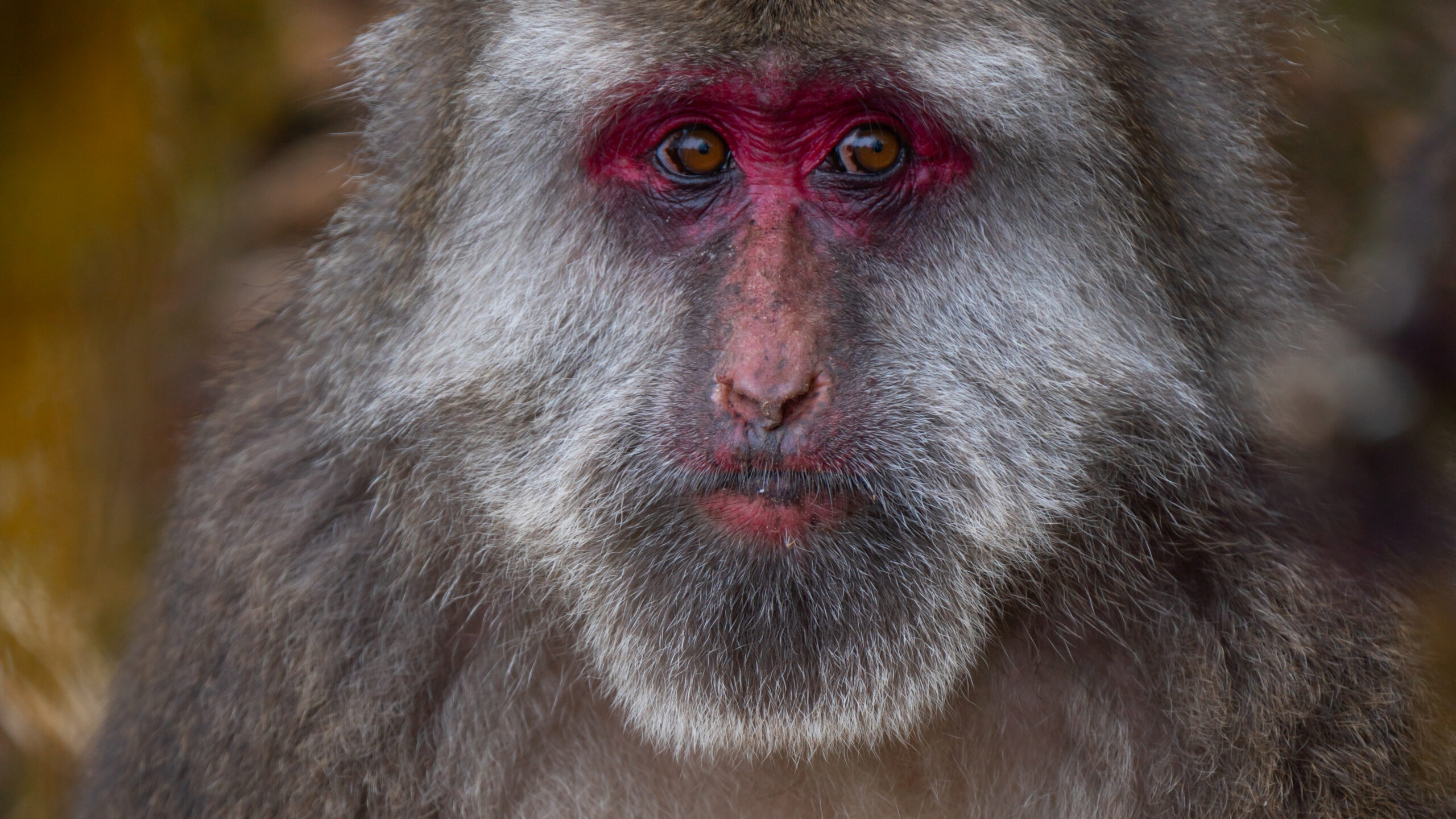
Recent research conducted by a team from the University of Pennsylvania has revealed significant insights into the neural mechanisms behind facial gestures in macaques. This study not only enhances our understanding of primate communication but also lays the groundwork for future advancements in assistive communication technologies for individuals with speech impairments.
Neuroscientist Geena Ianni and her colleagues sought to unravel how facial expressions are generated in the brain. They aimed to provide a foundation for developing neuroprosthetic devices that could decode facial gestures similarly to how current technologies extract speech from neural signals. “When my young nephew asks for ice cream before dinner and I say ‘no,’ the meaning is entirely dictated by whether the word is punctuated with a smirk or a stern frown,” Ianni explains, emphasizing the importance of non-verbal cues in communication.
Challenging Long-Standing Assumptions
Historically, scientists believed that facial gestures in primates were governed by distinct regions of the brain, segregating emotional expressions from voluntary movements like speech. However, Ianni’s research challenges this notion. The team conducted their study using macaques, chosen for their shared complex facial musculature with humans. They monitored the macaques’ brain activity via fMRI scans while observing their facial movements in response to various social stimuli, such as videos of other macaques and interactive avatars.
The researchers focused on three specific facial gestures: the lipsmack, which indicates submission; the threat face, used to challenge rivals; and chewing, a non-social movement. By pinpointing the brain regions involved in these gestures, Ianni’s team aimed to gain insight into how facial expressions are generated.
New Insights into Brain Coordination
Employing micro-electrode arrays with sub-millimeter precision, the researchers recorded neuronal activity across several key brain areas, including the primary motor cortex and the cingulate motor cortex. Contrary to their expectations of a clear division of labor among the brain regions, the findings revealed that all four areas actively participated in both social and non-social gestures.
This unexpected connectivity led the researchers to investigate how the brain differentiates between social expressions and actions like chewing. Their analysis identified distinct neural coding strategies: the cingulate cortex displayed a consistent firing pattern, indicating a stable representation of social context, while the motor and somatosensory cortices exhibited dynamic firing rates that varied with each gesture.
Ianni noted, “The static means the firing pattern of neurons is persistent across both multiple repetitions of the same facial gesture and across time.” This finding suggests that the brain integrates sensory cues with its internal state to produce appropriate facial expressions.
The implications of this research extend beyond animal communication. Ianni highlighted the potential for developing neural prostheses capable of decoding facial gestures, akin to recent advancements in speech decoding technologies. While the journey toward creating such devices remains complex, this study marks a crucial step in understanding the neural underpinnings of facial communication.
In conclusion, while the field of assistive communication devices has made remarkable progress, the development of technology to decode facial gestures will take time. Ianni’s research is a significant initial step toward creating more naturalistic communication solutions for patients who have lost the ability to express themselves through facial gestures. As she optimistically stated, “I hope our work goes towards enabling the field, even the tiniest bit, towards more naturalistic and rich communication designs that will improve lives of patients after brain injury.”
These findings were published in the journal Science, providing a foundation for future research in this promising area.

Meta Plans Major Layoffs as AI Costs Surge

Alberta’s Referendum Could Pave Way for U.S. Statehood

Minooka District 201 Plans Enhanced Bilingual Support for Students

Canmore Approves Multiple Development Permits for New Projects

Remembering Bradly Castillo Shearsmith: A Life of Friendship and Joy

BIS Urges Watchdogs to Integrate Synthetic Risk Transfers in Stress Tests

Teva Transforms: Shifting Focus from Generics to Branded Success

Apple Launches AirPods Max 2 with Enhanced Audio Features

Ontario Ends Funding for Seven Supervised Injection Sites

Toyoake City Proposes Daily Two-Hour Smartphone Use Limit

Pedestrian Fatally Injured in Esquimalt Collision on August 14

B.C. Review Reveals Urgent Need for Rare-Disease Drug Reforms

Dark Adventure Game “Bye Sweet Carole” Set for October Release

Konami Revives Iconic Metal Gear Solid Delta Ahead of Release

Victoria’s Pop-Up Shop Shines Light on B.C.’s Wolf Cull

Jimmy Lai’s Defense Challenges Charges Under National Security Law

Snapmaker U1 Color 3D Printer Redefines Speed and Sustainability

Apple Expands Self-Service Repair Program to Canada
-
 Science11 months ago
Toyoake City Proposes Daily Two-Hour Smartphone Use Limit
-
 Top Stories11 months ago
Pedestrian Fatally Injured in Esquimalt Collision on August 14
-
 Health11 months ago
B.C. Review Reveals Urgent Need for Rare-Disease Drug Reforms
-
 Technology11 months ago
Dark Adventure Game “Bye Sweet Carole” Set for October Release
-
 Technology11 months ago
Konami Revives Iconic Metal Gear Solid Delta Ahead of Release
-
 Lifestyle11 months ago
Victoria’s Pop-Up Shop Shines Light on B.C.’s Wolf Cull
-
 World11 months ago
Jimmy Lai’s Defense Challenges Charges Under National Security Law
-
 Technology11 months ago
Snapmaker U1 Color 3D Printer Redefines Speed and Sustainability
-
 Technology11 months ago
Apple Expands Self-Service Repair Program to Canada
-

 Technology11 months ago
AION Folding Knife: Redefining EDC Design with Premium Materials
-

 Technology11 months ago
Solve Today’s Wordle Challenge: Hints and Answer for August 19
-

 Business11 months ago
Gordon Murray Automotive Unveils S1 LM and Le Mans GTR at Monterey