
Science
Researchers Uncover Physics Behind Tape’s Screeching Sound

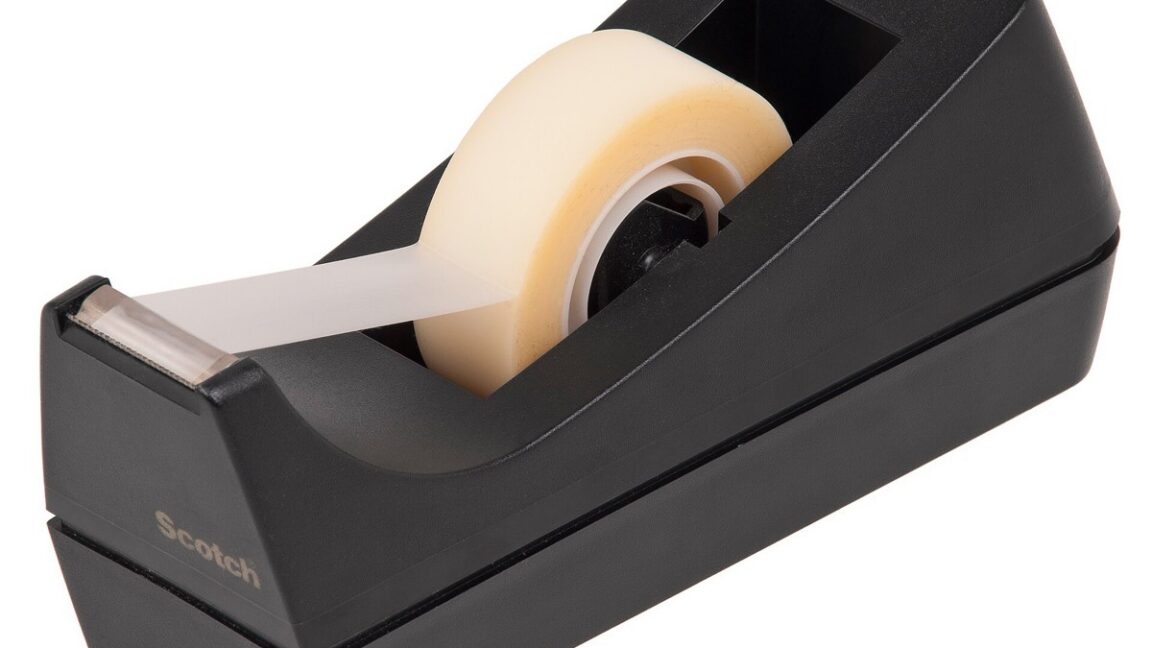
Scientists have revealed the intriguing physics behind the characteristic screeching sound produced when peeling Scotch tape. The sound, which many liken to fingernails on a chalkboard, results from shock waves generated by micro-cracks that travel along the tape at supersonic speeds. This finding was published in the journal Physical Review E.
The history of Scotch tape dates back to 1930, when engineer Richard Drew of 3M created the first transparent sticky tape. Initially developed for car manufacturing, Drew sought an adhesive that would not remove paint when peeled off. His invention quickly gained popularity, especially during the Great Depression, as consumers used it to mend various household items.
Interest in Scotch tape extends beyond its practical uses; scientists have long been fascinated by its physical properties. Research dating back to 1939 showed that peeling tape generates visible light, a phenomenon known as triboluminescence. This occurs when materials are crushed or torn, resulting in the emission of light due to the excitation of electrons. A well-known example can be seen with Wint-O-Green Life Savers, which emit sparks when crushed in a dark environment.
In 1953, Russian scientists discovered that peeling Scotch tape in a vacuum generated electrons with enough energy to produce X-rays. While this claim faced skepticism, a team from the University of California, Los Angeles (UCLA) confirmed the phenomenon in 2008, successfully creating low-quality X-ray images by unwinding Scotch tape in a vacuum chamber.
Peeling Scotch tape is not just about light and X-rays; it also produces sound attributed to a slip-stick mechanism during the peeling process. A study by Sigurdur Thoroddsen and colleagues in 2010 identified a crucial micro-fracture phenomenon that occurs during this process. Their findings highlighted a sequence of transverse cracks that travel across the adhesive at supersonic speeds.
The latest research aims to clarify the relationship between the screeching sound and these transverse cracks. Thoroddsen and his team conducted experiments to determine whether the sound is a direct result of the rapidly moving tips of these cracks. By manually peeling Scotch tape while capturing the cracks with high-speed cameras and the resulting sound with synchronized microphones, they observed a direct correlation between the sound pulses and the cracks.
Their results indicate that the screeching sound arises from a series of weak shock waves that culminate when the cracks reach the edge of the tape. The speed at which the cracks travel is crucial to the sound’s generation. According to the authors, “A partial vacuum is produced between the tape and the solid when the crack opens.” The crack moves too quickly for the void to be filled immediately, leading to a collapse that generates the sound pulse each time a fracture tip reaches the tape’s edge.
This research not only enhances our understanding of the physics behind a common household item but also reveals the complex scientific principles at play in everyday phenomena. The findings underscore the potential for further exploration in the realm of triboluminescence and its applications in various fields.

Meta Plans Major Layoffs as AI Costs Surge

Alberta’s Referendum Could Pave Way for U.S. Statehood

Minooka District 201 Plans Enhanced Bilingual Support for Students

Canmore Approves Multiple Development Permits for New Projects

Remembering Bradly Castillo Shearsmith: A Life of Friendship and Joy

BIS Urges Watchdogs to Integrate Synthetic Risk Transfers in Stress Tests

Teva Transforms: Shifting Focus from Generics to Branded Success

Apple Launches AirPods Max 2 with Enhanced Audio Features

Ontario Ends Funding for Seven Supervised Injection Sites

Toyoake City Proposes Daily Two-Hour Smartphone Use Limit

Pedestrian Fatally Injured in Esquimalt Collision on August 14

B.C. Review Reveals Urgent Need for Rare-Disease Drug Reforms

Dark Adventure Game “Bye Sweet Carole” Set for October Release

Konami Revives Iconic Metal Gear Solid Delta Ahead of Release

Victoria’s Pop-Up Shop Shines Light on B.C.’s Wolf Cull

Jimmy Lai’s Defense Challenges Charges Under National Security Law

Snapmaker U1 Color 3D Printer Redefines Speed and Sustainability

Apple Expands Self-Service Repair Program to Canada
-
 Science11 months ago
Toyoake City Proposes Daily Two-Hour Smartphone Use Limit
-
 Top Stories11 months ago
Pedestrian Fatally Injured in Esquimalt Collision on August 14
-
 Health11 months ago
B.C. Review Reveals Urgent Need for Rare-Disease Drug Reforms
-
 Technology11 months ago
Dark Adventure Game “Bye Sweet Carole” Set for October Release
-
 Technology11 months ago
Konami Revives Iconic Metal Gear Solid Delta Ahead of Release
-
 Lifestyle11 months ago
Victoria’s Pop-Up Shop Shines Light on B.C.’s Wolf Cull
-
 World11 months ago
Jimmy Lai’s Defense Challenges Charges Under National Security Law
-
 Technology11 months ago
Snapmaker U1 Color 3D Printer Redefines Speed and Sustainability
-
 Technology11 months ago
Apple Expands Self-Service Repair Program to Canada
-

 Technology11 months ago
AION Folding Knife: Redefining EDC Design with Premium Materials
-

 Technology11 months ago
Solve Today’s Wordle Challenge: Hints and Answer for August 19
-

 Business11 months ago
Gordon Murray Automotive Unveils S1 LM and Le Mans GTR at Monterey