
Science
Tiny Dinosaur Discovery Challenges Evolutionary Theories

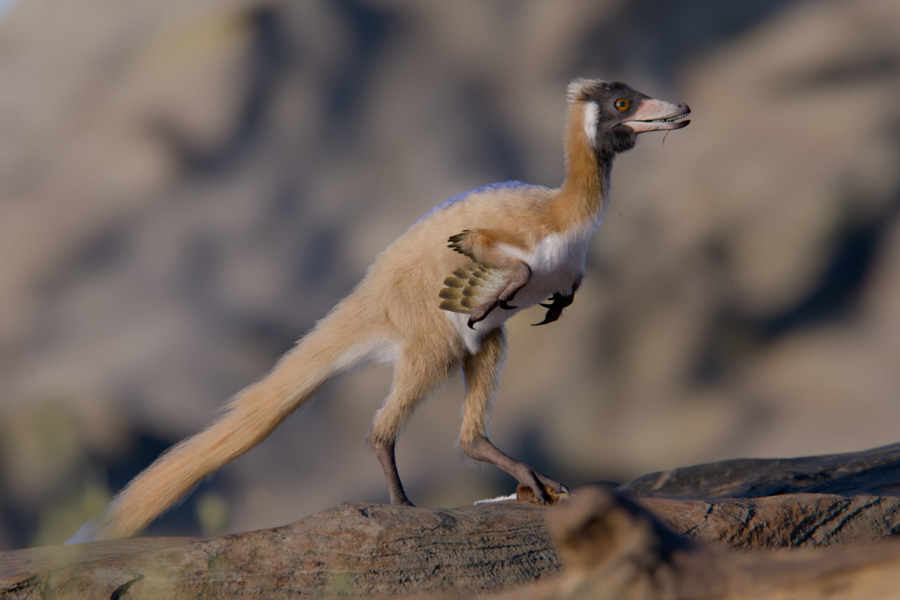
A newly discovered dinosaur fossil is reshaping our understanding of the evolutionary history of small theropods known as alvarezsaurids. The fossil, named Alnashetri cerropoliciensis, was unearthed from the Candeleros Formation in Río Negro Province, Argentina, and is believed to have lived approximately 90 million years ago. This remarkable find suggests that the evolution of miniaturized dinosaurs may not have followed a straightforward path tied to their diet, as previously thought.
Alvarezsaurids were primarily small-bodied theropods that scientists initially misidentified as early flightless birds. Over time, they were recognized as a lineage of non-avian dinosaurs that likely evolved to consume social insects, such as ants and termites. The prevailing hypothesis posited that these dinosaurs underwent a process of evolutionary miniaturization to become more efficient hunters of their insect prey.
However, the discovery of Alnashetri cerropoliciensis complicates this narrative. According to Peter Makovicky, a paleontologist at the University of Minnesota, this species did not appear to specialize in eating ants at all. “It was a pursuit predator actively hunting insects and small mammals,” he explained. This finding highlights a significant shift in how we perceive the evolutionary adaptations of alvarezsaurids.
Redefining Miniaturization
The fossil of Alnashetri is notable for being the most complete and smallest alvarezsaurid skeleton discovered in South America. Despite missing parts of its skull and limbs, the fossil reveals crucial anatomical features. The bone structure indicates that the dinosaur was a subadult, nearing sexual maturity, evidenced by the presence of medullary bone, a tissue associated with egg-laying in modern birds. This small dinosaur is estimated to have weighed around 700 grams, which is unusually light for its expected size.
The implications of this discovery challenge the established model of alvarezsaurid evolution. Rather than being a highly specialized species, Alnashetri occupies an early-branching position among its clade. This suggests that the miniaturization of alvarezsaurids was not a linear process tied strictly to their lifestyle as insectivores. Makovicky noted that the dinosaur possessed long forelimbs, indicating it may have been relatively fast, drawing an analogy to the speed of a roadrunner.
Further anatomical distinctions were also observed. Unlike later alvarezsaurids, which had robust forelimbs and small, serrated teeth, Alnashetri retained comparatively long forelimbs and non-serrated teeth that were not particularly small. This finding indicates a disconnect between the evolution of small body size and anatomical specializations for feeding.
New Insights into Biogeography
Prior to the discovery of Alnashetri cerropoliciensis, it was unclear why alvarezsaurids were predominantly found in Late Cretaceous rocks of Asia and South America. The existing theory suggested that these dinosaurs migrated between these two landmasses later in their history. However, integrating Alnashetri into the evolutionary tree revealed a significant gap in the fossil record, indicating that alvarezsaurids diverged much earlier, possibly during the Jurassic period.
Makovicky and his team investigated historical museum collections and found fragmentary theropods that were previously misclassified, leading to the identification of early alvarezsaurids from the Upper Jurassic Morrison Formation in North America and the Lower Cretaceous from the Isle of Wight in Europe. These findings suggest that early alvarezsaurids had a much broader distribution across the ancient supercontinent Pangaea, rather than being confined to Asia and South America.
As the continents drifted apart, isolated populations began to emerge, leading to the current distribution of alvarezsaurids in the fossil record. The populations that survived in Asia and South America represent remnants of a once widespread lineage.
Despite the surprising revelations, Makovicky expressed that many questions remain unanswered. The notion that alvarezsaurids evolved their small size primarily as an adaptation to a diet of ants has been largely discredited. “We sort of falsified this nice narrative where alvarezsaurid body size change was driven by ecology,” he said.
The research team’s next steps involve using CT scans to further investigate Alnashetri’s anatomy, which may provide insights into the evolution of its ant-eating relatives. Additionally, Makovicky mentioned that they have discovered another alvarezsaurid fossil in the same area, which could provide further context to their evolutionary story.
In conclusion, the study of Alnashetri cerropoliciensis not only challenges long-held assumptions regarding the evolution of alvarezsaurids but also opens new avenues of inquiry into the complexity of dinosaur evolution. Makovicky’s findings are detailed in the journal Nature, marking a significant contribution to the understanding of these fascinating creatures.

Meta Plans Major Layoffs as AI Costs Surge

Alberta’s Referendum Could Pave Way for U.S. Statehood

Minooka District 201 Plans Enhanced Bilingual Support for Students

Canmore Approves Multiple Development Permits for New Projects

Remembering Bradly Castillo Shearsmith: A Life of Friendship and Joy

BIS Urges Watchdogs to Integrate Synthetic Risk Transfers in Stress Tests

Teva Transforms: Shifting Focus from Generics to Branded Success

Apple Launches AirPods Max 2 with Enhanced Audio Features

Ontario Ends Funding for Seven Supervised Injection Sites

Toyoake City Proposes Daily Two-Hour Smartphone Use Limit

Pedestrian Fatally Injured in Esquimalt Collision on August 14

B.C. Review Reveals Urgent Need for Rare-Disease Drug Reforms

Dark Adventure Game “Bye Sweet Carole” Set for October Release

Konami Revives Iconic Metal Gear Solid Delta Ahead of Release

Victoria’s Pop-Up Shop Shines Light on B.C.’s Wolf Cull

Jimmy Lai’s Defense Challenges Charges Under National Security Law

Snapmaker U1 Color 3D Printer Redefines Speed and Sustainability

Apple Expands Self-Service Repair Program to Canada
-
 Science12 months ago
Toyoake City Proposes Daily Two-Hour Smartphone Use Limit
-
 Top Stories1 year ago
Pedestrian Fatally Injured in Esquimalt Collision on August 14
-
 Health1 year ago
B.C. Review Reveals Urgent Need for Rare-Disease Drug Reforms
-
 Technology12 months ago
Dark Adventure Game “Bye Sweet Carole” Set for October Release
-
 Technology12 months ago
Konami Revives Iconic Metal Gear Solid Delta Ahead of Release
-
 Lifestyle1 year ago
Victoria’s Pop-Up Shop Shines Light on B.C.’s Wolf Cull
-
 World12 months ago
Jimmy Lai’s Defense Challenges Charges Under National Security Law
-
 Technology12 months ago
Snapmaker U1 Color 3D Printer Redefines Speed and Sustainability
-
 Technology12 months ago
Apple Expands Self-Service Repair Program to Canada
-

 Technology12 months ago
AION Folding Knife: Redefining EDC Design with Premium Materials
-

 Technology1 year ago
Solve Today’s Wordle Challenge: Hints and Answer for August 19
-

 Business1 year ago
Gordon Murray Automotive Unveils S1 LM and Le Mans GTR at Monterey