
Science
University of Lethbridge Team Wins Silver at 2025 iGEM Competition

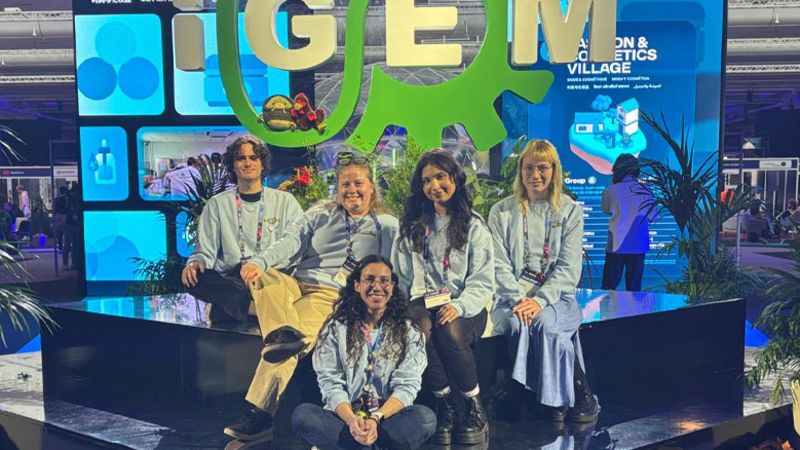
The University of Lethbridge (U of L) has achieved a significant milestone by winning a silver medal at the 2025 Grand Jamboree held in Paris. A team of students participated in the prestigious International Genetically Engineered Machine (iGEM) competition, initially focusing on developing an innovative and ethical method for producing hyaluronic acid, a substance widely used in the cosmetics industry.
As the project progressed, the team identified a critical need for a cost-effective solution to create the hyaluronic acid. Abby Giacchetta, a third-year neuroscience student and a key member of the team, explained their innovative approach. “We needed a way to make the hyaluronic acid, and we wanted to use E. coli by mixing genes into its plasmid to spur the production of a hyaluronic acid biofilm,” Giacchetta stated. The challenge was that the required multiplex automated genome engineering (MAGE) machine, typically priced around $90,000, was beyond their budget.
To address this financial hurdle, the team developed OSAGE (open-source automated genome engineering), designed with affordable and readily available components sourced online, along with 3D-printed parts. This innovative machine can be constructed for less than $1,000. The students made a strategic choice to prioritize refining the OSAGE machine over pursuing multiple projects simultaneously.
Collaboration and knowledge-sharing are central to the iGEM ethos. The U of L team, consisting of 16 members and supervised by Dr. Laura Keffer-Wilkes, built upon previous work from the iGEM community to create their prototype. “One of the great things about iGEM is that it is open source, meaning everyone has access to all the great work that’s been done in previous years,” Dr. Keffer-Wilkes remarked. “They chose to build off of previous work to create a system that could then be utilized by future generations of iGEM students for their projects, as it basically allows you to create any kind of bacterial strain you want to engineer.”
The judges at the World Jamboree praised the U of L team’s concept, particularly their commitment to expanding on existing projects and advancing the field of synthetic biology. Their efforts culminated in the team receiving a silver medal, marking an impressive achievement and recognition of their innovative work.
Looking ahead, the U of L team aims to broaden its membership to include students from various academic disciplines. Applications are currently being accepted for the 2026 iGEM cycle. Interested students are encouraged to visit the iGEM website and contact Dr. Keffer-Wilkes at [email protected] for more information.
This achievement highlights the potential of collaborative student research and the impact of open-source technology on scientific advancements. As the field of synthetic biology continues to evolve, the U of L team’s work may pave the way for future innovations that benefit both academia and industry.

Meta Plans Major Layoffs as AI Costs Surge

Alberta’s Referendum Could Pave Way for U.S. Statehood

Minooka District 201 Plans Enhanced Bilingual Support for Students

Canmore Approves Multiple Development Permits for New Projects

Remembering Bradly Castillo Shearsmith: A Life of Friendship and Joy

BIS Urges Watchdogs to Integrate Synthetic Risk Transfers in Stress Tests

Teva Transforms: Shifting Focus from Generics to Branded Success

Apple Launches AirPods Max 2 with Enhanced Audio Features

Ontario Ends Funding for Seven Supervised Injection Sites

Toyoake City Proposes Daily Two-Hour Smartphone Use Limit

Pedestrian Fatally Injured in Esquimalt Collision on August 14

B.C. Review Reveals Urgent Need for Rare-Disease Drug Reforms

Dark Adventure Game “Bye Sweet Carole” Set for October Release

Konami Revives Iconic Metal Gear Solid Delta Ahead of Release

Victoria’s Pop-Up Shop Shines Light on B.C.’s Wolf Cull

Jimmy Lai’s Defense Challenges Charges Under National Security Law

Snapmaker U1 Color 3D Printer Redefines Speed and Sustainability

Apple Expands Self-Service Repair Program to Canada
-
 Science12 months ago
Toyoake City Proposes Daily Two-Hour Smartphone Use Limit
-
 Top Stories12 months ago
Pedestrian Fatally Injured in Esquimalt Collision on August 14
-
 Health12 months ago
B.C. Review Reveals Urgent Need for Rare-Disease Drug Reforms
-
 Technology12 months ago
Dark Adventure Game “Bye Sweet Carole” Set for October Release
-
 Technology12 months ago
Konami Revives Iconic Metal Gear Solid Delta Ahead of Release
-
 Lifestyle12 months ago
Victoria’s Pop-Up Shop Shines Light on B.C.’s Wolf Cull
-
 World12 months ago
Jimmy Lai’s Defense Challenges Charges Under National Security Law
-
 Technology12 months ago
Snapmaker U1 Color 3D Printer Redefines Speed and Sustainability
-
 Technology12 months ago
Apple Expands Self-Service Repair Program to Canada
-

 Technology12 months ago
AION Folding Knife: Redefining EDC Design with Premium Materials
-

 Technology12 months ago
Solve Today’s Wordle Challenge: Hints and Answer for August 19
-

 Business12 months ago
Gordon Murray Automotive Unveils S1 LM and Le Mans GTR at Monterey