
Science
UVic Biologists Harness AI to Decode Unique Fish Sounds

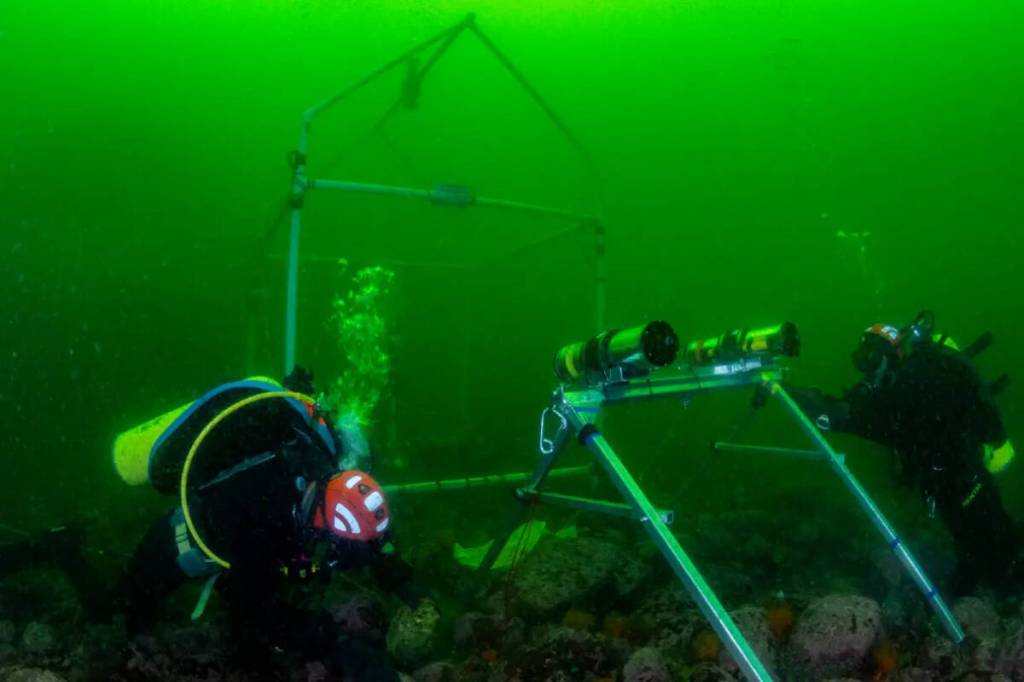
Researchers from the University of Victoria have made significant strides in understanding the acoustic communication of fish by identifying unique sounds produced by various species. Their study highlights that even closely related fish exhibit distinctive vocalizations, which can be accurately differentiated. Utilizing passive acoustics, the team successfully identified the sounds of eight fish species native to Vancouver Island.
The researchers developed a machine learning model capable of predicting fish species based on their sounds with an impressive accuracy rate of 88 percent. According to Darienne Lancaster, a PhD student and lead researcher, “We knew previously that many fish were making sounds in the wild, but we didn’t know which sounds belonged to which species, or if it was possible to tell these sounds apart.” This advancement parallels methods used in ornithology, where bird songs are employed to identify specific species.
Unique Sounds and Behavioral Insights
The study revealed fascinating insights into the vocal behaviors of fish. For instance, the black rockfish emits a long, growling sound reminiscent of a frog’s croak, while the quillback rockfish produces a series of short knocks and grunts. Lancaster noted, “It has been exciting to see how many different species of fish make sounds and the behaviours that go along with these calls.”
Interestingly, the research observed that some species, such as the quillback rockfish, emit rapid grunting sounds when pursued by predators, suggesting a defensive mechanism. Others, like the copper rockfish, create knocking sounds while foraging along the ocean floor, indicating their hunting behavior.
Innovative Techniques and Global Applications
Lancaster utilized a technique known as passive acoustic monitoring, which involves collecting underwater audio and video using a sound localization array designed by project collaborator Xavier Mouy, a former UVic PhD student. This method allowed the team to analyze sound characteristics and identify differences in species calls.
The AI machine learning model was trained using a set of 47 distinct sound features, including duration and frequency, to detect subtle variations in the vocalizations of each species. These differences enabled the researchers to group species calls effectively. The techniques developed in this study have potential applications for scientists worldwide, offering tools to decode various fish calls beyond those studied on Vancouver Island.
This research was funded by the Natural Sciences and Engineering Research Council of Canada and Fisheries and Oceans Canada, and it opens new avenues in marine biology, enhancing our understanding of aquatic life and its communication methods. The findings not only deepen our insight into fish behavior but also pave the way for future studies in the field of bioacoustics.

Meta Plans Major Layoffs as AI Costs Surge

Alberta’s Referendum Could Pave Way for U.S. Statehood

Minooka District 201 Plans Enhanced Bilingual Support for Students

Canmore Approves Multiple Development Permits for New Projects

Remembering Bradly Castillo Shearsmith: A Life of Friendship and Joy

BIS Urges Watchdogs to Integrate Synthetic Risk Transfers in Stress Tests

Teva Transforms: Shifting Focus from Generics to Branded Success

Apple Launches AirPods Max 2 with Enhanced Audio Features

Ontario Ends Funding for Seven Supervised Injection Sites

Toyoake City Proposes Daily Two-Hour Smartphone Use Limit

Pedestrian Fatally Injured in Esquimalt Collision on August 14

B.C. Review Reveals Urgent Need for Rare-Disease Drug Reforms

Dark Adventure Game “Bye Sweet Carole” Set for October Release

Konami Revives Iconic Metal Gear Solid Delta Ahead of Release

Victoria’s Pop-Up Shop Shines Light on B.C.’s Wolf Cull

Jimmy Lai’s Defense Challenges Charges Under National Security Law

Snapmaker U1 Color 3D Printer Redefines Speed and Sustainability

Apple Expands Self-Service Repair Program to Canada
-
 Science11 months ago
Toyoake City Proposes Daily Two-Hour Smartphone Use Limit
-
 Top Stories11 months ago
Pedestrian Fatally Injured in Esquimalt Collision on August 14
-
 Health11 months ago
B.C. Review Reveals Urgent Need for Rare-Disease Drug Reforms
-
 Technology11 months ago
Dark Adventure Game “Bye Sweet Carole” Set for October Release
-
 Technology11 months ago
Konami Revives Iconic Metal Gear Solid Delta Ahead of Release
-
 Lifestyle11 months ago
Victoria’s Pop-Up Shop Shines Light on B.C.’s Wolf Cull
-
 World11 months ago
Jimmy Lai’s Defense Challenges Charges Under National Security Law
-
 Technology11 months ago
Snapmaker U1 Color 3D Printer Redefines Speed and Sustainability
-
 Technology11 months ago
Apple Expands Self-Service Repair Program to Canada
-

 Technology11 months ago
AION Folding Knife: Redefining EDC Design with Premium Materials
-

 Technology11 months ago
Solve Today’s Wordle Challenge: Hints and Answer for August 19
-

 Business11 months ago
Gordon Murray Automotive Unveils S1 LM and Le Mans GTR at Monterey