
Science
Western Researchers Pioneer New Method for Algae Biofuel Production

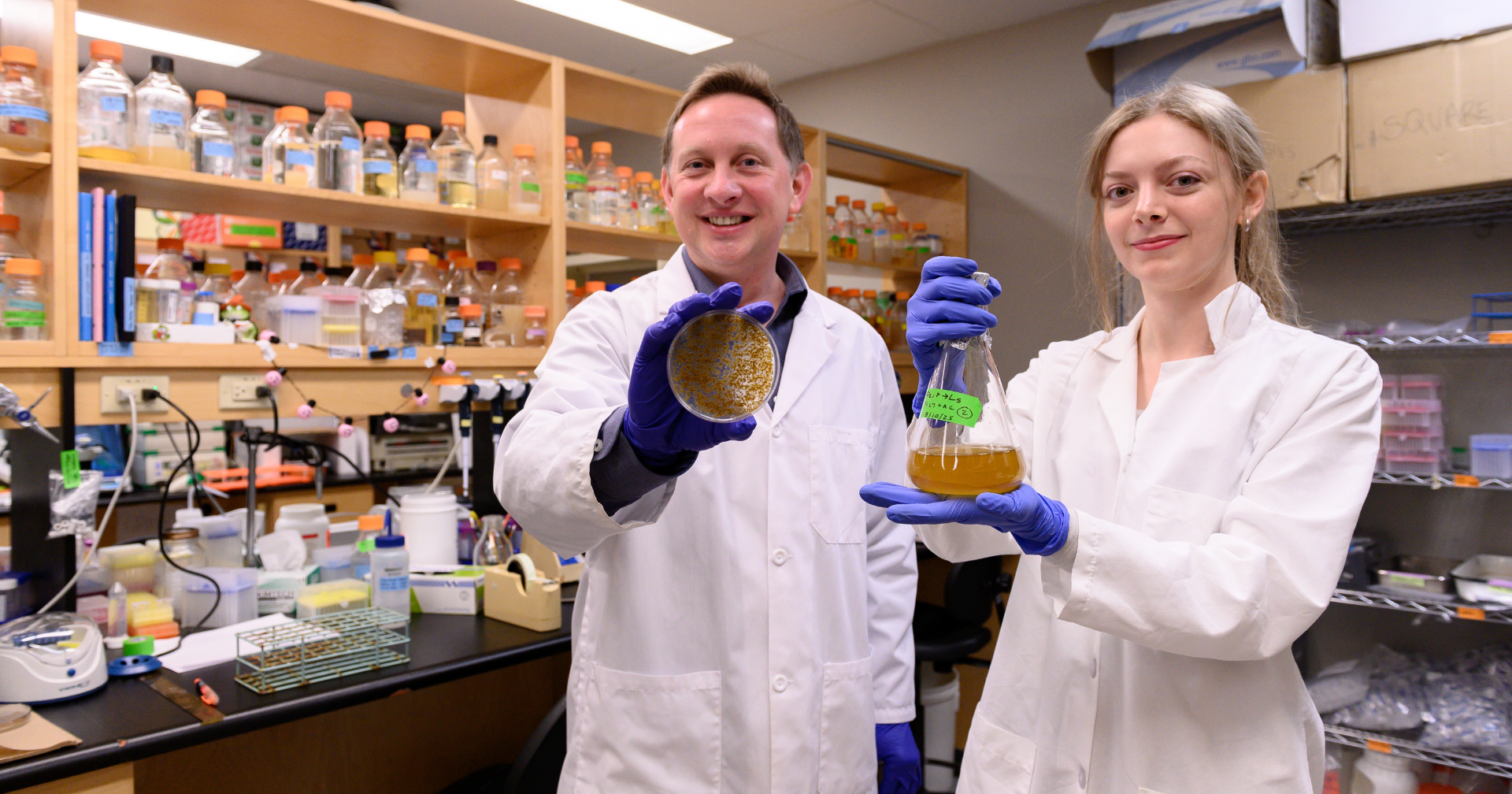
A team of researchers at Western University has developed a groundbreaking method for engineering diatoms, a type of single-celled algae, to produce more sustainable biofuels and nutraceuticals. This innovative technique, unveiled by Emma Walker, PhD’25, and Bogumil Karas, a professor at the Schulich School of Medicine & Dentistry, could lead to cleaner, cheaper sources of energy and health supplements.
Diatoms, which naturally store energy as oils, have long been of interest for their potential in producing biofuels and valuable compounds such as omega-3 fatty acids and antioxidants. The study, published in Nature Communications, highlights a more effective method for delivering DNA into these organisms, a key step in genetically modifying them for various applications.
Walker’s research focused on overcoming the challenges of DNA delivery to diatoms, which are protected by a silica shell known as a frustule. Previous methods were often slow and inconsistent. “People have long been interested in genetically modifying diatoms to make medicines, biofuels and other valuable compounds,” said Walker.
A pivotal moment in Walker’s research occurred when she tested a technique called electroporation, which uses electrical currents to create temporary pores in cell membranes. In her initial experiments, she observed the emergence of small colonies. However, when Karas repeated the process, he achieved over a hundred colonies, prompting Walker to investigate further.
Through a series of experiments, Walker discovered that older diatom cells exhibited a characteristic spherical shape, indicating a breakdown of their protective walls. This observation led her to hypothesize that the degradation of the cell wall could facilitate DNA insertion. By treating the cells with alcalase, an enzyme that disrupts the wall, she significantly enhanced the efficiency of DNA delivery, resulting in as many as 20,000 colonies in a single experiment.
The implications of this breakthrough are substantial. “This widens our ability to engineer the organism, which is important because one day we want to be able to create a strain of this diatom that is controlled by a synthetically built genome,” Walker stated. This capability is essential for advancing the development of biofuels and health products derived from diatoms.
The study also explored a low-cost chemical method for DNA insertion using polyethylene glycol (PEG), which proved to be more effective once the cell wall was compromised. This approach makes the technology more accessible, allowing laboratories to avoid expensive electroporation equipment.
Researchers further discovered that diatoms could assemble large pieces of DNA within their cells. “Suddenly, we could deliver very large pieces of DNA, not just small fragments,” Walker noted. This advancement has the potential to accelerate research timelines significantly. Karas emphasized the efficiency of the new method: “Instead of spending up to a few weeks moving DNA through bacteria before it reaches a diatom, we can now introduce the synthetic DNA directly.”
The techniques developed in this study have already been adapted for another diatom species through collaboration with Dr. Thomas Mock at the University of East Anglia in the UK. This international partnership brings scientists closer to the goal of resynthesizing DNA for greener energy technologies and innovative health solutions.
Walker’s findings demonstrate that some of the most significant advances in science come from unexpected observations and the curiosity to explore them. “Sometimes the biggest advances come from noticing something unexpected and asking why,” she said.
As research continues, the potential for diatoms to contribute to sustainable energy and health solutions appears brighter than ever. The work conducted at Western University represents a significant step forward in harnessing the capabilities of these remarkable organisms.

Meta Plans Major Layoffs as AI Costs Surge

Alberta’s Referendum Could Pave Way for U.S. Statehood

Minooka District 201 Plans Enhanced Bilingual Support for Students

Canmore Approves Multiple Development Permits for New Projects

Remembering Bradly Castillo Shearsmith: A Life of Friendship and Joy

BIS Urges Watchdogs to Integrate Synthetic Risk Transfers in Stress Tests

Teva Transforms: Shifting Focus from Generics to Branded Success

Apple Launches AirPods Max 2 with Enhanced Audio Features

Ontario Ends Funding for Seven Supervised Injection Sites

Toyoake City Proposes Daily Two-Hour Smartphone Use Limit

Pedestrian Fatally Injured in Esquimalt Collision on August 14

B.C. Review Reveals Urgent Need for Rare-Disease Drug Reforms

Dark Adventure Game “Bye Sweet Carole” Set for October Release

Konami Revives Iconic Metal Gear Solid Delta Ahead of Release

Victoria’s Pop-Up Shop Shines Light on B.C.’s Wolf Cull

Jimmy Lai’s Defense Challenges Charges Under National Security Law

Snapmaker U1 Color 3D Printer Redefines Speed and Sustainability

Apple Expands Self-Service Repair Program to Canada
-
 Science12 months ago
Toyoake City Proposes Daily Two-Hour Smartphone Use Limit
-
 Top Stories12 months ago
Pedestrian Fatally Injured in Esquimalt Collision on August 14
-
 Health12 months ago
B.C. Review Reveals Urgent Need for Rare-Disease Drug Reforms
-
 Technology12 months ago
Dark Adventure Game “Bye Sweet Carole” Set for October Release
-
 Technology12 months ago
Konami Revives Iconic Metal Gear Solid Delta Ahead of Release
-
 Lifestyle12 months ago
Victoria’s Pop-Up Shop Shines Light on B.C.’s Wolf Cull
-
 World12 months ago
Jimmy Lai’s Defense Challenges Charges Under National Security Law
-
 Technology12 months ago
Snapmaker U1 Color 3D Printer Redefines Speed and Sustainability
-
 Technology12 months ago
Apple Expands Self-Service Repair Program to Canada
-

 Technology12 months ago
AION Folding Knife: Redefining EDC Design with Premium Materials
-

 Technology12 months ago
Solve Today’s Wordle Challenge: Hints and Answer for August 19
-

 Business12 months ago
Gordon Murray Automotive Unveils S1 LM and Le Mans GTR at Monterey