
Technology
Designers Develop Home Device to Aid Knee Recovery for Seniors

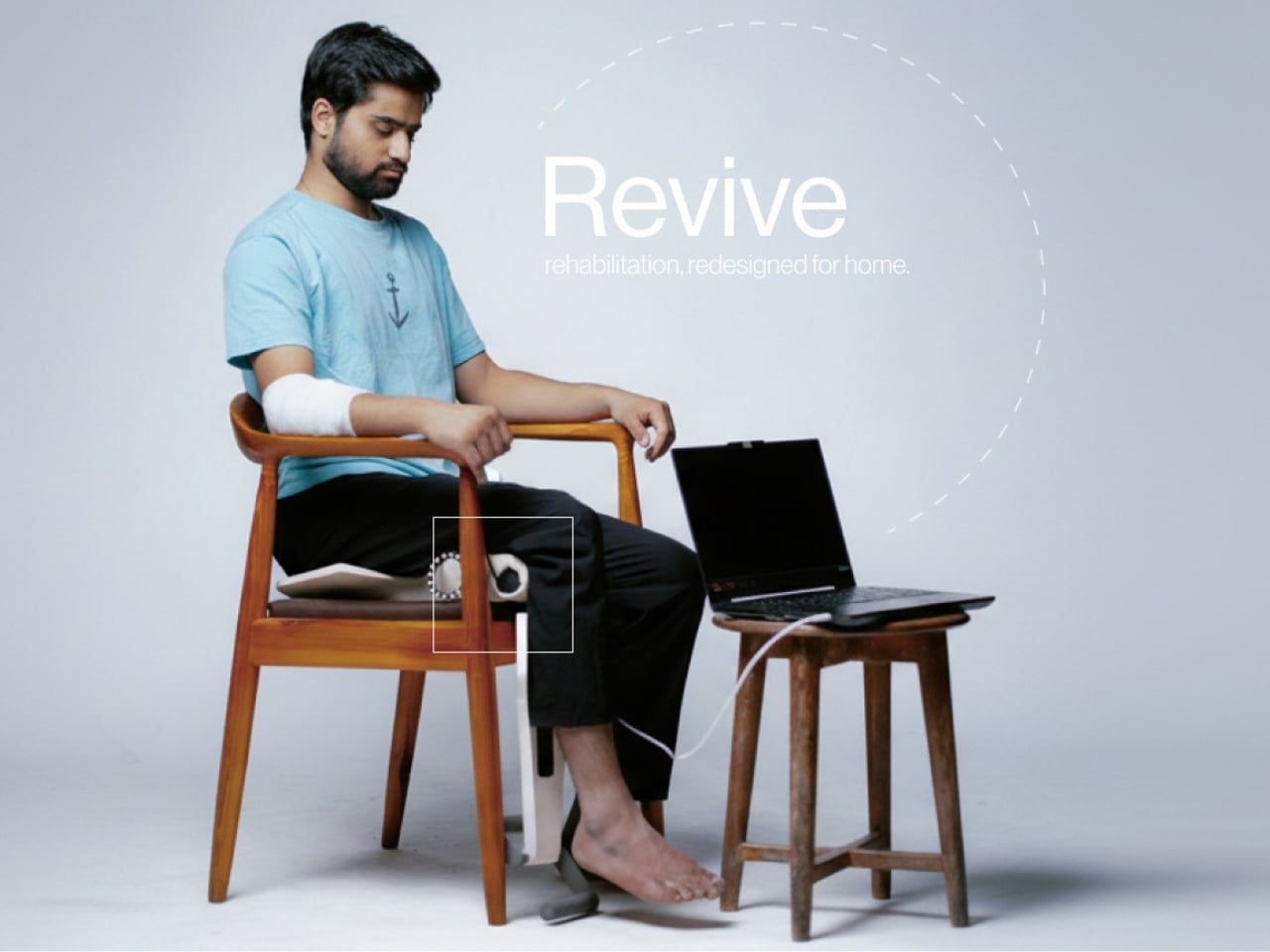
A team of three designers has created a home-based rehabilitation device specifically for seniors suffering from knee osteoarthritis. The device, named Revive, aims to address the pressing needs of a significant portion of the elderly population in India, where 40% of seniors live with this debilitating condition. With cases of knee osteoarthritis in India escalating from 23.46 million to 62.35 million between 1990 and 2019, the urgency for effective solutions has never been greater.
The designers, Madhav Binu, Kriti V, and Himvall Sindhu, focused on the daily challenges faced by individuals with chronic pain. Their research highlighted three significant barriers to recovery: limited mobility, fear of movement, and reduced independence. Understanding these psychological hurdles was crucial; when pain occurs, individuals often instinctively withdraw, which can hinder recovery progress.
To ground their design in real-world applications, the team conducted extensive primary research. They engaged directly with patients, observed clinical therapy sessions, and collaborated with physiotherapists. This hands-on approach informed their design process and ensured that the final product met the practical needs of its users.
The result of this rigorous research is a sleek, minimalist device that resembles modern home technology rather than traditional medical equipment. This aesthetic choice is intentional, as the designers recognized that intimidating devices could contribute to feelings of anxiety and limitation. Instead, Revive aims to be an inviting tool that encourages users to engage actively in their rehabilitation.
The market analysis conducted by the team revealed a significant gap in existing rehabilitation devices. Many solutions on the market are either fully automatic—requiring minimal user effort but offering less engagement—or fully manual, demanding too much from those already experiencing pain. Revive occupies a unique middle ground, providing guided assistance that balances ease of use with user engagement. This design allows individuals to feel actively involved in their recovery journey.
Collaboration with physiotherapists, such as Dr. Ankit Patel and Dr. Hetal Patel from Ahmedabad, was instrumental in refining the device. Their insights contributed to the adaptability of Revive across various stages of therapy, essential for a four-week rehabilitation program where patient needs can change significantly.
At its core, the underlying principle of Revive is straightforward: effective recovery involves relearning movement gradually and consistently incorporating these movements into daily routines. Long-term improvement relies on making rehabilitation manageable, shifting the focus away from sporadic, intensive physiotherapy sessions to a more continuous, integrated approach.
The design development exemplifies contemporary product creation methodologies. The team engaged in a cycle of prototyping, feedback collection, and refinement, ensuring that the device was rigorously tested against real-world use. Each iteration incorporated feedback and insights, resulting in a product finely tuned to meet user needs.
As healthcare increasingly shifts towards decentralization and patient-directed models, devices like Revive are becoming essential. They facilitate intelligent guidance while allowing individuals to maintain their independence and dignity in familiar surroundings.
This innovative design work not only addresses practical rehabilitation needs but also reframes the conversation around recovery. The designers shifted the focus from enhancing physiotherapy effectiveness in clinical settings to making recovery feel more integrated and less isolating for users.
In summary, Revive stands as a testament to thoughtful design that combines rigorous research with a deep understanding of user experience. By emphasizing recovery as a part of daily life, rather than a clinical obligation, the team has created a tool that has the potential to significantly improve the quality of life for seniors living with knee osteoarthritis.

Meta Plans Major Layoffs as AI Costs Surge

Alberta’s Referendum Could Pave Way for U.S. Statehood

Minooka District 201 Plans Enhanced Bilingual Support for Students

Canmore Approves Multiple Development Permits for New Projects

Remembering Bradly Castillo Shearsmith: A Life of Friendship and Joy

BIS Urges Watchdogs to Integrate Synthetic Risk Transfers in Stress Tests

Teva Transforms: Shifting Focus from Generics to Branded Success

Apple Launches AirPods Max 2 with Enhanced Audio Features

Ontario Ends Funding for Seven Supervised Injection Sites

Toyoake City Proposes Daily Two-Hour Smartphone Use Limit

Pedestrian Fatally Injured in Esquimalt Collision on August 14

B.C. Review Reveals Urgent Need for Rare-Disease Drug Reforms

Dark Adventure Game “Bye Sweet Carole” Set for October Release

Konami Revives Iconic Metal Gear Solid Delta Ahead of Release

Victoria’s Pop-Up Shop Shines Light on B.C.’s Wolf Cull

Jimmy Lai’s Defense Challenges Charges Under National Security Law

Snapmaker U1 Color 3D Printer Redefines Speed and Sustainability

Apple Expands Self-Service Repair Program to Canada
-
 Science1 year ago
Toyoake City Proposes Daily Two-Hour Smartphone Use Limit
-
 Top Stories1 year ago
Pedestrian Fatally Injured in Esquimalt Collision on August 14
-
 Health1 year ago
B.C. Review Reveals Urgent Need for Rare-Disease Drug Reforms
-
 Technology1 year ago
Dark Adventure Game “Bye Sweet Carole” Set for October Release
-
 Technology1 year ago
Konami Revives Iconic Metal Gear Solid Delta Ahead of Release
-
 Lifestyle1 year ago
Victoria’s Pop-Up Shop Shines Light on B.C.’s Wolf Cull
-
 World1 year ago
Jimmy Lai’s Defense Challenges Charges Under National Security Law
-
 Technology1 year ago
Snapmaker U1 Color 3D Printer Redefines Speed and Sustainability
-
 Technology1 year ago
Apple Expands Self-Service Repair Program to Canada
-

 Technology1 year ago
AION Folding Knife: Redefining EDC Design with Premium Materials
-

 Technology1 year ago
Solve Today’s Wordle Challenge: Hints and Answer for August 19
-

 Business1 year ago
Gordon Murray Automotive Unveils S1 LM and Le Mans GTR at Monterey