
Technology
Discover the Innovative 1970s Flatpack Kids’ Desk by Colani

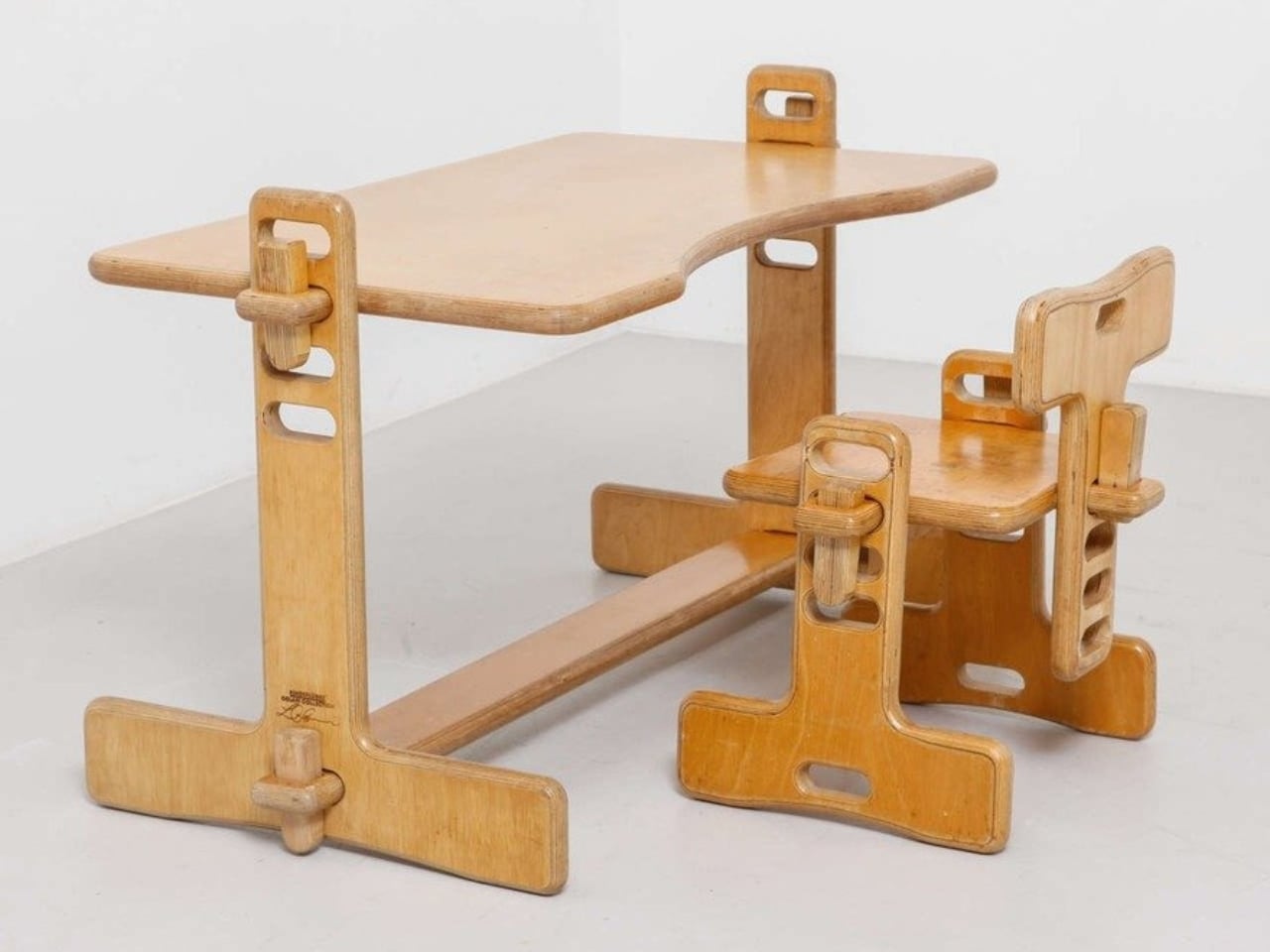
Decades before IKEA popularized the concept of flatpack furniture, visionary designer Luigi Colani was already revolutionizing children’s furniture with his Tobifant desk and chair set in the 1970s. This innovative design not only offered convenience but also addressed a common challenge faced by parents: the rapid growth of children.
A New Approach to Children’s Furniture
Colani, renowned for his embrace of curves and organic shapes, created the Tobifant collection for the West German brand Kinderlübke. The desk and chair set featured height-adjustable frames, allowing parents to modify the furniture as their children grew. Instead of replacing furniture every few years, families could make a single investment that adapted to their child’s changing needs.
This approach was ahead of its time, as many children’s furniture options were either disposable or prohibitively expensive. By designing a piece that could grow with its user, Colani promoted sustainability long before it became a prevalent theme in modern design.
Moreover, each Tobifant desk was uniquely equipped with one kilogram of modeling clay and three wooden tools, emphasizing Colani’s belief that a desk should serve as a creative space, not just a place for homework. His design promoted hands-on engagement, encouraging children to explore their creativity.
Timeless Design and Lasting Impact
The flatpack design was not merely a logistical advantage; it democratized quality design. Colani made it easier for families to access well-crafted furniture, bringing thoughtful, human-centered design into homes that may have been previously restricted to more expensive options.
Today, surviving Tobifant sets appear on vintage reseller sites, often fetching impressive prices among collectors. Original pieces from Luigi Colani are increasingly rare, and the Tobifant exemplifies a perfect blend of form, function, and forward-thinking philosophy.
Colani’s foresight in developing flatpack, modular, and adjustable designs was remarkable. He anticipated trends that are now common in the industry, such as sustainability through longevity and child-centered functionality that does not compromise aesthetics. His work can be seen as a precursor to the innovative approaches adopted by many contemporary furniture startups.
As consumers continue to navigate the complexities of modern furniture assembly, it’s worth reflecting on the legacy of Luigi Colani and his Tobifant collection. He demonstrated that furniture could be more than just practical; it could also be beautiful and transformative for family life. This legacy deserves recognition and appreciation for its enduring influence on design.

Meta Plans Major Layoffs as AI Costs Surge

Alberta’s Referendum Could Pave Way for U.S. Statehood

Minooka District 201 Plans Enhanced Bilingual Support for Students

Canmore Approves Multiple Development Permits for New Projects

Remembering Bradly Castillo Shearsmith: A Life of Friendship and Joy

BIS Urges Watchdogs to Integrate Synthetic Risk Transfers in Stress Tests

Teva Transforms: Shifting Focus from Generics to Branded Success

Apple Launches AirPods Max 2 with Enhanced Audio Features

Ontario Ends Funding for Seven Supervised Injection Sites

Toyoake City Proposes Daily Two-Hour Smartphone Use Limit

Pedestrian Fatally Injured in Esquimalt Collision on August 14

B.C. Review Reveals Urgent Need for Rare-Disease Drug Reforms

Dark Adventure Game “Bye Sweet Carole” Set for October Release

Konami Revives Iconic Metal Gear Solid Delta Ahead of Release

Victoria’s Pop-Up Shop Shines Light on B.C.’s Wolf Cull

Jimmy Lai’s Defense Challenges Charges Under National Security Law

Snapmaker U1 Color 3D Printer Redefines Speed and Sustainability

Apple Expands Self-Service Repair Program to Canada
-
 Science11 months ago
Toyoake City Proposes Daily Two-Hour Smartphone Use Limit
-
 Top Stories11 months ago
Pedestrian Fatally Injured in Esquimalt Collision on August 14
-
 Health11 months ago
B.C. Review Reveals Urgent Need for Rare-Disease Drug Reforms
-
 Technology11 months ago
Dark Adventure Game “Bye Sweet Carole” Set for October Release
-
 Technology11 months ago
Konami Revives Iconic Metal Gear Solid Delta Ahead of Release
-
 Lifestyle11 months ago
Victoria’s Pop-Up Shop Shines Light on B.C.’s Wolf Cull
-
 World11 months ago
Jimmy Lai’s Defense Challenges Charges Under National Security Law
-
 Technology11 months ago
Snapmaker U1 Color 3D Printer Redefines Speed and Sustainability
-
 Technology11 months ago
Apple Expands Self-Service Repair Program to Canada
-

 Technology11 months ago
AION Folding Knife: Redefining EDC Design with Premium Materials
-

 Technology11 months ago
Solve Today’s Wordle Challenge: Hints and Answer for August 19
-

 Business11 months ago
Gordon Murray Automotive Unveils S1 LM and Le Mans GTR at Monterey