
Technology
Doctors Embrace AI to Combat Healthcare Inefficiencies in Canada

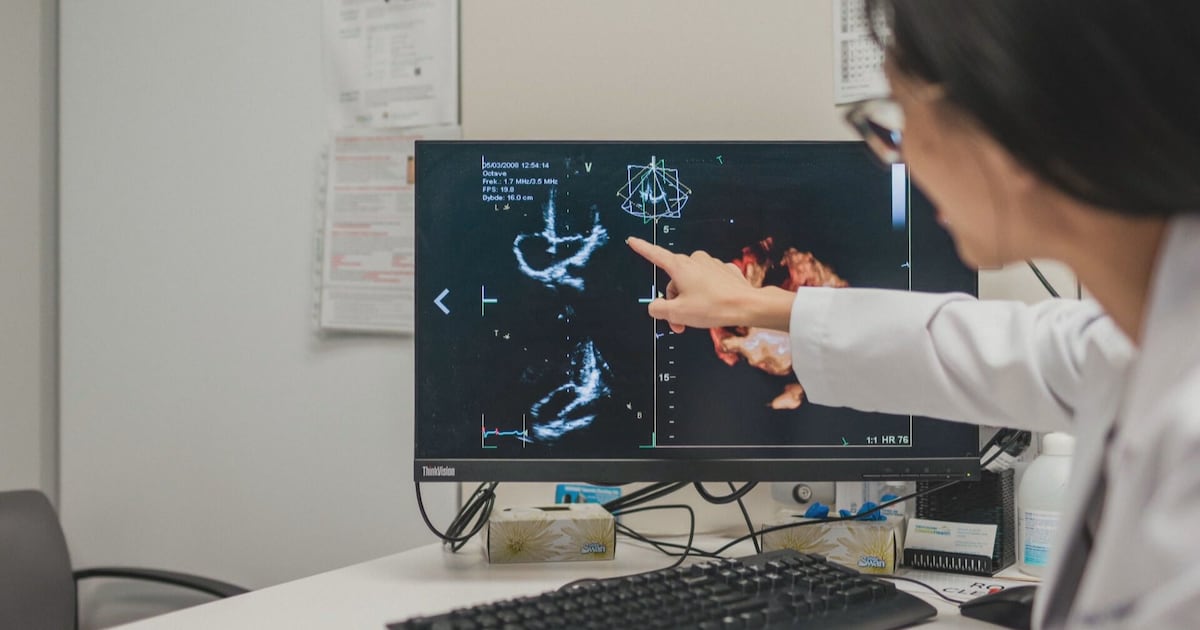
As artificial intelligence (AI) continues to gain traction across various sectors in Canada, healthcare professionals are beginning to integrate these technologies to address significant inefficiencies within the country’s healthcare system. Experts, including Dr. Muhammad Mamdani, former Vice President of Data Science and Advanced Analytics at Unity Health Toronto, assert that AI can play a crucial role in improving patient care when utilized thoughtfully.
One of the most notable applications of AI in healthcare is the use of AI scribes. Dr. Mamdani highlights that these tools help streamline interactions between patients and physicians. Traditionally, doctors often find themselves distracted by the need to take detailed notes during consultations. “When doctors have to take medical notes themselves, they must do so while simultaneously attempting to focus as much as possible on the patient and their health concerns,” he explained in an interview with CTVNews.ca.
Transforming Patient Interactions
Since implementing AI scribes in his practice, Dr. Mamdani has observed a significant shift in how physicians allocate their time. He noted that the technology allows doctors to focus more on patient interactions rather than on administrative tasks. “Studies have shown that it’ll actually free up about three to four hours per week for physicians,” he stated. The AI scribe transcribes and summarizes conversations, enabling doctors to concentrate on patient care rather than note-taking.
While acknowledging the potential for errors, Dr. Mamdani emphasized the overall time savings that AI provides. “More than 80 percent of physicians are totally fine with the system; the benefits far outweigh the hassle of reviewing notes,” he said. This efficiency is critical given the increasing demands on healthcare providers.
Advanced Clinical Applications
AI’s impact extends beyond administrative tasks into clinical decision-making. At St. Joseph’s Health Centre and St. Michael’s Hospital, both part of Unity Health, an AI model actively monitors patients in internal medicine and general surgery. Dr. Mamdani explained that this system tracks patients every hour and analyzes approximately 150 to 170 parameters to predict critical health events, such as the likelihood of a patient deteriorating or requiring intensive care within the next 48 hours.
Implemented around five years ago, this technology has shown promising results, contributing to a 26 percent reduction in unexpected mortality, according to a paper published in the Canadian Medical Association (CMA) Journal last year. “These tools essentially help save lives,” Dr. Mamdani remarked.
While the integration of AI can enhance diagnostic accuracy and improve patient outcomes, it is essential to remember the limitations inherent in technology. Dr. Margot Burnell, president of the CMA, emphasizes that AI cannot replace the invaluable human element of healthcare. “What is unique to healthcare is building a trusting relationship with a patient,” she stated. “AI will be a tool, but it cannot replace us.”
The rise of AI chatbots, such as ChatGPT, has prompted some Canadians to seek medical advice online instead of visiting a doctor. Dr. Burnell warns that while these tools can provide useful information, they cannot replicate the comprehensive care offered by healthcare professionals. She highlighted the risks involved when patients turn to unverified sources for medical advice, noting that one in five individuals seeking guidance from social media has reported adverse outcomes, including delays in diagnosis.
Addressing Systemic Challenges
Dr. Mamdani pointed out that the Canadian healthcare system is under considerable strain, with long wait times and a significant number of individuals lacking access to primary care. A report from the Canadian Institute for Health Information (CIHI) highlights that 15 percent of visits to emergency departments from April 2023 to March 2024 were for conditions that could have been managed in primary care settings. “There’s a lot of inefficiency in the system right now,” said Dr. Mamdani. “We’re already working the job of three or four people.”
The potential of AI to alleviate some of these burdens is promising, but the adoption of such technologies must be approached with caution. Dr. Burnell stressed the importance of protecting patient privacy and ensuring that data is used ethically. Questions surrounding data ownership, consent, and potential biases in AI models remain critical concerns.
As AI continues to evolve, it is imperative that healthcare providers monitor its impacts closely. “We need to ensure that it does not cause increased inequities,” Dr. Burnell stated. The CMA has emphasized that AI is only as effective as the data it is based upon, underscoring the necessity for diverse and representative datasets to avoid blind spots in healthcare delivery.
While healthcare professionals express enthusiasm about the potential of AI, they also acknowledge the need for a balanced approach that respects patient safety, privacy, and the indispensable human aspect of care.

Meta Plans Major Layoffs as AI Costs Surge

Alberta’s Referendum Could Pave Way for U.S. Statehood

Minooka District 201 Plans Enhanced Bilingual Support for Students

Canmore Approves Multiple Development Permits for New Projects

Remembering Bradly Castillo Shearsmith: A Life of Friendship and Joy

BIS Urges Watchdogs to Integrate Synthetic Risk Transfers in Stress Tests

Teva Transforms: Shifting Focus from Generics to Branded Success

Apple Launches AirPods Max 2 with Enhanced Audio Features

Ontario Ends Funding for Seven Supervised Injection Sites

Toyoake City Proposes Daily Two-Hour Smartphone Use Limit

Pedestrian Fatally Injured in Esquimalt Collision on August 14

B.C. Review Reveals Urgent Need for Rare-Disease Drug Reforms

Dark Adventure Game “Bye Sweet Carole” Set for October Release

Konami Revives Iconic Metal Gear Solid Delta Ahead of Release

Victoria’s Pop-Up Shop Shines Light on B.C.’s Wolf Cull

Jimmy Lai’s Defense Challenges Charges Under National Security Law

Snapmaker U1 Color 3D Printer Redefines Speed and Sustainability

Apple Expands Self-Service Repair Program to Canada
-
 Science1 year ago
Toyoake City Proposes Daily Two-Hour Smartphone Use Limit
-
 Top Stories1 year ago
Pedestrian Fatally Injured in Esquimalt Collision on August 14
-
 Health1 year ago
B.C. Review Reveals Urgent Need for Rare-Disease Drug Reforms
-
 Technology1 year ago
Dark Adventure Game “Bye Sweet Carole” Set for October Release
-
 Technology1 year ago
Konami Revives Iconic Metal Gear Solid Delta Ahead of Release
-
 Lifestyle1 year ago
Victoria’s Pop-Up Shop Shines Light on B.C.’s Wolf Cull
-
 World1 year ago
Jimmy Lai’s Defense Challenges Charges Under National Security Law
-
 Technology1 year ago
Snapmaker U1 Color 3D Printer Redefines Speed and Sustainability
-
 Technology1 year ago
Apple Expands Self-Service Repair Program to Canada
-

 Technology1 year ago
AION Folding Knife: Redefining EDC Design with Premium Materials
-

 Technology1 year ago
Solve Today’s Wordle Challenge: Hints and Answer for August 19
-

 Business1 year ago
Gordon Murray Automotive Unveils S1 LM and Le Mans GTR at Monterey