
Technology
Europe Eases Emission Rules for Automakers Amid Industry Struggles

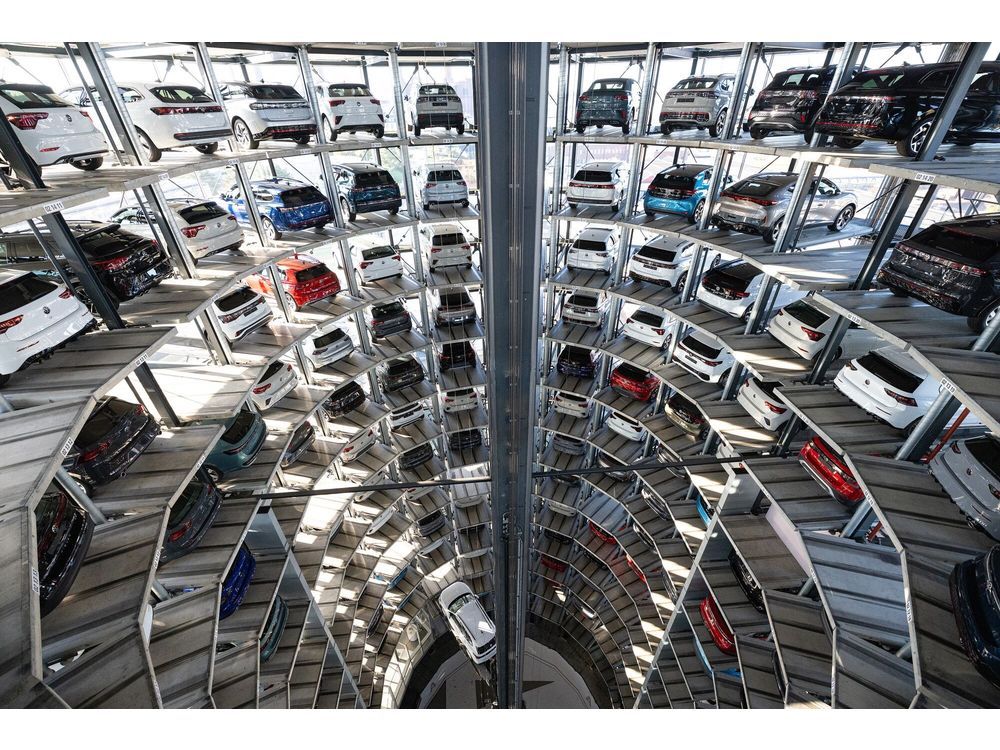
Europe’s automotive industry is poised for a significant shift as the European Union (EU) prepares to relax stringent regulations that would have effectively banned new combustion-engine vehicles by 2035. This policy adjustment comes at a crucial time as manufacturers grapple with the challenges of transitioning to emission-free driving, a move that could redefine the continent’s transport sector.
According to sources familiar with the discussions, the EU is considering amendments that may extend the deadline for combustion-engine vehicles by five years, while other options, including removing the ban entirely, are also being evaluated.
German Chancellor Friedrich Merz emphasized the importance of a competitive manufacturing sector during a press briefing in Heidelberg, stating, “We will only be able to do something for climate protection if we have a competitive manufacturing sector.” He advocated for swift corrections to ensure the industry’s future in Europe.
The forthcoming policy revision is largely a response to persistent lobbying from major automakers like Stellantis NV and Mercedes-Benz Group AG. These companies have been concerned about the potential for fines exceeding €1 billion (approximately $1.2 billion) in the coming years if the original regulations remained in place. Additionally, key auto-producing nations, notably Germany—home to industry giants such as Volkswagen AG and BMW AG—have pushed for policy changes to alleviate political tensions and avert job losses.
While this temporary reprieve may be welcomed by an industry that contributes around €1 trillion (around $1.2 trillion) to the European economy, it carries inherent risks. Too much leniency could hinder technological advancements and widen the competitive gap with companies like Tesla Inc. and Chinese manufacturers such as BYD Co..
Jos Delbeke, a professor at the European University Institute in Florence and former senior EU climate official, remarked, “What’s happening now is a wake-up call for the industry. Some flexibility may be needed for all good reasons, but it should be temporary; otherwise, we risk missing climate targets and losing the technology race.”
The adjustment in regulations might also provide European leaders an opportunity to make the transition to electric vehicles (EVs) more palatable for consumers. Traditionally, the responsibility for aligning with the EU’s ambitious EV goals has rested heavily on manufacturers, while national governments have been slow to implement effective policies that encourage the adoption of this technology.
Despite the additional time for policymakers to adapt strategies, financial constraints may limit incentives for purchasing or operating electric vehicles. Earlier in March 2023, the EU laid out an action plan aiming to enhance the cost-competitiveness of local battery cells and components, alongside pledges to collaborate with member states on effective EV policies. However, the EU’s influence over national taxation and subsidy frameworks remains limited.
Rising populism across Europe has made the financial implications of the green transition a sensitive topic for governments. This was evident earlier this month when the EU reached a preliminary agreement on a new climate target for 2040, while simultaneously delaying the introduction of carbon pricing at the pump until 2028. Although this delay may render combustion-engine vehicles more expensive and thereby enhance the attractiveness of EVs, political leaders fear a backlash from voters.
Ingo Ramming, head of carbon markets at Banco Bilbao Vizcaya Argentaria SA in Madrid, noted, “The EU’s climate ambition demands that every sector delivers, yet emissions reductions from road transport are lagging.” He added that the success of the new fuel pricing system will largely depend on addressing political and social concerns, particularly in today’s challenging environment.
For manufacturers, the delay provides a brief opportunity to revise investment plans disrupted by rising costs and uncertain EV demand. Automakers have already reduced or slowed several battery plant projects, while suppliers—who employ a significant portion of the industry’s workforce—face intense pressure as orders for combustion-engine vehicles decline faster than the ramp-up of electric models.
Industry representatives caution that without a transition aligned with market realities, numerous smaller parts manufacturers could face dire consequences, increasing the risk of job losses and supply chain disruptions across the region. Archibald Poty, trade and market affairs manager at CLEPA, the European supplier association, stated, “Europe’s industrial base is under pressure as electrification and global competition shift value to Asia. In a less favorable business environment, strategic policies are vital.”
Under pressure from climate-skeptic parties, green policies have been portrayed as a threat to economic prosperity. As governments seek to protect legacy manufacturing sectors, they must navigate the delicate balance between fostering innovation and ensuring political stability.
Despite the current easing of regulations, environmental commitments remain intact, and the coming months will be crucial in determining whether policymakers can maintain Europe’s automotive competitiveness while pursuing the goal of net-zero emissions by 2050. Many industry executives contend that simply shifting deadlines will not address the underlying challenges the sector faces, including high energy costs, sluggish permitting processes, and insufficient local battery production.
Without progress on these critical issues, Europe risks merely delaying the inevitable challenges rather than improving its standing in the global electric vehicle race. Critics warn that the extension could inadvertently encourage manufacturers to continue relying on profitable conventional technologies, hindering the urgent shift to electric vehicles and allowing regions like China to advance more rapidly.
The potential for weakened regulations may also revitalize interim solutions, such as hybrid systems and range extenders. Currently, many essential components for EV batteries are sourced from China, which means any short-term benefits for European suppliers could be limited. Although local-content requirements could be beneficial, major German automakers have expressed concerns regarding the associated costs and bureaucratic hurdles.
William Todts, executive director of Transport & Environment, an advocacy group focusing on clean transport policy in Europe, cautioned, “The danger is creating confusion about the direction of travel. There’s a big risk we waste another couple of years debating what the industry of the future should look like.”
As the EU navigates these complex issues, the automotive industry stands at a crossroads, facing the challenge of evolving in a rapidly changing global market while addressing pressing environmental concerns.

Meta Plans Major Layoffs as AI Costs Surge

Alberta’s Referendum Could Pave Way for U.S. Statehood

Minooka District 201 Plans Enhanced Bilingual Support for Students

Canmore Approves Multiple Development Permits for New Projects

Remembering Bradly Castillo Shearsmith: A Life of Friendship and Joy

BIS Urges Watchdogs to Integrate Synthetic Risk Transfers in Stress Tests

Teva Transforms: Shifting Focus from Generics to Branded Success

Apple Launches AirPods Max 2 with Enhanced Audio Features

Ontario Ends Funding for Seven Supervised Injection Sites

Toyoake City Proposes Daily Two-Hour Smartphone Use Limit

Pedestrian Fatally Injured in Esquimalt Collision on August 14

B.C. Review Reveals Urgent Need for Rare-Disease Drug Reforms

Dark Adventure Game “Bye Sweet Carole” Set for October Release

Konami Revives Iconic Metal Gear Solid Delta Ahead of Release

Victoria’s Pop-Up Shop Shines Light on B.C.’s Wolf Cull

Jimmy Lai’s Defense Challenges Charges Under National Security Law

Snapmaker U1 Color 3D Printer Redefines Speed and Sustainability

Apple Expands Self-Service Repair Program to Canada
-
 Science1 year ago
Toyoake City Proposes Daily Two-Hour Smartphone Use Limit
-
 Top Stories1 year ago
Pedestrian Fatally Injured in Esquimalt Collision on August 14
-
 Health1 year ago
B.C. Review Reveals Urgent Need for Rare-Disease Drug Reforms
-
 Technology1 year ago
Dark Adventure Game “Bye Sweet Carole” Set for October Release
-
 Technology1 year ago
Konami Revives Iconic Metal Gear Solid Delta Ahead of Release
-
 Lifestyle1 year ago
Victoria’s Pop-Up Shop Shines Light on B.C.’s Wolf Cull
-
 World1 year ago
Jimmy Lai’s Defense Challenges Charges Under National Security Law
-
 Technology1 year ago
Snapmaker U1 Color 3D Printer Redefines Speed and Sustainability
-
 Technology1 year ago
Apple Expands Self-Service Repair Program to Canada
-

 Technology1 year ago
AION Folding Knife: Redefining EDC Design with Premium Materials
-

 Technology1 year ago
Solve Today’s Wordle Challenge: Hints and Answer for August 19
-

 Business1 year ago
Gordon Murray Automotive Unveils S1 LM and Le Mans GTR at Monterey