
Technology
Innovative Exoskeleton Empowers Injured Dogs to Regain Movement

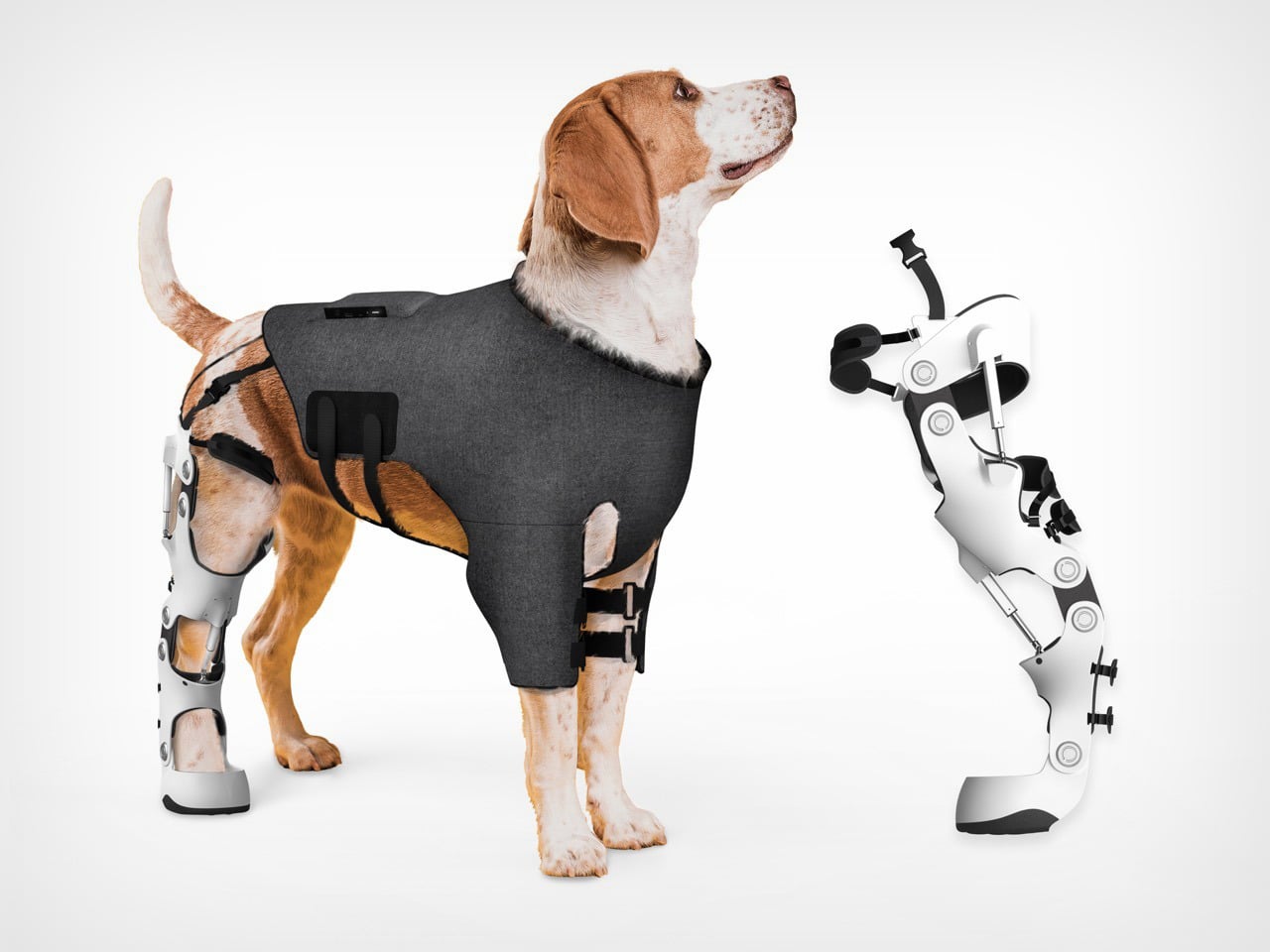
A groundbreaking rehabilitation device, the Pet Power Assistive Exoskeleton, is set to transform the recovery process for injured dogs. Designed by Leijing Zhou, this innovative technology allows pets to relearn movement in a manner that feels natural and intuitive, addressing a significant gap in animal care.
The inspiration for this device emerged from a news report highlighting the inadequacies of existing prosthetic solutions for pets. While these traditional aids were well-intentioned, they often proved to be passive, rigid, and uncomfortable. Many provided only basic mobility support, falling short of the needs of recovering animals. This became even more personal for Zhou after caring for a dog that suffered a hindlimb injury, revealing the limitations of current rehabilitation technologies.
Understanding Movement Through Technology
The Pet Power Assistive Exoskeleton distinguishes itself by focusing on the dog’s intention rather than forcing movement. Utilizing principles from active exoskeleton systems employed in human stroke rehabilitation, the device integrates surface electromyographic sensors to interpret muscle signals from a dog’s healthy forelimb. As the dog initiates movement, these signals are analyzed in real-time to predict the necessary actions for the impaired hindlimb.
This intelligent approach enables the exoskeleton to provide precise mechanical assistance, synchronizing the impaired leg with the dog’s natural gait. The result is a cooperative rehabilitation process where the technology supports the dog’s natural movements, fostering a more fluid and instinctive experience.
Personalized Design for Enhanced Recovery
A key aspect of the exoskeleton’s design is its personalization. Recognizing that every dog has a unique body structure and injury profile, the device is created using advanced 3D printing techniques based on individual body scans. This ensures a tailored fit that distributes weight evenly and minimizes discomfort.
The materials selected for the exoskeleton prioritize both comfort and functionality. Lightweight structural components, soft memory foam padding, and non-slip surfaces enhance stability and long-term usability. This thoughtful design makes the device suitable not only for clinical rehabilitation but also for everyday activities, promoting a seamless transition back to normal life.
Developed between 2023 and March 2025 in Hangzhou, the project involved considerable research and experimentation. One of the significant challenges was interpreting muscle signals in animals, an area lacking in standardized methods and existing data. This necessitated repeated field testing, iterative modeling, and close observation of canine behavior to translate biological signals into reliable movement predictions.
Ultimately, the Pet Power Assistive Exoskeleton represents a profound shift in how we approach animal rehabilitation. It acknowledges pets as active participants in their recovery rather than passive recipients of aid. By merging empathy with advanced technology, this project not only restores mobility but also safeguards the dignity and independence of animals, allowing them to experience the simple joy of movement once again.

Meta Plans Major Layoffs as AI Costs Surge

Alberta’s Referendum Could Pave Way for U.S. Statehood

Minooka District 201 Plans Enhanced Bilingual Support for Students

Canmore Approves Multiple Development Permits for New Projects

Remembering Bradly Castillo Shearsmith: A Life of Friendship and Joy

BIS Urges Watchdogs to Integrate Synthetic Risk Transfers in Stress Tests

Teva Transforms: Shifting Focus from Generics to Branded Success

Apple Launches AirPods Max 2 with Enhanced Audio Features

Ontario Ends Funding for Seven Supervised Injection Sites

Toyoake City Proposes Daily Two-Hour Smartphone Use Limit

Pedestrian Fatally Injured in Esquimalt Collision on August 14

Dark Adventure Game “Bye Sweet Carole” Set for October Release

B.C. Review Reveals Urgent Need for Rare-Disease Drug Reforms

Konami Revives Iconic Metal Gear Solid Delta Ahead of Release

Jimmy Lai’s Defense Challenges Charges Under National Security Law

Victoria’s Pop-Up Shop Shines Light on B.C.’s Wolf Cull

Snapmaker U1 Color 3D Printer Redefines Speed and Sustainability

Apple Expands Self-Service Repair Program to Canada
-
 Science8 months ago
Toyoake City Proposes Daily Two-Hour Smartphone Use Limit
-
 Top Stories8 months ago
Pedestrian Fatally Injured in Esquimalt Collision on August 14
-
 Technology8 months ago
Dark Adventure Game “Bye Sweet Carole” Set for October Release
-
 Health8 months ago
B.C. Review Reveals Urgent Need for Rare-Disease Drug Reforms
-
 Technology8 months ago
Konami Revives Iconic Metal Gear Solid Delta Ahead of Release
-
 World8 months ago
Jimmy Lai’s Defense Challenges Charges Under National Security Law
-
 Lifestyle8 months ago
Victoria’s Pop-Up Shop Shines Light on B.C.’s Wolf Cull
-
 Technology8 months ago
Snapmaker U1 Color 3D Printer Redefines Speed and Sustainability
-
 Technology8 months ago
Apple Expands Self-Service Repair Program to Canada
-

 Technology8 months ago
AION Folding Knife: Redefining EDC Design with Premium Materials
-

 Technology8 months ago
Solve Today’s Wordle Challenge: Hints and Answer for August 19
-

 Business8 months ago
Gordon Murray Automotive Unveils S1 LM and Le Mans GTR at Monterey