
Technology
Innovative Microhome in Punjab Replenishes Groundwater While Living

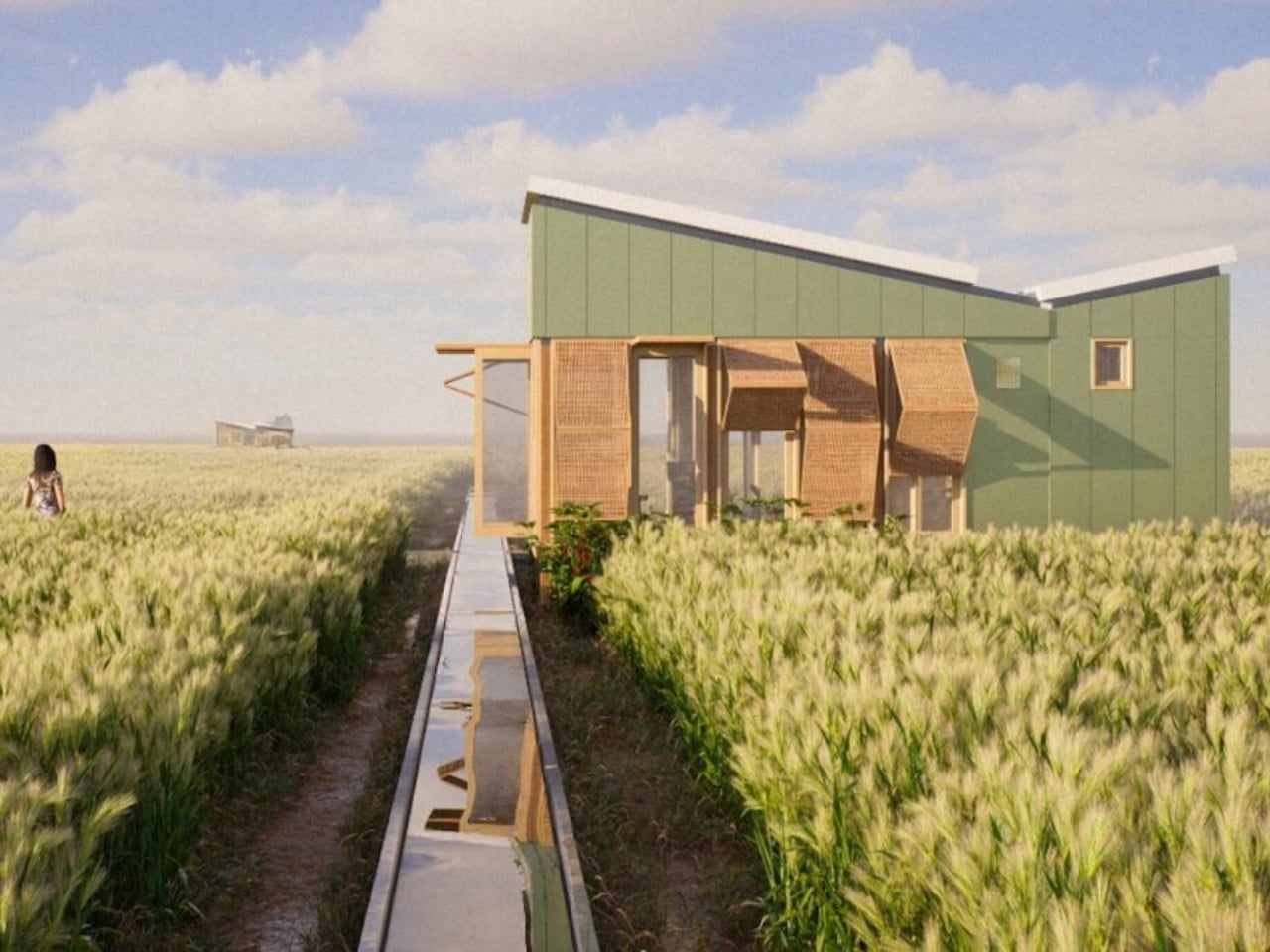
A groundbreaking microhome in Punjab, India, is making waves by tackling the region’s severe groundwater depletion crisis. Designed by New York architects Aleksa Milojevic and Matthew W Wilde, the project, named Living on Groundwater, aims to replenish local aquifers while providing sustainable housing solutions.
In an area grappling with one of the world’s most pressing water crises, this innovative home spans just 25 square meters but packs a powerful environmental punch. It features a sophisticated system that harvests rainwater, recycles greywater, and returns treated water to the aquifer through an on-site injection well. This hydro-positive model not only minimizes the home’s carbon footprint but also positions it as an active participant in environmental restoration.
Design and Functionality
The design of Living on Groundwater harmonizes with the agricultural landscape of Punjab. Elevated on a timber frame, the home minimizes ground disturbance, allowing water, air, and vegetation to flow freely beneath it. This clever elevation prevents soil compression, enabling natural ecological processes to continue unhindered.
The home’s permeable facade invites natural light, creating a seamless connection between indoor and outdoor spaces. It adapts to seasonal changes, offering shade and ventilation in the summer while capturing warmth during colder months. The loft-style sleeping area maximizes the compact 269-square-foot space, freeing the ground level for living and work areas. Modular cabinetry and convertible surfaces ensure that the interior meets the diverse needs of its occupants, emphasizing flexibility and livability.
This project has garnered significant recognition, winning first prize in the Kingspan-funded MICROHOME #10 competition organized by Buildner. The award, which includes a prize of €20,000, highlights the project’s “technically sophisticated integration of building systems, local ecology, and water resilience.” The jury praised the microhome for its role in environmental repair, showcasing it as more than just a residence.
Research-Driven Innovation
What sets this microhome apart is its foundation in thorough research. Developed through a seminar and field study at Yale University, the design team engaged deeply with the agricultural history and environmental challenges of Punjab. This local context shaped the home’s features, ensuring it addresses specific regional needs rather than offering generic solutions.
As global housing pressures mount due to climate change, rising construction costs, and demographic shifts, the Living on Groundwater project presents a hopeful model for future developments. It demonstrates that small-scale architecture can be aesthetically pleasing, functional, and environmentally responsible. This innovative approach reminds us that effective solutions often arise from a deep understanding of local conditions and a commitment to working in harmony with nature.
In a world where sustainable living is becoming increasingly essential, Living on Groundwater stands as a testament to the potential of thoughtful design to create homes that not only serve their inhabitants but also actively contribute to the health of the environment.

Meta Plans Major Layoffs as AI Costs Surge

Alberta’s Referendum Could Pave Way for U.S. Statehood

Minooka District 201 Plans Enhanced Bilingual Support for Students

Canmore Approves Multiple Development Permits for New Projects

Remembering Bradly Castillo Shearsmith: A Life of Friendship and Joy

BIS Urges Watchdogs to Integrate Synthetic Risk Transfers in Stress Tests

Teva Transforms: Shifting Focus from Generics to Branded Success

Apple Launches AirPods Max 2 with Enhanced Audio Features

Ontario Ends Funding for Seven Supervised Injection Sites

Toyoake City Proposes Daily Two-Hour Smartphone Use Limit

Pedestrian Fatally Injured in Esquimalt Collision on August 14

B.C. Review Reveals Urgent Need for Rare-Disease Drug Reforms

Dark Adventure Game “Bye Sweet Carole” Set for October Release

Konami Revives Iconic Metal Gear Solid Delta Ahead of Release

Victoria’s Pop-Up Shop Shines Light on B.C.’s Wolf Cull

Jimmy Lai’s Defense Challenges Charges Under National Security Law

Snapmaker U1 Color 3D Printer Redefines Speed and Sustainability

Apple Expands Self-Service Repair Program to Canada
-
 Science11 months ago
Toyoake City Proposes Daily Two-Hour Smartphone Use Limit
-
 Top Stories11 months ago
Pedestrian Fatally Injured in Esquimalt Collision on August 14
-
 Health11 months ago
B.C. Review Reveals Urgent Need for Rare-Disease Drug Reforms
-
 Technology11 months ago
Dark Adventure Game “Bye Sweet Carole” Set for October Release
-
 Technology11 months ago
Konami Revives Iconic Metal Gear Solid Delta Ahead of Release
-
 Lifestyle11 months ago
Victoria’s Pop-Up Shop Shines Light on B.C.’s Wolf Cull
-
 World11 months ago
Jimmy Lai’s Defense Challenges Charges Under National Security Law
-
 Technology11 months ago
Snapmaker U1 Color 3D Printer Redefines Speed and Sustainability
-
 Technology11 months ago
Apple Expands Self-Service Repair Program to Canada
-

 Technology11 months ago
AION Folding Knife: Redefining EDC Design with Premium Materials
-

 Technology11 months ago
Solve Today’s Wordle Challenge: Hints and Answer for August 19
-

 Business11 months ago
Gordon Murray Automotive Unveils S1 LM and Le Mans GTR at Monterey