
Technology
NASA Explores Menstrual Cup Options for Long-Term Space Missions

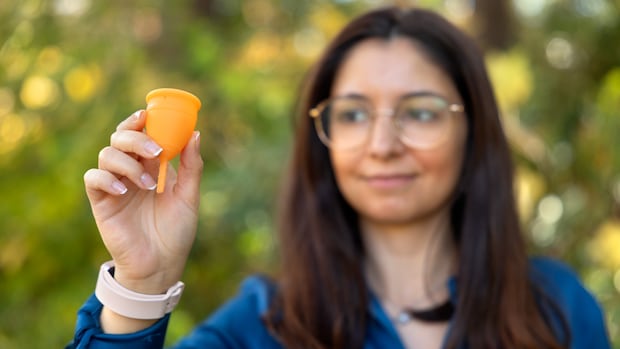
In a significant advancement for female astronauts, researchers are exploring the use of menstrual cups for managing menstruation during long-duration space missions. A study published in the journal NPJ Women’s Health highlights the challenges faced by astronauts who menstruate and presents a new option aimed at enhancing their comfort in space.
The conversation around menstruation in space is not new, but it remains a sensitive topic. When Sally Ride became the first American woman in space during her mission aboard the space shuttle Challenger on June 18, 1983, she was asked how many tampons she would need for her week-long journey. Her response was clear: the suggested number was far from adequate. Today, as space agencies prepare for longer missions, such as those planned for Mars, the need to address this issue has become more pressing.
Most astronauts who menstruate currently opt for hormonal contraceptive methods to suppress their periods. Others choose traditional products like tampons or pads. However, the AstroCup mission, a collaboration between Cornell University and Lunette, aims to provide a reusable, environmentally friendly alternative: menstrual cups. These flexible, bell-shaped devices are inserted vaginally and collect menstrual blood, offering a sustainable solution for astronauts who prefer not to suppress their cycles.
The AstroCup mission involved launching two menstrual cups on a suborbital, uncrewed flight to assess their performance under space conditions. The team measured key factors such as temperature, acceleration, and humidity. Following the flight, tests confirmed that the cups maintained their integrity when subjected to conditions that mimic those in space.
Catarina Miranda, a science communicator and co-author of the study, emphasized the importance of providing astronauts with various options. “We want to give different options to women because right now, astronauts are induced to take menstrual suppression,” she stated. “Since we already have solutions here on Earth that are sustainable, why not adapt them for space?”
As space missions become more ambitious, including the upcoming Artemis II mission scheduled for early 2026, the implications of such research grow. This mission will see astronauts, including Jeremy Hansen of the Canadian Space Agency, embark on a journey to orbit the Moon—marking a critical step toward future expeditions to Mars.
Researcher Ligia Coelho pointed out that the importance of addressing menstruation in space had previously been overlooked. “This is just a situation where people didn’t know this could be a problem because nobody thought about it,” Coelho remarked. The introduction of menstrual cups could alleviate the logistical challenges of packing sufficient disposable products for extended missions, as they are lightweight and reusable.
Beyond menstrual cups, the study’s authors are exploring various menstrual management options, further broadening the conversation around women’s health in space. Shawna Pandya, Canada’s first named commercial female astronaut, has also been conducting research on the feasibility of intrauterine devices (IUDs) for space travel. She highlighted the need for ongoing research to address women’s health issues in the context of long-duration missions.
While the current focus is on menstrual cups, researchers are optimistic about expanding their studies. They aim to test the cups in actual space environments, assessing how they perform under exposure to radiation and other factors unique to space travel.
As space agencies prepare for an era of commercial space travel and longer missions, the conversation surrounding women’s health continues to evolve. With the exploration of options like menstrual cups, the goal is clear: to ensure all astronauts, regardless of gender, have the tools they need for successful missions. The potential for sustainable menstrual management solutions represents a crucial step forward in making space accessible to everyone.
As Coelho succinctly put it, “These options are not rocket science. There’s really no excuse not to put them on the table.”

Meta Plans Major Layoffs as AI Costs Surge

Alberta’s Referendum Could Pave Way for U.S. Statehood

Minooka District 201 Plans Enhanced Bilingual Support for Students

Canmore Approves Multiple Development Permits for New Projects

Remembering Bradly Castillo Shearsmith: A Life of Friendship and Joy

BIS Urges Watchdogs to Integrate Synthetic Risk Transfers in Stress Tests

Teva Transforms: Shifting Focus from Generics to Branded Success

Apple Launches AirPods Max 2 with Enhanced Audio Features

Ontario Ends Funding for Seven Supervised Injection Sites

Toyoake City Proposes Daily Two-Hour Smartphone Use Limit

Pedestrian Fatally Injured in Esquimalt Collision on August 14

B.C. Review Reveals Urgent Need for Rare-Disease Drug Reforms

Dark Adventure Game “Bye Sweet Carole” Set for October Release

Konami Revives Iconic Metal Gear Solid Delta Ahead of Release

Victoria’s Pop-Up Shop Shines Light on B.C.’s Wolf Cull

Jimmy Lai’s Defense Challenges Charges Under National Security Law

Snapmaker U1 Color 3D Printer Redefines Speed and Sustainability

Apple Expands Self-Service Repair Program to Canada
-
 Science1 year ago
Toyoake City Proposes Daily Two-Hour Smartphone Use Limit
-
 Top Stories1 year ago
Pedestrian Fatally Injured in Esquimalt Collision on August 14
-
 Health1 year ago
B.C. Review Reveals Urgent Need for Rare-Disease Drug Reforms
-
 Technology1 year ago
Dark Adventure Game “Bye Sweet Carole” Set for October Release
-
 Technology1 year ago
Konami Revives Iconic Metal Gear Solid Delta Ahead of Release
-
 Lifestyle1 year ago
Victoria’s Pop-Up Shop Shines Light on B.C.’s Wolf Cull
-
 World1 year ago
Jimmy Lai’s Defense Challenges Charges Under National Security Law
-
 Technology1 year ago
Snapmaker U1 Color 3D Printer Redefines Speed and Sustainability
-
 Technology1 year ago
Apple Expands Self-Service Repair Program to Canada
-

 Technology1 year ago
AION Folding Knife: Redefining EDC Design with Premium Materials
-

 Technology1 year ago
Solve Today’s Wordle Challenge: Hints and Answer for August 19
-

 Business1 year ago
Gordon Murray Automotive Unveils S1 LM and Le Mans GTR at Monterey