
Technology
Queen’s University Celebrates Research Milestones in 2025

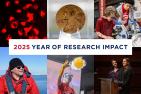
December serves as a time for reflection, and for Queen’s University, 2025 marked a year of significant achievements in research. This year, the institution celebrated the 10th anniversary of Dr. Art McDonald’s Nobel Prize in Physics while also launching a new Strategic Research Plan. The highlights of this year included groundbreaking innovations in various fields, from nanotechnology to artificial intelligence applications in law.
Breakthroughs in Nanoscience
At the forefront of Queen’s research initiatives is the Carbon to Metal Coating Institute (C2MCI), where scientists are developing a novel method to protect metals. Central to this initiative is the use of thin organic coatings, which not only preserve the integrity of metals but also pave the way for advancements in cancer therapy. Researchers at C2MCI are exploring how this technology can selectively target and eliminate tumors while sparing healthy cells. This innovative approach underscores a significant leap in the fight against cancer, with the potential to transform treatment paradigms.
Advancing Legal Technology
In addition to its work in the sciences, Queen’s is also making strides in the legal field. The Conflict Analytics Lab (CAL) has introduced OpenJustice, a no-code AI platform aimed at democratizing access to legal support. This initiative has garnered $1.3 million in funding, which will be utilized to provide high-quality AI tools for small legal practices and pro-bono lawyers, not only in Canada but also globally. By enhancing access to legal resources, Queen’s aims to empower underserved communities and promote equality in legal representation.
Recognizing the importance of interdisciplinary research, Queen’s is also making headlines in the realm of computing. Bhavin Shastri, a Canada Research Chair specializing in Physics, Engineering Physics, and Astronomy, has been awarded the prestigious Sloan Research Fellowship in Physics for 2025. His work in neuromorphic photonics seeks to mimic the brain’s parallel processing capabilities, which could lead to the development of faster and more energy-efficient light-based computing systems. This recognition not only highlights Shastri’s contributions but also positions Queen’s at the cutting edge of technological innovation.
As the year draws to a close, Queen’s University stands proud of its advancements in research, which reflect its commitment to addressing some of the most pressing challenges in health, law, and technology. The accomplishments of 2025 not only celebrate individual achievements but also signify the institution’s ongoing dedication to fostering innovation that has a meaningful impact on society.

Meta Plans Major Layoffs as AI Costs Surge

Alberta’s Referendum Could Pave Way for U.S. Statehood

Minooka District 201 Plans Enhanced Bilingual Support for Students

Canmore Approves Multiple Development Permits for New Projects

Remembering Bradly Castillo Shearsmith: A Life of Friendship and Joy

BIS Urges Watchdogs to Integrate Synthetic Risk Transfers in Stress Tests

Teva Transforms: Shifting Focus from Generics to Branded Success

Apple Launches AirPods Max 2 with Enhanced Audio Features

Ontario Ends Funding for Seven Supervised Injection Sites

Toyoake City Proposes Daily Two-Hour Smartphone Use Limit

Pedestrian Fatally Injured in Esquimalt Collision on August 14

B.C. Review Reveals Urgent Need for Rare-Disease Drug Reforms

Dark Adventure Game “Bye Sweet Carole” Set for October Release

Konami Revives Iconic Metal Gear Solid Delta Ahead of Release

Victoria’s Pop-Up Shop Shines Light on B.C.’s Wolf Cull

Jimmy Lai’s Defense Challenges Charges Under National Security Law

Snapmaker U1 Color 3D Printer Redefines Speed and Sustainability

Apple Expands Self-Service Repair Program to Canada
-
 Science1 year ago
Toyoake City Proposes Daily Two-Hour Smartphone Use Limit
-
 Top Stories1 year ago
Pedestrian Fatally Injured in Esquimalt Collision on August 14
-
 Health1 year ago
B.C. Review Reveals Urgent Need for Rare-Disease Drug Reforms
-
 Technology1 year ago
Dark Adventure Game “Bye Sweet Carole” Set for October Release
-
 Technology1 year ago
Konami Revives Iconic Metal Gear Solid Delta Ahead of Release
-
 Lifestyle1 year ago
Victoria’s Pop-Up Shop Shines Light on B.C.’s Wolf Cull
-
 World1 year ago
Jimmy Lai’s Defense Challenges Charges Under National Security Law
-
 Technology1 year ago
Snapmaker U1 Color 3D Printer Redefines Speed and Sustainability
-
 Technology1 year ago
Apple Expands Self-Service Repair Program to Canada
-

 Technology1 year ago
AION Folding Knife: Redefining EDC Design with Premium Materials
-

 Technology1 year ago
Solve Today’s Wordle Challenge: Hints and Answer for August 19
-

 Business1 year ago
Gordon Murray Automotive Unveils S1 LM and Le Mans GTR at Monterey