
Top Stories
B.C. Students Face Significant Decline in Math Skills, Report Shows

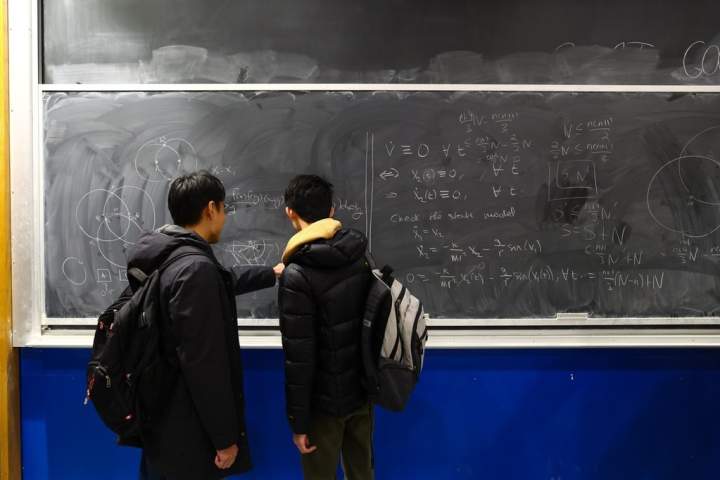
A report from the C.D. Howe Institute highlights a concerning trend among Canadian students, particularly in British Columbia (B.C.), where a significant decline in mathematics skills has been observed. The report indicates that B.C. students have experienced a 42-point decline in math performance since 2003, equating to approximately two years of academic loss, according to Anna Stokke, the report’s author and a professor of mathematics and statistics at the University of Winnipeg.
This decline is compounded by an alarming increase in the number of students struggling with math. Stokke noted that the proportion of students performing at the lowest levels has doubled, while those achieving the highest scores has halved. The findings are further corroborated by the Programme for International Student Assessment (PISA), which evaluates 15-year-old students’ proficiency in essential skills like math and problem-solving.
Stokke emphasized the importance of a solid mathematical foundation for effective problem-solving, stating, “Generally speaking, if you look at the research on problem solving, students have to have a really strong foundation in math to be good problem solvers.” She advocates for a renewed focus on enhancing students’ foundational math knowledge to improve overall performance.
Curriculum Concerns and Recommendations
The report criticizes the current B.C. math curriculum, which Stokke describes as having “very vague outcomes for mathematics.” She argues that children must master essential skills such as fractions, addition, subtraction, multiplication, and division by Grade 5 or 6 to prepare for algebra and more advanced concepts. Stokke remarked, “For example, even at Grade 5, it says that it’s not intended that children should memorize math facts, which is terrible.” She asserts that memorizing basic math facts is crucial for facilitating future problem-solving.
Another concern raised in the report is the recent shift in teaching methods towards exploratory math. While this approach may seem beneficial, Stokke believes it often results in insufficient practice of fundamental concepts, ultimately hindering students’ readiness for more complex math tasks.
In response to these criticisms, B.C. Education Minister Lisa Beare defended the province’s curriculum, highlighting its flexibility. She stated, “We have here in B.C., our Pathways to Learning for math, which allows teachers the ability to be flexible, to not only plan to teach and assess students when it comes to the math curriculum, to ensure we’re getting the best results for students and meeting them where they’re at.”
Addressing Technology’s Role
Stokke also addressed the role of technology in the classroom, recommending that it be minimized during math lessons. She believes that technology can detract from students’ concentration and focus, which are essential for successful learning in mathematics. “A lot of people have been drawing attention to the detrimental aspects of technology in the classroom,” she added. “So I do think that’s part of it. But I also think we really need to focus on teaching math well, and making sure students get a lot of practice.”
The report serves as a call to action for educators and policymakers to reevaluate the teaching of mathematics in British Columbia. With significant challenges ahead, enhancing students’ math skills will require a concerted effort to provide the necessary foundation and resources for effective learning.

Meta Plans Major Layoffs as AI Costs Surge

Alberta’s Referendum Could Pave Way for U.S. Statehood

Minooka District 201 Plans Enhanced Bilingual Support for Students

Canmore Approves Multiple Development Permits for New Projects

Remembering Bradly Castillo Shearsmith: A Life of Friendship and Joy

BIS Urges Watchdogs to Integrate Synthetic Risk Transfers in Stress Tests

Teva Transforms: Shifting Focus from Generics to Branded Success

Apple Launches AirPods Max 2 with Enhanced Audio Features

Ontario Ends Funding for Seven Supervised Injection Sites

Toyoake City Proposes Daily Two-Hour Smartphone Use Limit

Pedestrian Fatally Injured in Esquimalt Collision on August 14

B.C. Review Reveals Urgent Need for Rare-Disease Drug Reforms

Dark Adventure Game “Bye Sweet Carole” Set for October Release

Konami Revives Iconic Metal Gear Solid Delta Ahead of Release

Victoria’s Pop-Up Shop Shines Light on B.C.’s Wolf Cull

Jimmy Lai’s Defense Challenges Charges Under National Security Law

Snapmaker U1 Color 3D Printer Redefines Speed and Sustainability

Apple Expands Self-Service Repair Program to Canada
-
 Science1 year ago
Toyoake City Proposes Daily Two-Hour Smartphone Use Limit
-
 Top Stories1 year ago
Pedestrian Fatally Injured in Esquimalt Collision on August 14
-
 Health1 year ago
B.C. Review Reveals Urgent Need for Rare-Disease Drug Reforms
-
 Technology1 year ago
Dark Adventure Game “Bye Sweet Carole” Set for October Release
-
 Technology1 year ago
Konami Revives Iconic Metal Gear Solid Delta Ahead of Release
-
 Lifestyle1 year ago
Victoria’s Pop-Up Shop Shines Light on B.C.’s Wolf Cull
-
 World1 year ago
Jimmy Lai’s Defense Challenges Charges Under National Security Law
-
 Technology1 year ago
Snapmaker U1 Color 3D Printer Redefines Speed and Sustainability
-
 Technology1 year ago
Apple Expands Self-Service Repair Program to Canada
-

 Technology1 year ago
AION Folding Knife: Redefining EDC Design with Premium Materials
-

 Technology1 year ago
Solve Today’s Wordle Challenge: Hints and Answer for August 19
-

 Business1 year ago
Gordon Murray Automotive Unveils S1 LM and Le Mans GTR at Monterey