
Top Stories
Conservationists Alarmed by Closure of Salmon Gene Bank Facilities

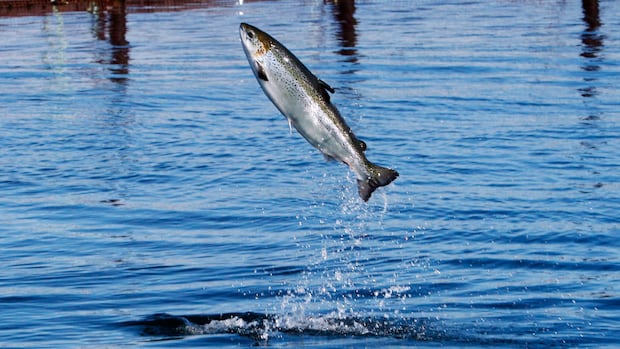
Two conservation organizations and an Indigenous water protector are sounding the alarm over the recent decision by Fisheries and Oceans Canada (DFO) to close its Atlantic Salmon Live Gene Bank program. This program, which is vital for the survival of the endangered Inner Bay of Fundy Atlantic salmon population, is set to close its facilities in Mactaquac, New Brunswick, and Coldbrook, Nova Scotia. The closures, confirmed late on a Friday by DFO, may jeopardize the future of this already at-risk species.
The gene banks play a crucial role in raising juvenile salmon to adulthood and facilitating their mating before releasing them back into their natural habitats. According to DFO’s website, this initiative is designed specifically to support the dwindling population of Inner Bay of Fundy salmon. Nikki-Marie Lloyd, a water protector from Annapolis Valley First Nation and a former Indigenous liaison at the Coldbrook facility, expressed deep concern about the impact of the closures. “This is a managed extinction,” she stated, emphasizing that the government, which is responsible for safeguarding these species, is instead allowing their potential disappearance.
The Inner Bay of Fundy Atlantic salmon has been classified as endangered under the Species at Risk Act since 2003. While DFO declined an interview request from CBC News, it stated that it would continue to fulfill its obligations under the Species at Risk Act. The department mentioned plans to collaborate with partners on the National Atlantic Salmon Strategy, announced in March 2025, which aims to restore and rebuild wild Atlantic salmon populations and their habitats.
Despite this strategy, concerns persist regarding the actual effectiveness of DFO’s plans. The department did not clarify how many employees will be affected by the facility closures or provide a timeline for the shutdowns. These actions are part of broader cuts outlined in the federal government’s budget last year, raising questions about the future of one of Canada’s oldest federal research farms located in Nappan, Nova Scotia.
Amy Weston, managing director of the Nova Scotia Salmon Association, echoed Lloyd’s sentiments, stating that without the gene banks, the population of Inner Bay of Fundy salmon is at severe risk of extirpation. “The population is extremely low,” Weston said. “Without having some preservation of the live gene bank, of some part of the population, there’s really no hope for recovery.”
Deirdre Green, executive director of regional programs with the Atlantic Salmon Federation, also criticized the decision, pointing out the significant risks the closures pose for the salmon population. “[DFO is] meant to be the competent party responsible for recovering and protecting these fish,” she remarked. Green highlighted that the national conservation strategy was announced prior to the budget cuts and is insufficient to address the challenges posed by the closures.
At the time of the announcement, the federal government indicated that it had already invested $6.1 million into the conservation strategy and would allocate an additional $1 million. Green, however, argued that the requested funding of $400 million was necessary for a comprehensive strategy, deeming the additional million a mere “drop in the bucket.”
Conservationists share a consensus that the closure of these facilities could lead to the end of the Inner Bay of Fundy salmon population. A population estimate conducted by DFO between 2013 and 2017 revealed that fewer than 105 adult Atlantic salmon were returning to their home rivers each year. Notably, the report indicated that the salmon returning were almost entirely from the two biodiversity facilities. It stated, “Under current conditions, it is highly unlikely that adult returns to these rivers can be maintained without the support of the Live Gene Bank program, given the lack of juvenile production from natural spawning.”
Both Lloyd and Green are advocating for the continuation of the live gene bank facilities. Green hopes that an organization or First Nation will step in to take over the operations, while Lloyd envisions that a Mi’kmaw group could keep the gene banks running.
As conservationists grapple with the implications of these closures, the fate of the Inner Bay of Fundy Atlantic salmon hangs in the balance, highlighting the urgent need for effective management and preservation strategies for one of Canada’s most vulnerable species.

Meta Plans Major Layoffs as AI Costs Surge

Alberta’s Referendum Could Pave Way for U.S. Statehood

Minooka District 201 Plans Enhanced Bilingual Support for Students

Canmore Approves Multiple Development Permits for New Projects

Remembering Bradly Castillo Shearsmith: A Life of Friendship and Joy

BIS Urges Watchdogs to Integrate Synthetic Risk Transfers in Stress Tests

Teva Transforms: Shifting Focus from Generics to Branded Success

Apple Launches AirPods Max 2 with Enhanced Audio Features

Ontario Ends Funding for Seven Supervised Injection Sites

Toyoake City Proposes Daily Two-Hour Smartphone Use Limit

Pedestrian Fatally Injured in Esquimalt Collision on August 14

B.C. Review Reveals Urgent Need for Rare-Disease Drug Reforms

Dark Adventure Game “Bye Sweet Carole” Set for October Release

Konami Revives Iconic Metal Gear Solid Delta Ahead of Release

Victoria’s Pop-Up Shop Shines Light on B.C.’s Wolf Cull

Jimmy Lai’s Defense Challenges Charges Under National Security Law

Snapmaker U1 Color 3D Printer Redefines Speed and Sustainability

Apple Expands Self-Service Repair Program to Canada
-
 Science12 months ago
Toyoake City Proposes Daily Two-Hour Smartphone Use Limit
-
 Top Stories12 months ago
Pedestrian Fatally Injured in Esquimalt Collision on August 14
-
 Health12 months ago
B.C. Review Reveals Urgent Need for Rare-Disease Drug Reforms
-
 Technology12 months ago
Dark Adventure Game “Bye Sweet Carole” Set for October Release
-
 Technology12 months ago
Konami Revives Iconic Metal Gear Solid Delta Ahead of Release
-
 Lifestyle12 months ago
Victoria’s Pop-Up Shop Shines Light on B.C.’s Wolf Cull
-
 World12 months ago
Jimmy Lai’s Defense Challenges Charges Under National Security Law
-
 Technology12 months ago
Snapmaker U1 Color 3D Printer Redefines Speed and Sustainability
-
 Technology12 months ago
Apple Expands Self-Service Repair Program to Canada
-

 Technology12 months ago
AION Folding Knife: Redefining EDC Design with Premium Materials
-

 Technology12 months ago
Solve Today’s Wordle Challenge: Hints and Answer for August 19
-

 Business12 months ago
Gordon Murray Automotive Unveils S1 LM and Le Mans GTR at Monterey