
Top Stories
Drivers Urged to Prepare Vehicles for Severe Cold Snap

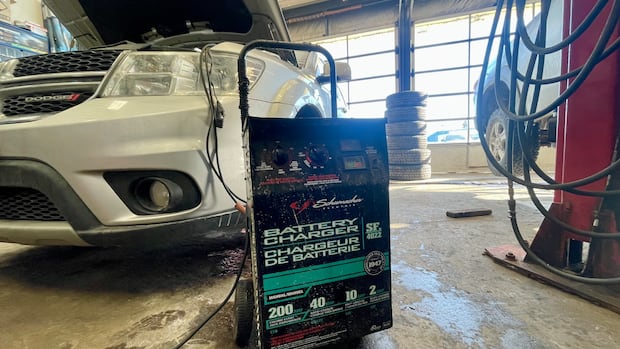
As a severe cold snap grips northwestern Ontario, drivers are urged to take essential steps to ensure their vehicles remain operational. Temperatures are predicted to plummet, with overnight lows reaching approximately -31 C on January 4 and 5, while daytime highs hover around -19 C. Environment and Climate Change Canada (ECCC) has issued warnings as conditions are expected to remain frigid throughout the week.
Neil Cutting, shop manager at Payless Automotive Maintenance and Repairs in Thunder Bay, has noted a surge in vehicle issues related to the cold. “During these extreme temperatures, we commonly see a spike in battery failures, alternator problems, and issues with power steering and transmissions,” he stated. He emphasized that taking preventive measures can significantly alleviate these issues.
Essential Tips for Winter Vehicle Care
To enhance vehicle performance during cold weather, Cutting recommends using a block heater. “Plugging in your vehicle overnight can keep the coolant warm, which helps maintain engine warmth,” he explained. This allows for quicker oil circulation when starting the engine. He suggests that drivers should use a block heater when temperatures dip below -12 C.
In addition to block heaters, battery blankets can also be beneficial. “Cold weather can drastically reduce battery performance, cutting cold cranking amps by nearly half at temperatures around -30 C to -40 C,” Cutting warned. Keeping batteries warm is crucial for reliable starts during harsh winter conditions.
For those making short trips, Cutting advises taking longer drives periodically. “This helps recharge the battery, ensuring it operates effectively,” he said. He also recommends carrying jumper cables, a battery booster pack, and coolant in the vehicle as precautions.
Impact on Electric and Hybrid Vehicles
Drivers of electric and hybrid vehicles must be mindful of reduced battery efficiency in cold weather. According to Cutting, “In lower temperatures, you might find that a battery rated for 300 to 400 kilometres of range may only deliver 150 to 200 kilometres.” He explained that electric vehicles typically have two battery systems: a larger one for driving and a smaller 12-volt battery that operates auxiliary functions. It is often this smaller battery that faces issues in extreme cold.
While current weather conditions present challenges, ECCC is also looking ahead. The agency forecasts a significant warming trend for 2026, predicting that it will be among the hottest years on record, potentially nearing temperatures seen in 2023 and 2025. Bill Merryfield, a research scientist with ECCC, noted that 2026 is expected to be between 1.35 C and 1.53 C above pre-industrial levels.
Merryfield explained that while greenhouse gas emissions are the primary driver of these temperature increases, the El Nino and La Nina climate cycles also have a substantial impact. He stated, “The current La Nina conditions have kept ocean surface temperatures cool, but this pattern is expected to reverse, increasing global temperatures in the coming years.”
As residents of northwestern Ontario face the current cold snap, following these practical tips can help ensure that vehicles remain functional and safe during this challenging weather.

Meta Plans Major Layoffs as AI Costs Surge

Alberta’s Referendum Could Pave Way for U.S. Statehood

Minooka District 201 Plans Enhanced Bilingual Support for Students

Canmore Approves Multiple Development Permits for New Projects

Remembering Bradly Castillo Shearsmith: A Life of Friendship and Joy

BIS Urges Watchdogs to Integrate Synthetic Risk Transfers in Stress Tests

Teva Transforms: Shifting Focus from Generics to Branded Success

Apple Launches AirPods Max 2 with Enhanced Audio Features

Ontario Ends Funding for Seven Supervised Injection Sites

Toyoake City Proposes Daily Two-Hour Smartphone Use Limit

Pedestrian Fatally Injured in Esquimalt Collision on August 14

B.C. Review Reveals Urgent Need for Rare-Disease Drug Reforms

Dark Adventure Game “Bye Sweet Carole” Set for October Release

Konami Revives Iconic Metal Gear Solid Delta Ahead of Release

Victoria’s Pop-Up Shop Shines Light on B.C.’s Wolf Cull

Jimmy Lai’s Defense Challenges Charges Under National Security Law

Snapmaker U1 Color 3D Printer Redefines Speed and Sustainability

Apple Expands Self-Service Repair Program to Canada
-
 Science12 months ago
Toyoake City Proposes Daily Two-Hour Smartphone Use Limit
-
 Top Stories12 months ago
Pedestrian Fatally Injured in Esquimalt Collision on August 14
-
 Health12 months ago
B.C. Review Reveals Urgent Need for Rare-Disease Drug Reforms
-
 Technology12 months ago
Dark Adventure Game “Bye Sweet Carole” Set for October Release
-
 Technology12 months ago
Konami Revives Iconic Metal Gear Solid Delta Ahead of Release
-
 Lifestyle12 months ago
Victoria’s Pop-Up Shop Shines Light on B.C.’s Wolf Cull
-
 World12 months ago
Jimmy Lai’s Defense Challenges Charges Under National Security Law
-
 Technology12 months ago
Snapmaker U1 Color 3D Printer Redefines Speed and Sustainability
-
 Technology12 months ago
Apple Expands Self-Service Repair Program to Canada
-

 Technology12 months ago
AION Folding Knife: Redefining EDC Design with Premium Materials
-

 Technology12 months ago
Solve Today’s Wordle Challenge: Hints and Answer for August 19
-

 Business12 months ago
Gordon Murray Automotive Unveils S1 LM and Le Mans GTR at Monterey