
Top Stories
Iran Conflict Triggers Selloff in Emerging Markets, Investors React

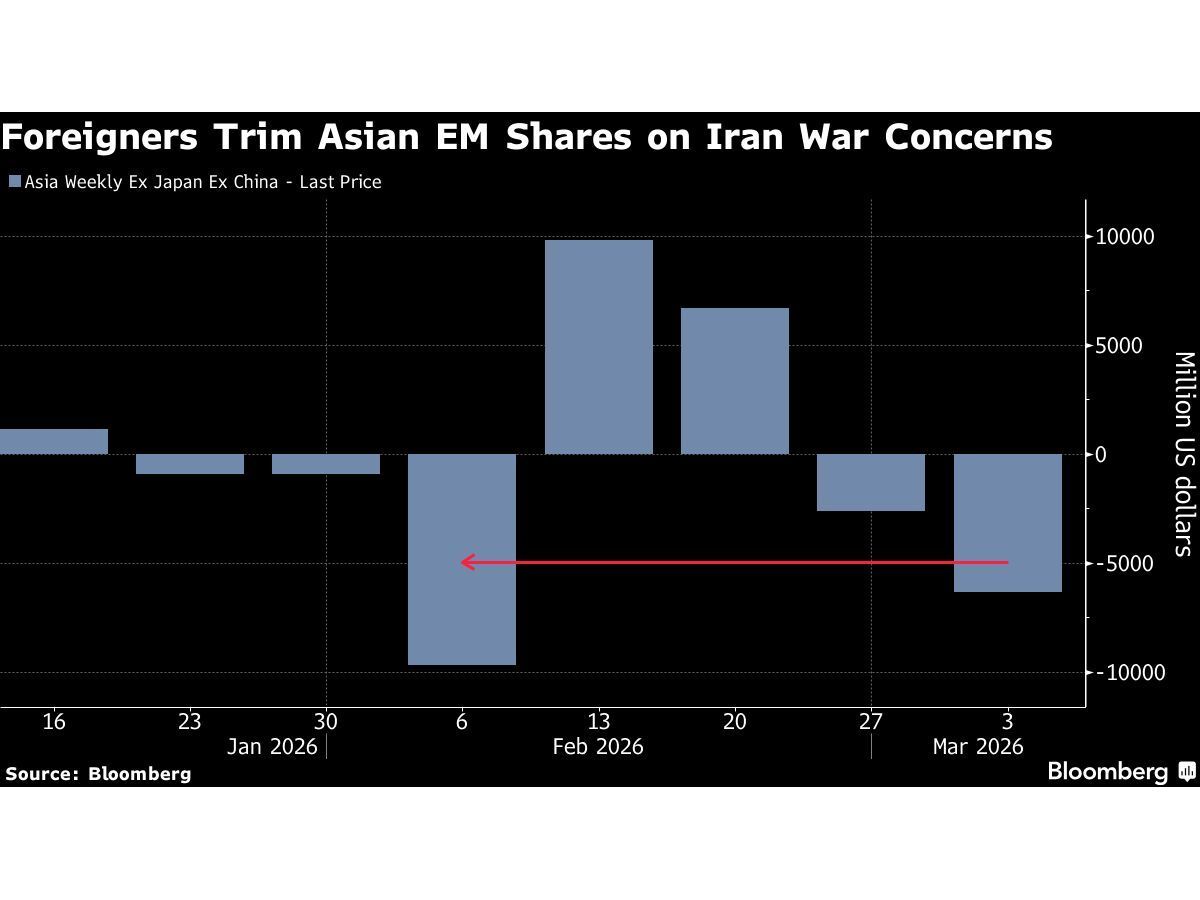
The ongoing conflict in Iran has led to a significant downturn in emerging markets, impacting global investment strategies. Stocks and bonds that recently reached record highs are now facing intense pressure as traders react to rising oil prices and a strengthening dollar. These dual challenges threaten the economic outlook for some of the fastest-growing economies worldwide, especially in Asia, where markets have taken the hardest hit.
Korean stocks, for instance, have plummeted by nearly 18% this week alone. This sharp decline reflects a broader selloff, as investors reassess their positions in light of escalating energy costs and currency pressures. According to Sonal Desai, the Chief Investment Officer for Fixed Income at Franklin Templeton, the resilience of emerging markets is now under scrutiny following a strong start to the year.
The turmoil intensified on Wednesday, with the benchmark index for emerging markets dropping as much as 4.4%, edging closer to a technical correction. In contrast, the MSCI Inc. indices for global and developed-market equities decreased by less than 1% before the US market opened. A benchmark of dollar-based emerging market debt experienced its largest two-day decline since April, while a measure of emerging market currencies fell 1.7% since Monday, marking its steepest weekly drop since March 2020.
This sudden shift in market sentiment has prompted global investors to withdraw approximately $6.3 billion from Asian emerging markets, excluding China. This outflow positions the region for its largest weekly decline in a month, as highlighted by data compiled by Bloomberg. Markets heavily reliant on technology, such as South Korea and Taiwan, were among the most affected during this downturn.
As investors navigate this landscape, many are contemplating how to adjust their portfolios in response to sustained higher energy prices. A strategic pivot is emerging, focusing on differentiating between countries that are oil importers and those that are exporters. Marcelo Assalin, head of emerging markets debt at William Blair, indicated a shift away from import-dependent nations towards oil-exporting regions, as energy prices continue to rise.
Countries like South Korea, Thailand, and India stand to suffer from persistent oil price increases, while oil-exporting nations such as Malaysia may better withstand the pressures. Higher crude costs threaten to escalate consumer prices, complicating the monetary policy landscape for central banks that had recently begun to consider interest rate cuts.
In Latin America, the situation presents a mixed outlook. Countries like Colombia and Mexico benefit from higher oil prices as exporters, but any fiscal advantages may be offset by the necessity of fuel subsidies. Felipe Hernandez, an economist at Bloomberg, noted that both nations face significant inflation risks, which could compel them to maintain elevated interest rates.
The strengthening dollar has further exacerbated challenges for emerging markets. The Bloomberg dollar gauge increased by 1.5% this week, putting additional strain on currencies across developing nations and escalating debt-servicing costs. Philip McNicholas, an Asia sovereign strategist at Robeco Group in Singapore, highlighted that countries such as Thailand and India are particularly vulnerable from a foreign exchange perspective. On Wednesday, India’s rupee fell to a record low, prompting the central bank to intervene by selling dollars to stabilize the currency.
In China, the central bank recently adjusted its strategy by fixing a stronger yuan, reversing earlier indications of tolerance for currency weakness. This shift in policy reflects the broader complexities facing emerging markets as they adapt to the ongoing conflict in Iran.
The outlook for bonds in this climate is more complex. If economic growth remains subdued, there may be potential for long-term interest rates to decline, resulting in flatter yield curves in markets where longer-dated yields appear elevated. McNicholas suggested that the longer end of the curve should trend lower, given the subdued nominal GDP growth, indicating that curves in Thailand and Korea may be overly steep.
The trajectory of emerging markets in the wake of the Iranian conflict hinges on the evolving situation. Donald Trump, President of the United States, announced plans on Tuesday to provide insurance guarantees and naval escorts for oil tankers and other vessels navigating through the Strait of Hormuz, aiming to prevent an energy crisis stemming from the conflict.
While Goldman Sachs Group Inc. noted that spikes in geopolitical risk typically have a negative short-term impact on Asian equities, they also believe that these effects tend to dissipate over time. As parts of the region already faced vulnerabilities to a market correction, analysts remain optimistic about the long-term potential. Goldman’s analysts, led by Timothy Moe, suggested viewing short-term weaknesses as opportunities to reinforce positions in key areas such as defense, energy, and shareholder returns.
In summary, the unfolding events in Iran have sparked a significant reevaluation of investment strategies across emerging markets, prompting a rapid withdrawal of capital and raising critical questions about future economic resilience. The impact of this conflict will continue to be felt as investors seek clarity amidst uncertainty.

Meta Plans Major Layoffs as AI Costs Surge

Alberta’s Referendum Could Pave Way for U.S. Statehood

Minooka District 201 Plans Enhanced Bilingual Support for Students

Canmore Approves Multiple Development Permits for New Projects

Remembering Bradly Castillo Shearsmith: A Life of Friendship and Joy

BIS Urges Watchdogs to Integrate Synthetic Risk Transfers in Stress Tests

Teva Transforms: Shifting Focus from Generics to Branded Success

Apple Launches AirPods Max 2 with Enhanced Audio Features

Ontario Ends Funding for Seven Supervised Injection Sites

Toyoake City Proposes Daily Two-Hour Smartphone Use Limit

Pedestrian Fatally Injured in Esquimalt Collision on August 14

B.C. Review Reveals Urgent Need for Rare-Disease Drug Reforms

Dark Adventure Game “Bye Sweet Carole” Set for October Release

Konami Revives Iconic Metal Gear Solid Delta Ahead of Release

Victoria’s Pop-Up Shop Shines Light on B.C.’s Wolf Cull

Jimmy Lai’s Defense Challenges Charges Under National Security Law

Snapmaker U1 Color 3D Printer Redefines Speed and Sustainability

Apple Expands Self-Service Repair Program to Canada
-
 Science12 months ago
Toyoake City Proposes Daily Two-Hour Smartphone Use Limit
-
 Top Stories1 year ago
Pedestrian Fatally Injured in Esquimalt Collision on August 14
-
 Health1 year ago
B.C. Review Reveals Urgent Need for Rare-Disease Drug Reforms
-
 Technology12 months ago
Dark Adventure Game “Bye Sweet Carole” Set for October Release
-
 Technology1 year ago
Konami Revives Iconic Metal Gear Solid Delta Ahead of Release
-
 Lifestyle1 year ago
Victoria’s Pop-Up Shop Shines Light on B.C.’s Wolf Cull
-
 World12 months ago
Jimmy Lai’s Defense Challenges Charges Under National Security Law
-
 Technology1 year ago
Snapmaker U1 Color 3D Printer Redefines Speed and Sustainability
-
 Technology1 year ago
Apple Expands Self-Service Repair Program to Canada
-

 Technology12 months ago
AION Folding Knife: Redefining EDC Design with Premium Materials
-

 Technology1 year ago
Solve Today’s Wordle Challenge: Hints and Answer for August 19
-

 Business1 year ago
Gordon Murray Automotive Unveils S1 LM and Le Mans GTR at Monterey