
Top Stories
Iran Partially Closes Strait of Hormuz Amid U.S. Nuclear Talks

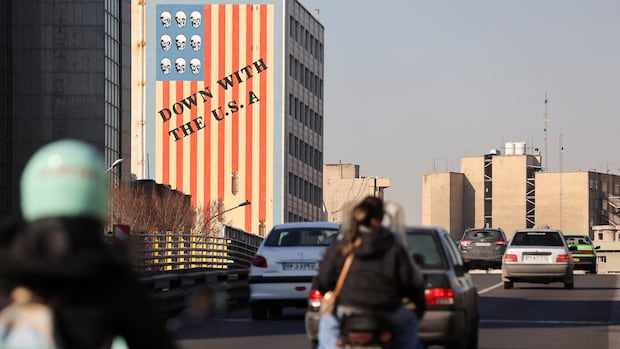
Iran has announced a partial closure of the Strait of Hormuz as it resumes indirect nuclear negotiations with the United States in Geneva. The closure, reported by the semi-official Fars News Agency, is described as a security precaution during military exercises conducted by Iran’s Revolutionary Guards in this vital oil shipping route. The Strait of Hormuz is crucial for global oil transport, with approximately one-fifth of the world’s oil passing through its waters.
In a statement on Tuesday, Iran’s Supreme Leader Ayatollah Ali Khamenei asserted that U.S. efforts to destabilize his government would ultimately fail. These comments came shortly after the commencement of the talks, which are mediated by Oman and involve U.S. officials including Steve Witkoff and Jared Kushner. Khamenei emphasized that Iran’s government remains resilient in the face of external pressures.
The negotiations occur against a backdrop of heightened military presence in the Middle East, notably following a series of U.S. airstrikes on Iranian nuclear facilities in June 2023. President Donald Trump has indicated that regime change in Iran could be beneficial, stating that Iran might seek a deal to avoid severe repercussions. “I don’t think they want the consequences of not making a deal,” Trump remarked while speaking to reporters aboard Air Force One.
As the talks began, Iranian media reported Khamenei’s rejection of U.S. military might, suggesting that even the strongest army can be severely challenged. The success of the ongoing discussions is believed to hinge on the U.S.’s willingness to make realistic demands and consider lifting economic sanctions that have heavily impacted Iran’s economy.
Iran had previously suspended uranium enrichment activities following the escalation of military actions against it. The Foreign Ministry spokesperson, Esmaeil Baghaei, confirmed that Tehran has conveyed its positions regarding the nuclear issue and the desired framework for any agreement to the U.S. side.
The indirect talks are taking place at the residence of the Omani ambassador to the United Nations in Cologny, Switzerland, under strict security. Reports indicate that several vehicles with Iranian diplomatic license plates were present at the venue, highlighting the significance of this diplomatic engagement.
While the U.S. military prepares for potential operations against Iran if ordered by Trump, regional tensions remain high. Washington, along with its ally Israel, perceives Iran’s nuclear aspirations as a direct threat, while Tehran maintains that its nuclear program is solely for peaceful purposes. Despite enriching uranium beyond levels necessary for power generation, Iran is a signatory of the nuclear Non-Proliferation Treaty (NPT), which allows for civilian nuclear power under specific conditions.
The outcome of these discussions is considered critical not only for U.S.-Iran relations but also for the broader geopolitical landscape, where fears of military conflict and its implications for the region persist. As the situation develops, the international community continues to monitor the potential for a resolution that addresses both nuclear concerns and economic sanctions.

Meta Plans Major Layoffs as AI Costs Surge

Alberta’s Referendum Could Pave Way for U.S. Statehood

Minooka District 201 Plans Enhanced Bilingual Support for Students

Canmore Approves Multiple Development Permits for New Projects

Remembering Bradly Castillo Shearsmith: A Life of Friendship and Joy

BIS Urges Watchdogs to Integrate Synthetic Risk Transfers in Stress Tests

Teva Transforms: Shifting Focus from Generics to Branded Success

Apple Launches AirPods Max 2 with Enhanced Audio Features

Ontario Ends Funding for Seven Supervised Injection Sites

Toyoake City Proposes Daily Two-Hour Smartphone Use Limit

Pedestrian Fatally Injured in Esquimalt Collision on August 14

B.C. Review Reveals Urgent Need for Rare-Disease Drug Reforms

Dark Adventure Game “Bye Sweet Carole” Set for October Release

Konami Revives Iconic Metal Gear Solid Delta Ahead of Release

Victoria’s Pop-Up Shop Shines Light on B.C.’s Wolf Cull

Jimmy Lai’s Defense Challenges Charges Under National Security Law

Snapmaker U1 Color 3D Printer Redefines Speed and Sustainability

Apple Expands Self-Service Repair Program to Canada
-
 Science12 months ago
Toyoake City Proposes Daily Two-Hour Smartphone Use Limit
-
 Top Stories12 months ago
Pedestrian Fatally Injured in Esquimalt Collision on August 14
-
 Health12 months ago
B.C. Review Reveals Urgent Need for Rare-Disease Drug Reforms
-
 Technology12 months ago
Dark Adventure Game “Bye Sweet Carole” Set for October Release
-
 Technology12 months ago
Konami Revives Iconic Metal Gear Solid Delta Ahead of Release
-
 Lifestyle12 months ago
Victoria’s Pop-Up Shop Shines Light on B.C.’s Wolf Cull
-
 World12 months ago
Jimmy Lai’s Defense Challenges Charges Under National Security Law
-
 Technology12 months ago
Snapmaker U1 Color 3D Printer Redefines Speed and Sustainability
-
 Technology12 months ago
Apple Expands Self-Service Repair Program to Canada
-

 Technology12 months ago
AION Folding Knife: Redefining EDC Design with Premium Materials
-

 Technology12 months ago
Solve Today’s Wordle Challenge: Hints and Answer for August 19
-

 Business12 months ago
Gordon Murray Automotive Unveils S1 LM and Le Mans GTR at Monterey